
There is something about a bluebell wood in late April that is difficult to put into words. The morning chorus is in full voice, the air smells clean, the canopy above is a fresh, tender green, and below it all, spreading out across the forest floor as far as you can see, is that extraordinary carpet of blue and violet. If you are looking for the best bluebell woods in Hertfordshire, you are in the right place.
I should say upfront: this is not a list I have put together from a quick internet search. These are woods I have visited with a camera, sometimes more than once, learning through trial and error where the light falls, which corners reward an early start, and which locations have something genuinely special to offer a photographer. That experience shapes every recommendation here.
The bluebell season in Hertfordshire is short. At its peak you have perhaps two to three weeks, sometimes less. Getting it right means understanding not just where to go, but when, and how to approach it once you are there. I have made enough mistakes over the years to know that turning up at the wrong time of day with the wrong lens is a reliable way to come home disappointed, however beautiful the display.
In this guide I will walk you through eight Hertfordshire bluebell woods worth visiting, with practical notes on parking, access, and the specific spots and conditions that have worked best for me. I will also cover timing, the single biggest lens mistake most photographers make in woodland, and what to do when the light is not on your side.
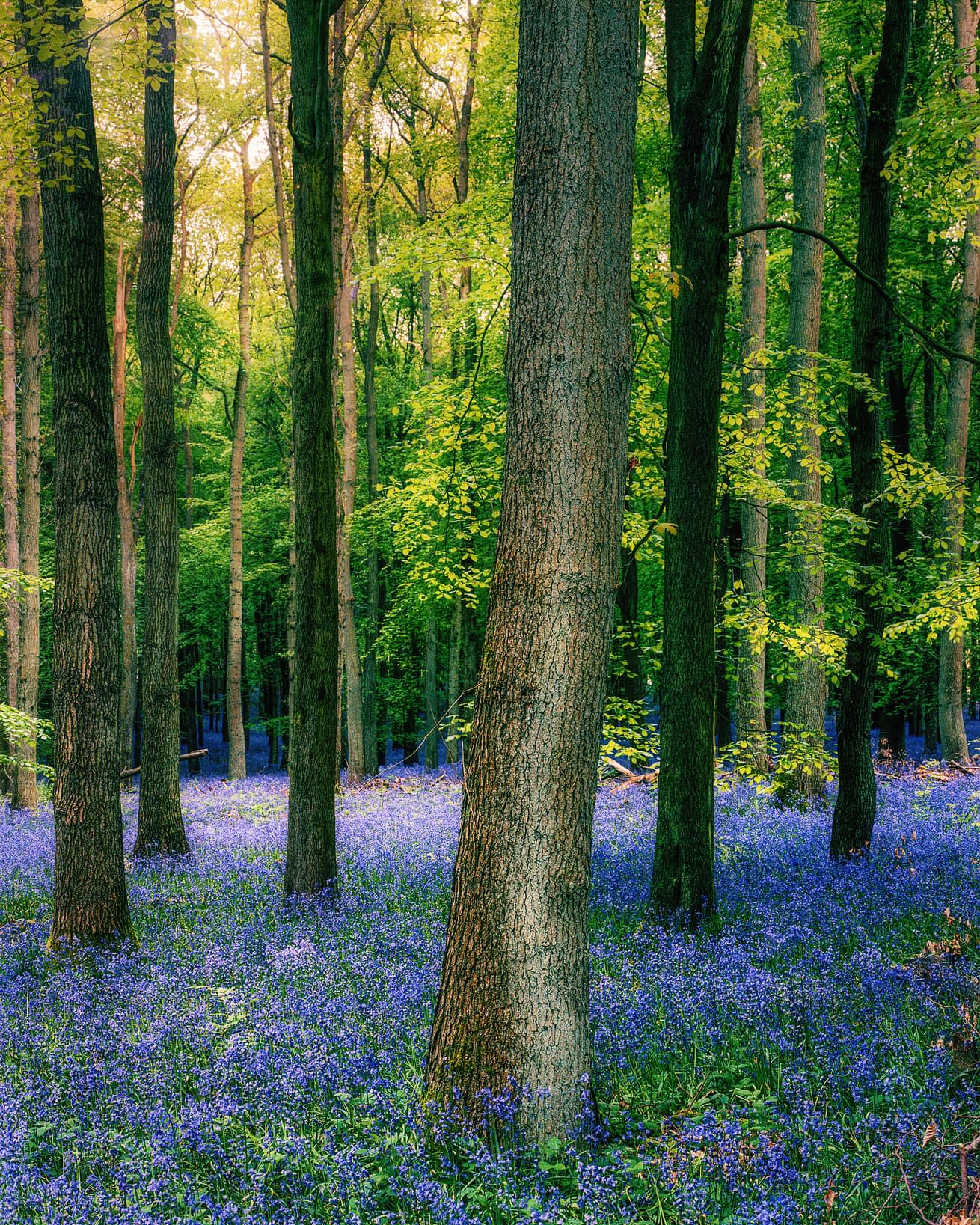
Table of Contents
How to Create Unique Landscape Photos On Your Doorstep
Tired of thinking your local area is boring? This in-depth guide shows how to uncover fresh, original photos close to home - even in “uninspiring” places.
- Reframe your expectations and mindset
- Use curiosity to find beauty anywhere
- Discover overlooked scenes in familiar spots
When to Visit: The Two-Week Window
Timing is everything with bluebells. Miss the window and you will find the flowers past their best, the petals browning at the edges, the carpet thinning out. Get it right and you will find yourself standing in one of the most beautiful natural displays that English woodland has to offer.
In Hertfordshire, the bluebells typically peak in late April and into early May. As a rough guide, by the end of the first week of May the display is usually beginning to fade. That gives you a window of perhaps two weeks at most, and often less, depending on the weather in the weeks leading up to it. A warm early spring can bring everything forward; a cold one can push it back. Watching the trees is a useful indicator: when the canopy above is just beginning to fill out with that fresh, tender green, the conditions below are usually close to perfect.
What to look for
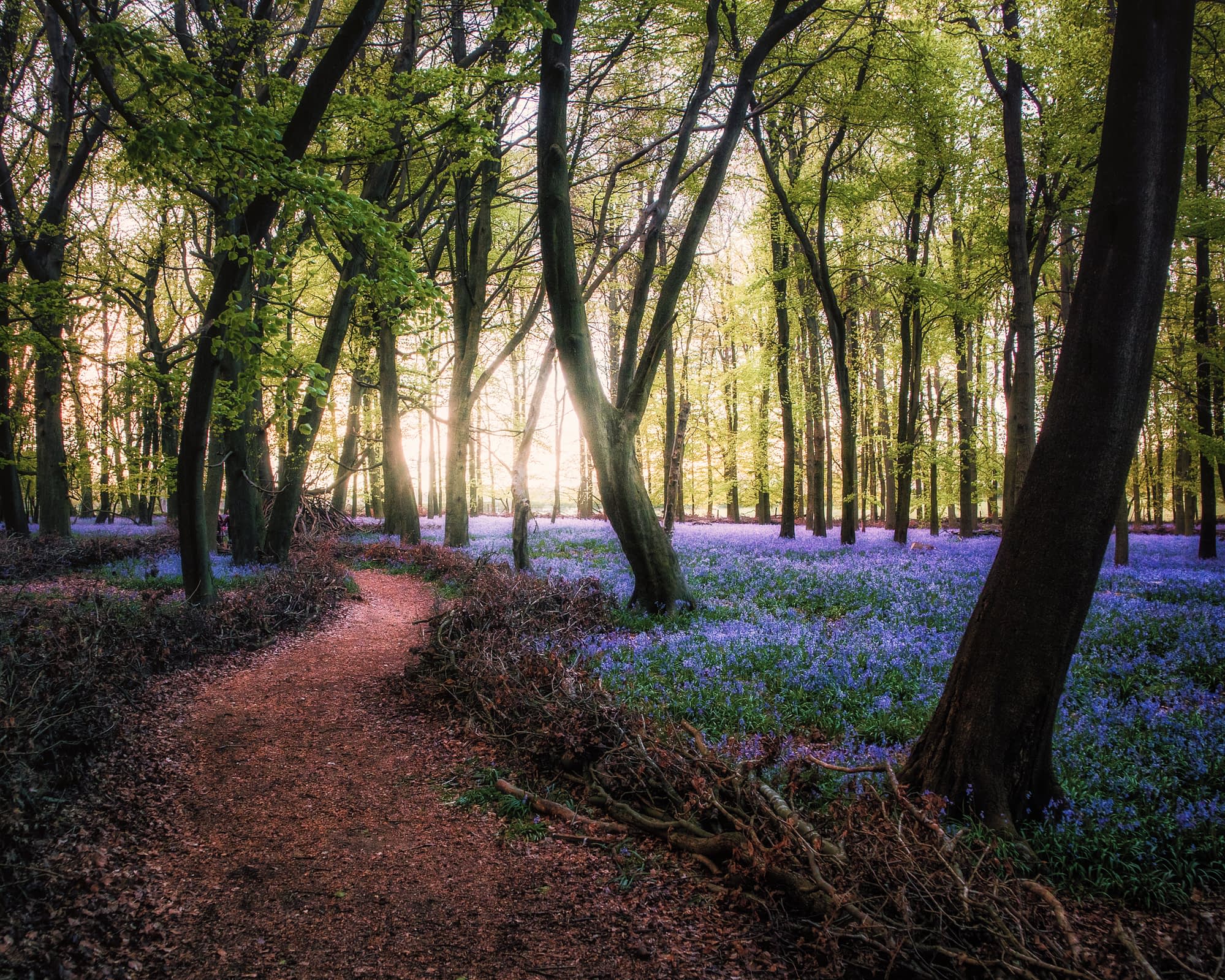
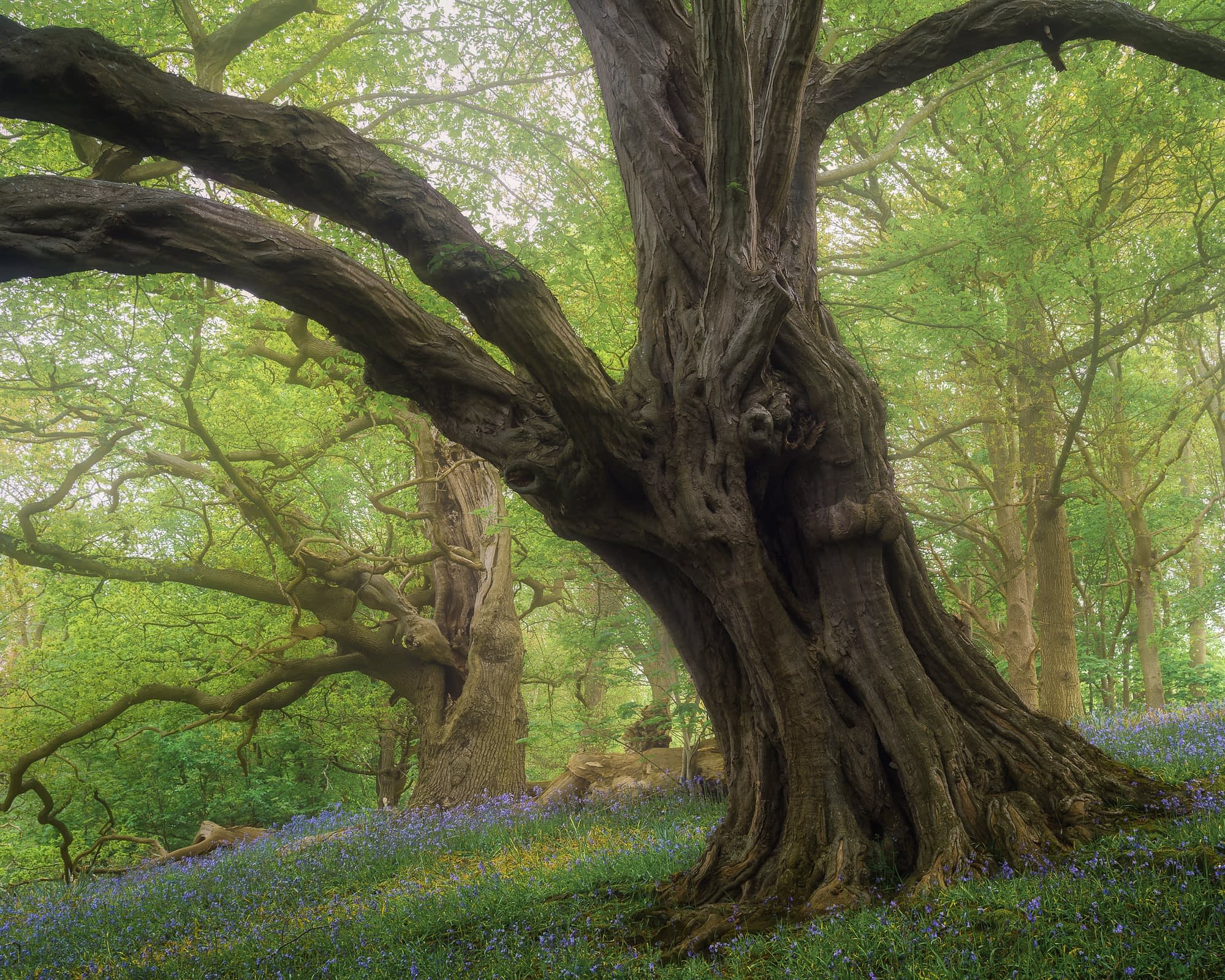
The best bluebell images come when two things align: a full carpet of flowers at ground level, and fresh new leaves overhead. The leaves matter more than most photographers realise. That translucent green canopy, backlit by morning sun, adds a quality of light to the whole scene that you simply cannot replicate at any other time of year. Too early and the trees are still bare; too late and the canopy has thickened, the bluebells are fading, and the light has lost that particular quality.
If you arrive a little late
Do not write off a visit if you have missed the peak. Past their best, the bluebells become subjects for more intimate work: close-ups of individual flowers, studies of the fresh ferns beginning to uncurl, details of the new growth pushing through the leaf litter. There is a quieter kind of beauty in a woodland in mid-May, and a photographer who is paying attention will still find plenty to work with.
If this has got you thinking about what else your local woodland offers across the year, my guide to creating unique landscape photos on your doorstep covers exactly that kind of thinking.
The Best Bluebell Woods in Hertfordshire
These are the woods I keep coming back to. Some are well known, others are quietly tucked away and rarely mentioned in the usual lists. All of them have something genuinely worth visiting for, and all of them I have been to with a camera rather than just a search engine.
Ashridge Estate / Dockey Wood
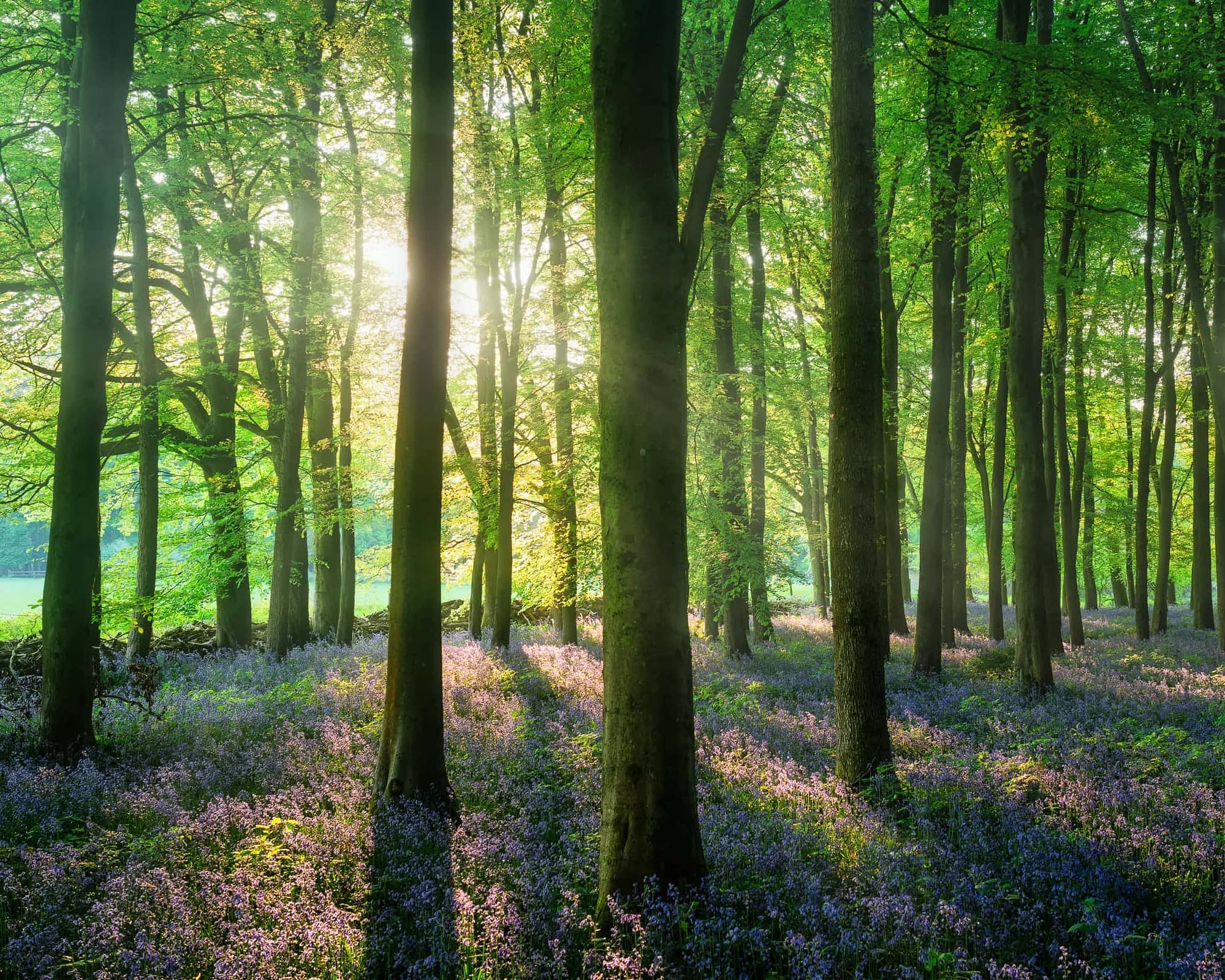
The Ashridge Estate is vast, and you could spend a whole day exploring it without covering half of it. For bluebells, the two areas worth heading to are Dockey Wood and Ivinghoe Common. Dockey Wood in particular has a reputation for good reason: the display here can be extraordinary at peak. Be aware that the National Trust can charge for access to Dockey Wood during the bluebell season, not just for parking, so it is worth checking ahead before you visit. My recommendation is to head to the far end of the wood, furthest from the road and car park. The spring light comes from that direction, which makes it the best spot for backlit shots early in the morning.
Parking: what3words.com/incomes.swerving.shears and what3words.com/cackling.brush.caged
Heartwood Forest / Langley Wood
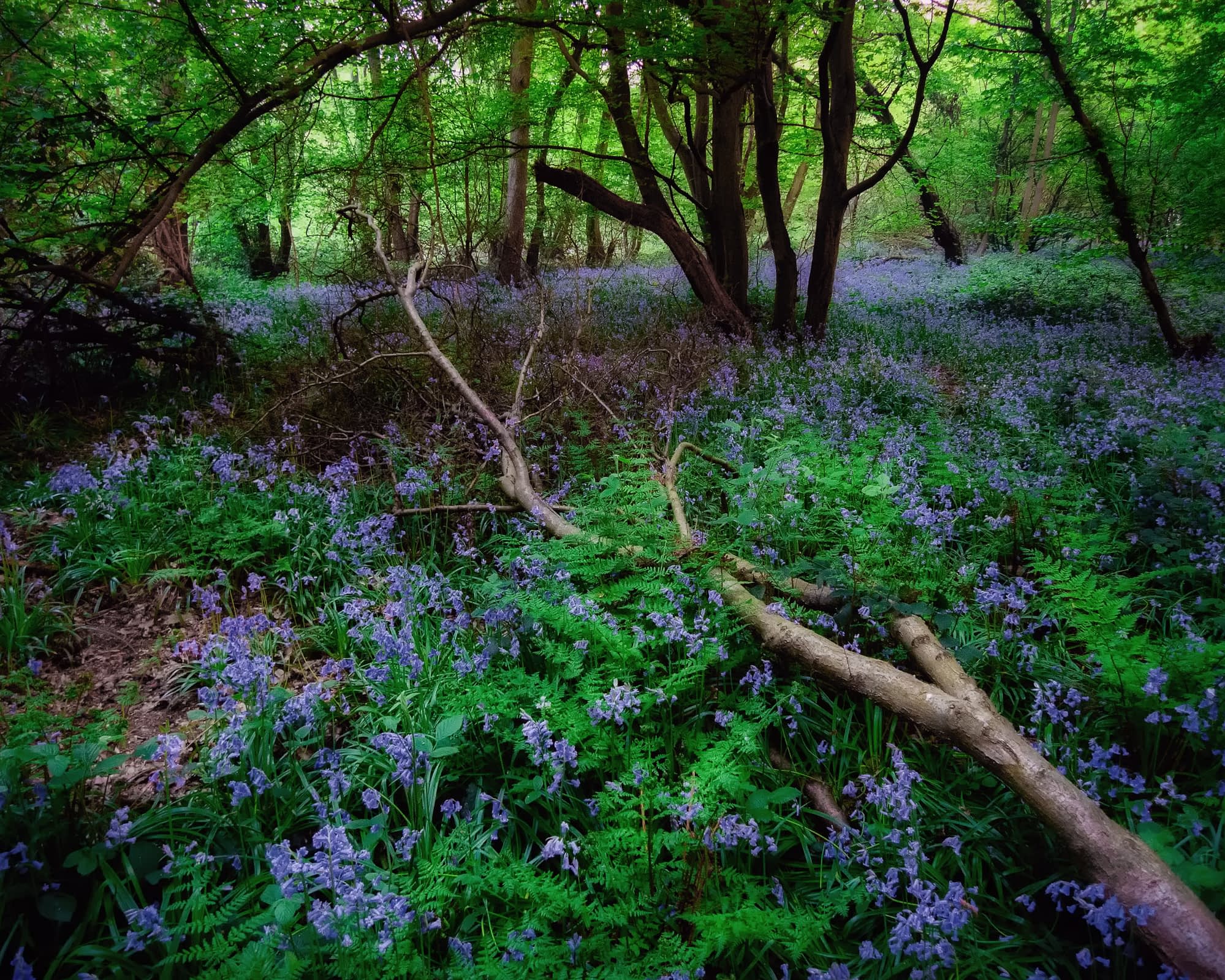
Heartwood Forest is a remarkable place: five ancient woods connected through what is now England's largest newly planted native woodland, managed by the Woodland Trust and free to access at all times. The best of the ancient woods for bluebells is Langley Wood. Follow the circular walk to the far side, where a stand of tall hornbeams makes for excellent compositions. Face east and shoot in the morning light for the best results.
Parking: what3words.com/idea.ranch.filed
Mardley Heath
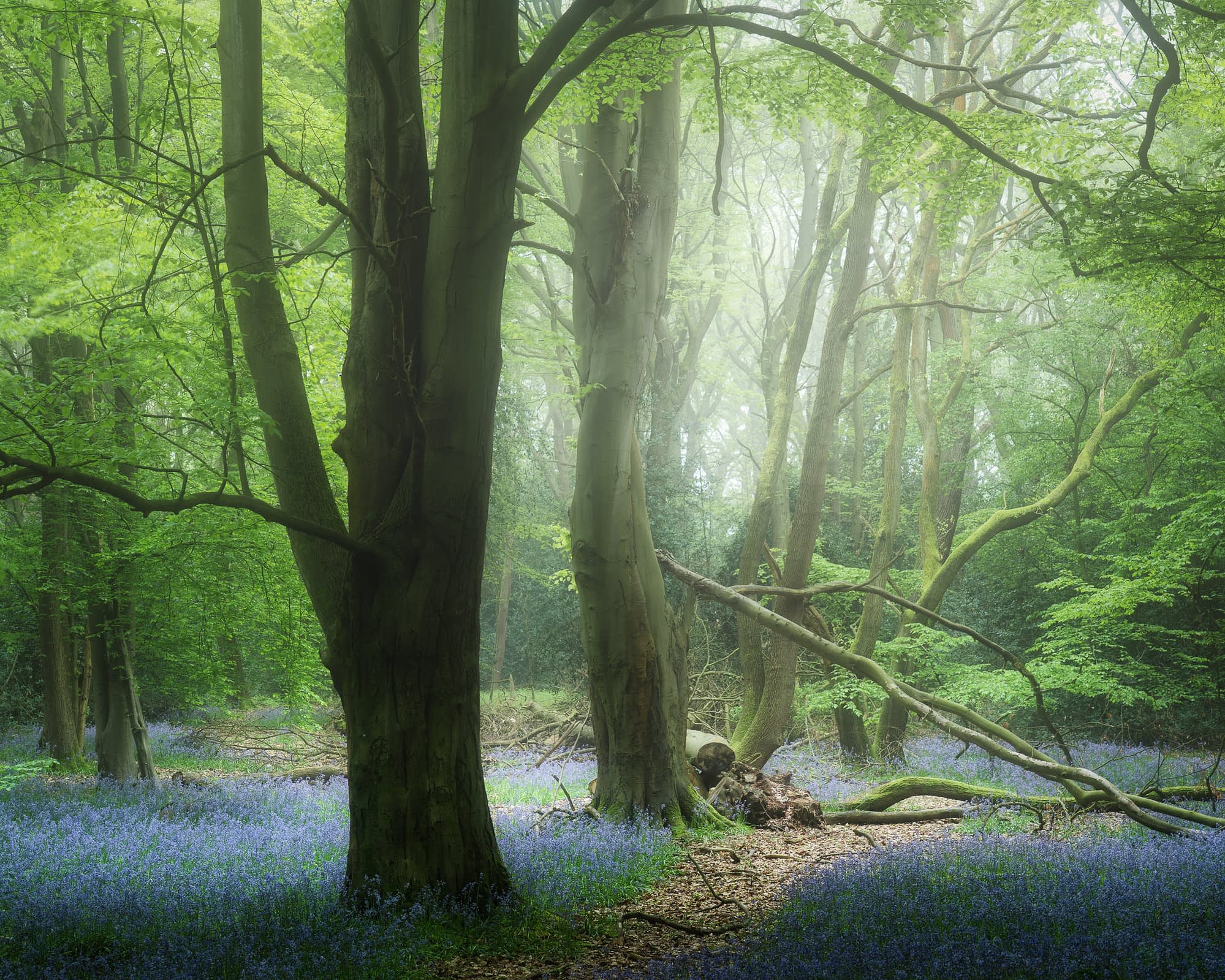
Better known to local dog walkers than to photographers, Mardley Heath sits on the site of a former gravel quarry alongside a section of ancient woodland. It is a more understated location than some on this list, but the bluebell displays in late April and into May can be beautiful. The best opportunities are in the part of the woodland closest to the A1M.
Parking: what3words.com/code.edge.hope
Panshanger Park
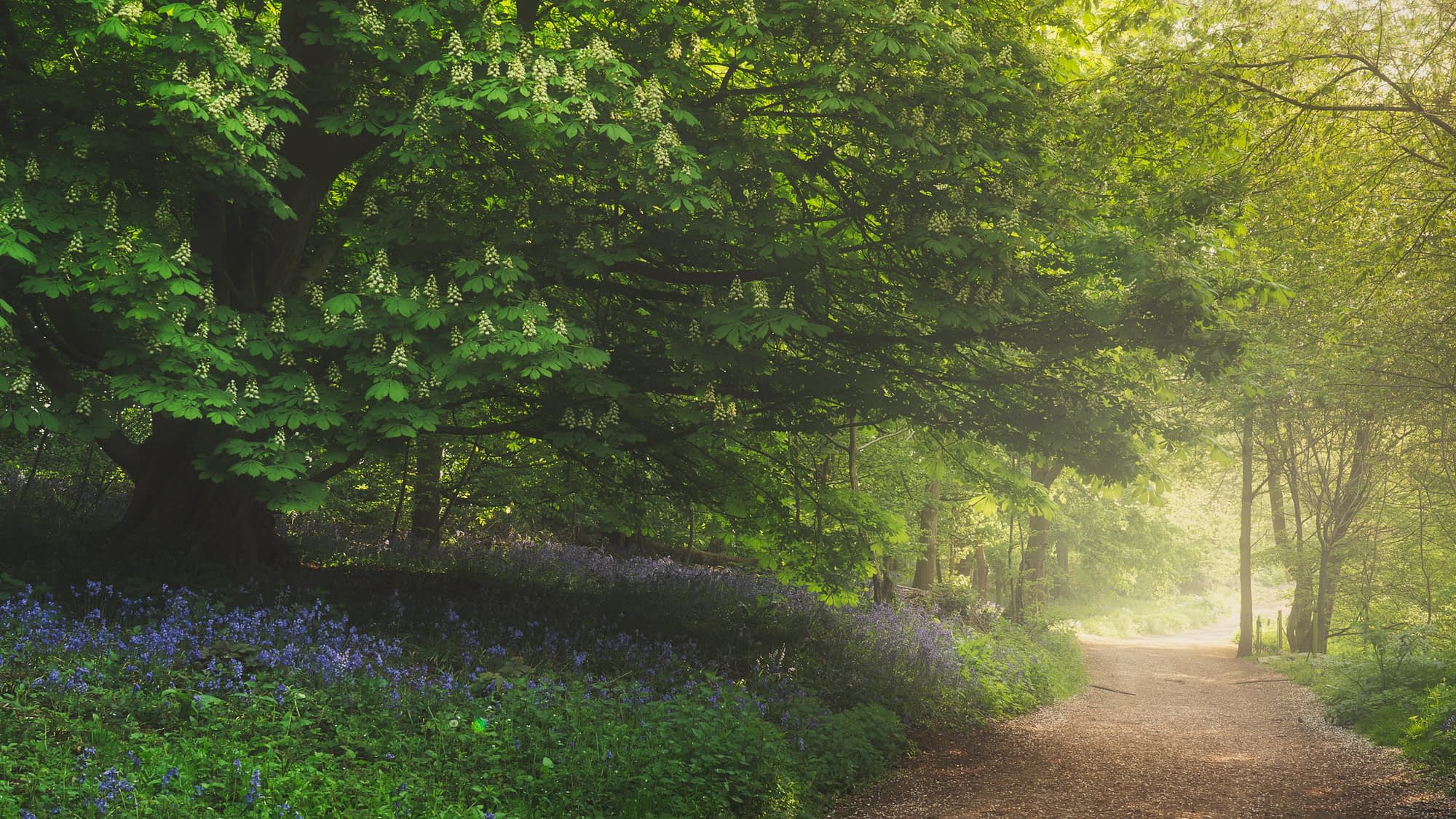
Panshanger is perhaps best known for its collection of giant ancient and veteran oak trees, but there are large areas of bluebells here too, particularly toward the Hertford end of the park. Park in the Thieves Lane car park and follow the path through the woods. There are some other areas of bluebells amongst the ancient trees, too - they're much further into the park, though. The big trees give the woodland a different character from many other bluebell sites, and that combination of ancient trees and spring flowers is worth exploring photographically.
Parking: what3words.com/enhancement.fairly.calms
Gobions Wood
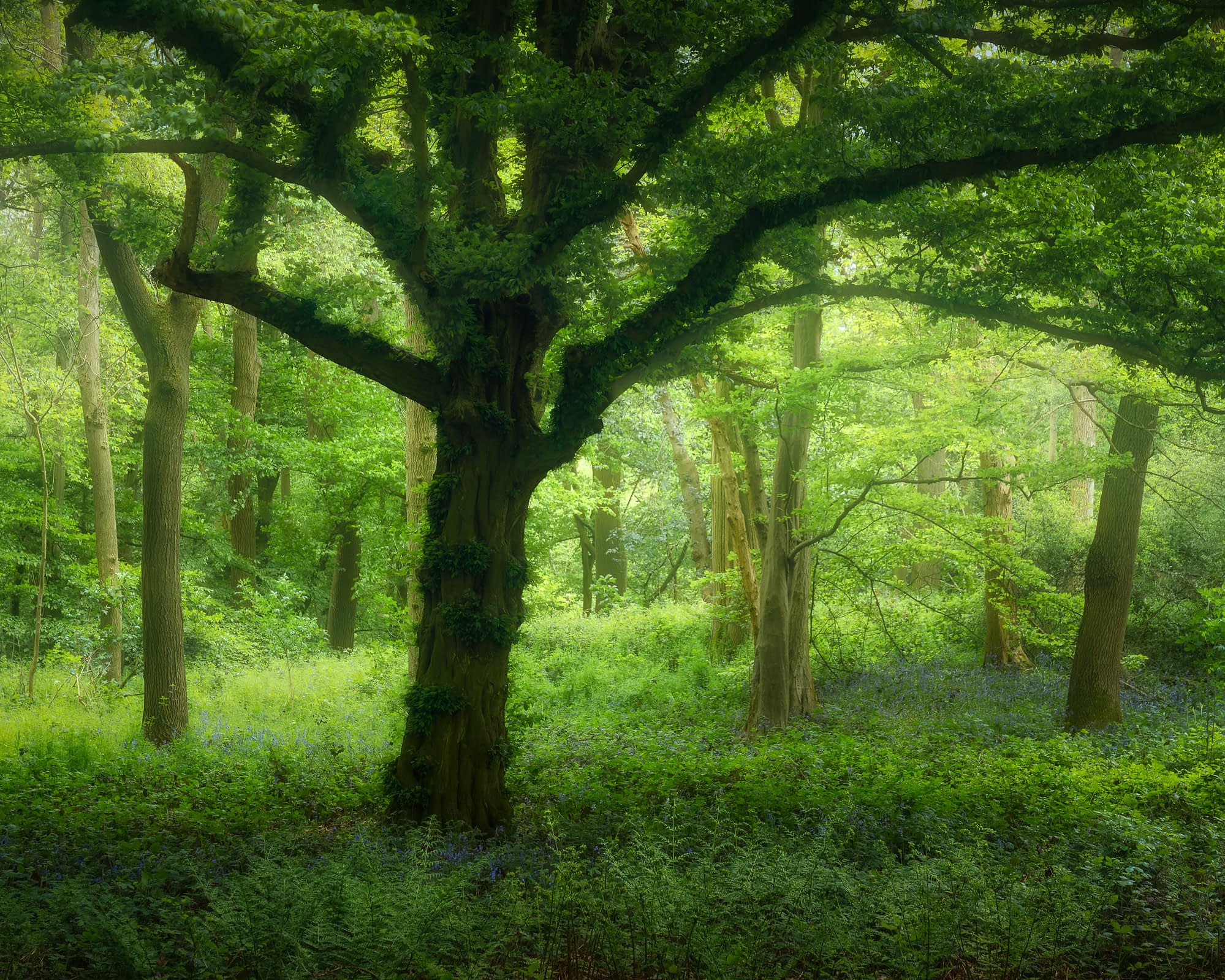
A little-known woodland on the edge of Brookmans Park, managed by the Wildlife Trusts. Gobions Wood has beautiful bluebell displays set amongst a mix of hornbeam and oak, which is typical of Hertfordshire's ancient woodland character. It is the kind of place you might have entirely to yourself on a weekday morning, which is worth something in itself.
Parking: what3words.com/badge.perky.will
Hitch Wood
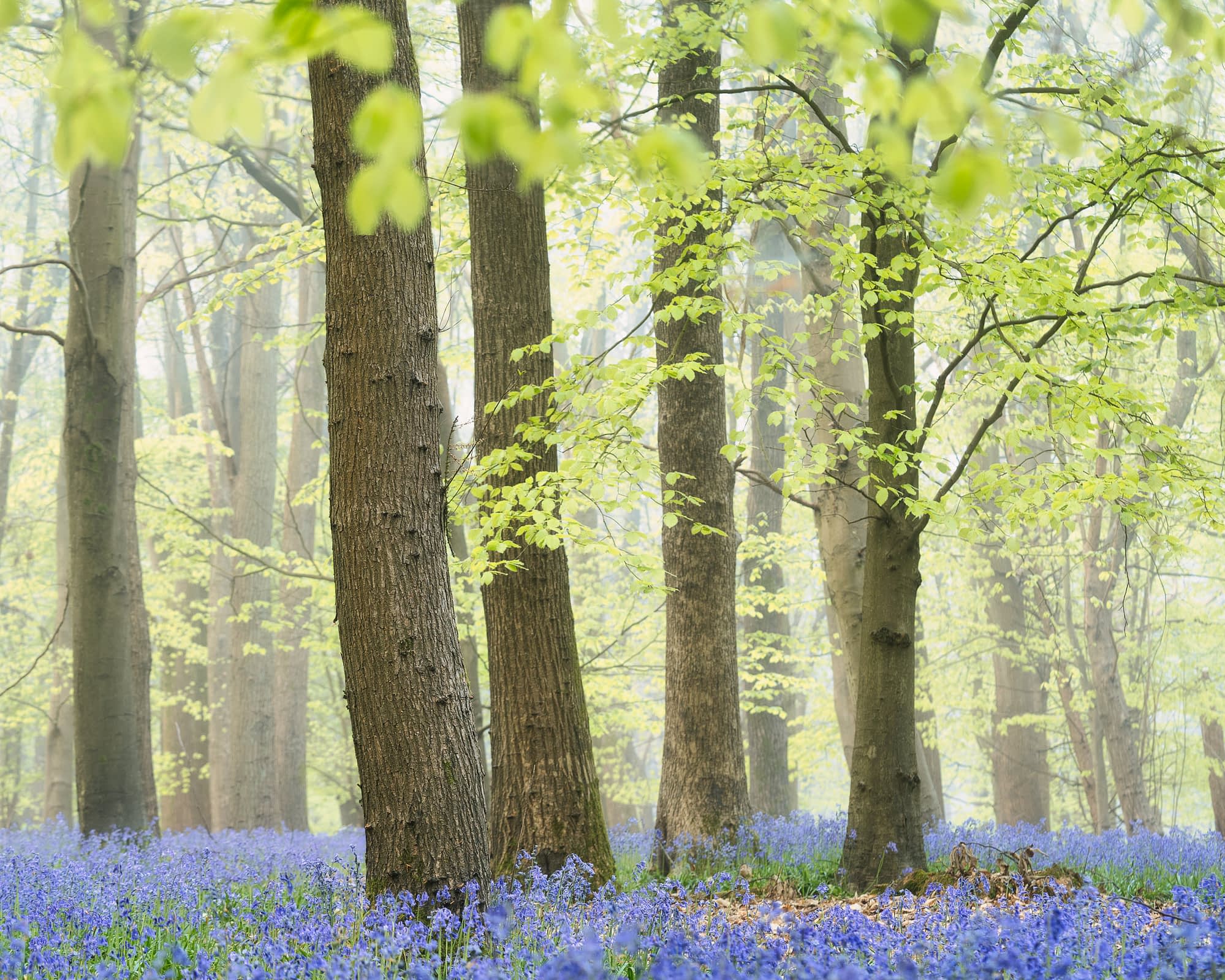
Perhaps the closest bluebell wood to home for me, Hitch Wood sits midway between Codicote and Hitchin and is the kind of place that is easy to get lost in, in the best possible sense. The woodland is predominantly sessile oak, which means tall, straight trunks that sit beautifully above a carpet of bluebells in spring. I first discovered it in the depths of winter and have been returning ever since. There is year-round interest here, but spring is when it is at its finest.
Parking: what3words.com/drip.face.famous
Sherrardspark Wood
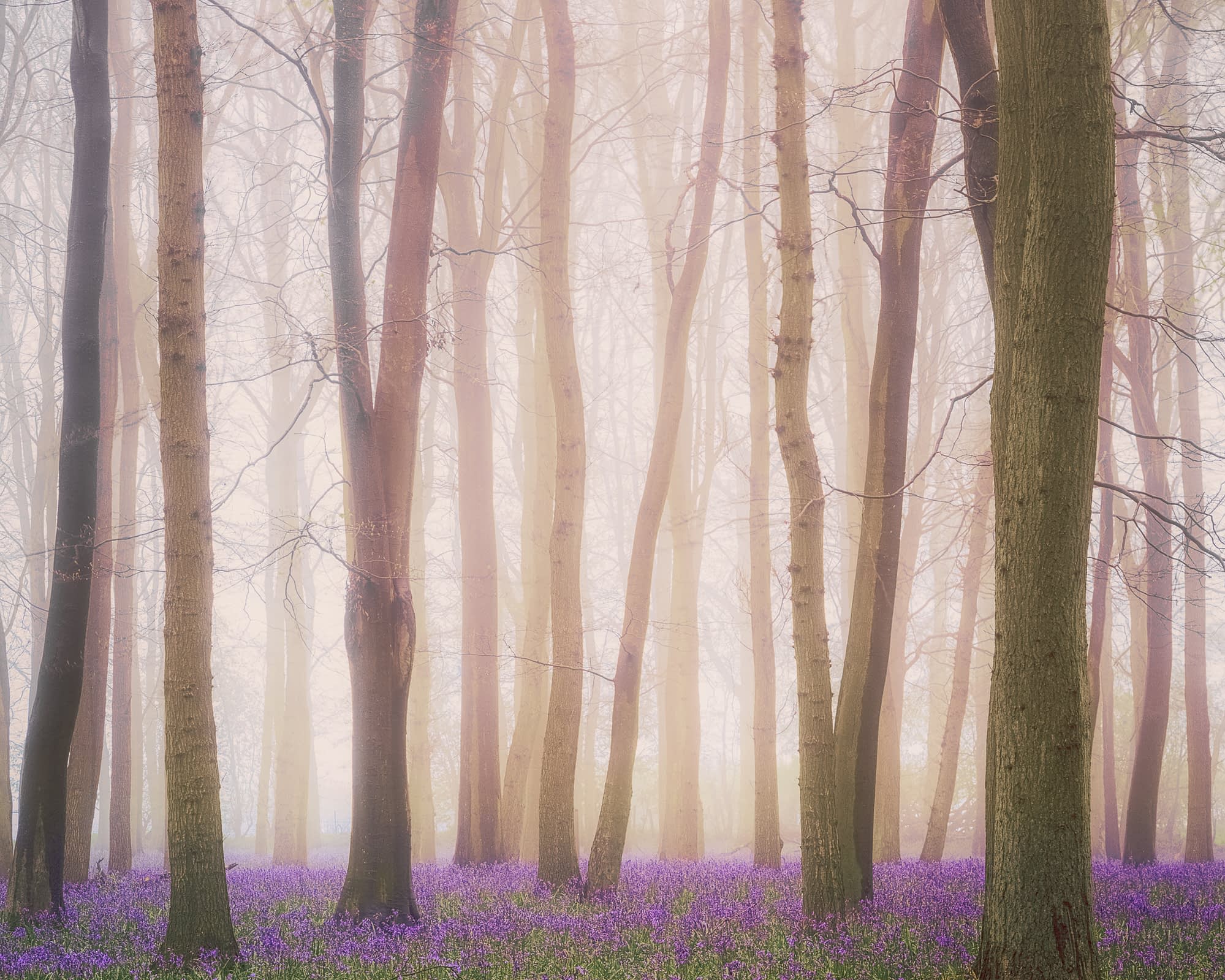
On the edge of Welwyn Garden City, Sherrardspark Woods has not always delivered the most productive bluebell sessions for me personally, but there are bluebells here in spring and the woods have a pleasant, open character that makes them worth exploring. There is year-round interest here too. One practical note: the Red Lion at Welwyn, opposite the entrance on Digswell Hill, serves excellent food, which makes it a good base for a longer day out.
Parking: what3words.com/lifted.beams.elite
Astonbury Woods
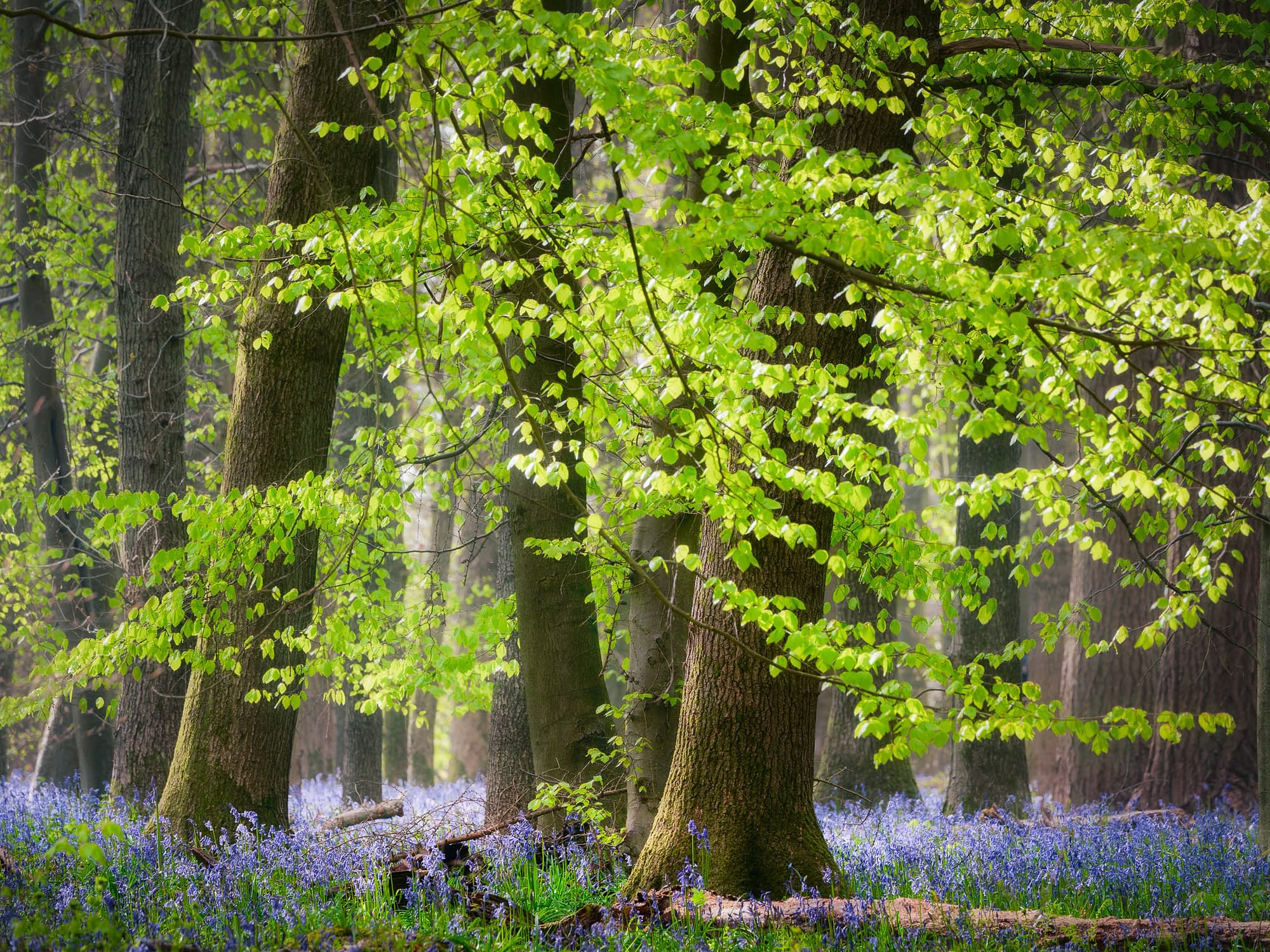
Astonbury is a beautiful ancient woodland with carpets of bluebells, but it comes with a significant practical challenge: parking is extremely limited. I have resorted to cycling there, which is only around thirty minutes from home. If you are planning a visit by car, note that access is easier if you book lunch or dinner at the Three Horseshoes nearby. It is worth the effort to find a way in.
Parking: what3words.com/healthier.these.rock
The Lens Mistake Most Photographers Make
If you have read much about landscape photography, you will have encountered the idea that wide-angle lenses are the default choice. The magazines pushed it for years. The logic seems reasonable enough: you are in a big, beautiful place, so you want to capture as much of it as possible. In woodland, this thinking leads you astray almost every time.
I spent my early visits to bluebell woods struggling with exactly this. I had a wide-angle lens on the camera because that was what I had been told to use, and the images I came home with felt disconnected from the experience of actually being there. The woods looked chaotic rather than beautiful. The carpet of flowers that had taken my breath away in person seemed to dissolve into visual noise on screen. It took several visits, and some deliberate experimentation, before I understood why.
Wide-angle lenses in woodland do two things that work against you. First, they pull everything apart, exaggerating the distances between trees and creating a sense of space that often reads as emptiness rather than depth. Second, they include so much of the scene that the eye has nowhere to rest. A woodland floor is already a complex, busy environment. A wide-angle lens makes it more so.
The answer, at least as a starting point, is a standard zoom.
Focal length in practice
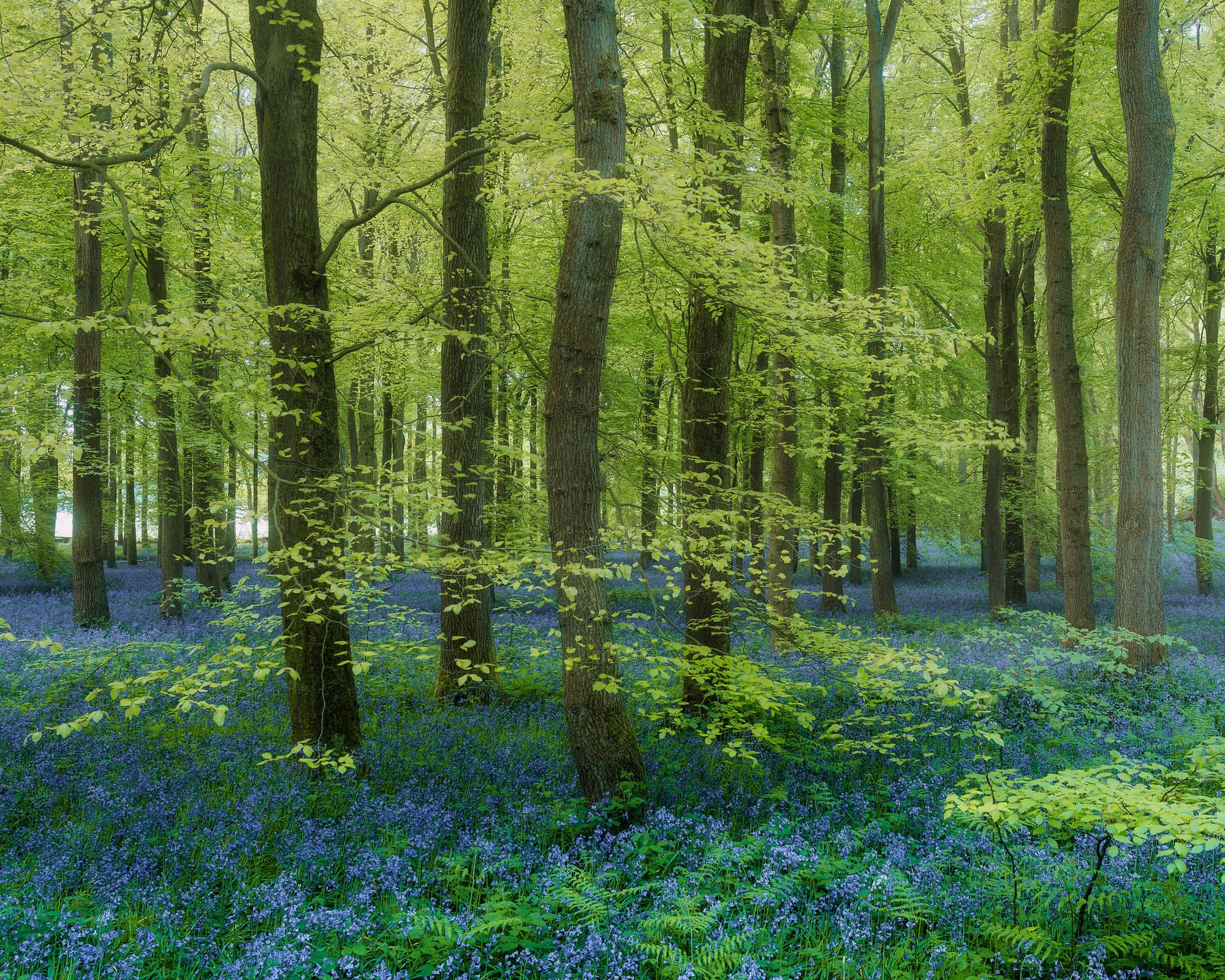
Working somewhere between 35mm and 85mm on a full-frame camera will serve you far better in most bluebell woodland situations. This range allows you to compress the scene slightly, to select a portion of the woodland rather than trying to include all of it, and to create images that feel like a place you could actually stand in rather than a record of somewhere you once visited.
On a crop sensor camera, the equivalent range is approximately 24mm to 55mm. The principle is the same: resist the urge to go wide, and instead look for the part of the scene that interests you most.
This does not mean a wide-angle lens has no place in woodland photography. There are situations where it works: a strong foreground subject very close to the lens, or a dramatic canopy viewed from directly below. But these are specific compositional choices, not defaults. Leave the wide-angle in the bag until you have a reason to reach for it.
What Happens When You Get the Light Wrong
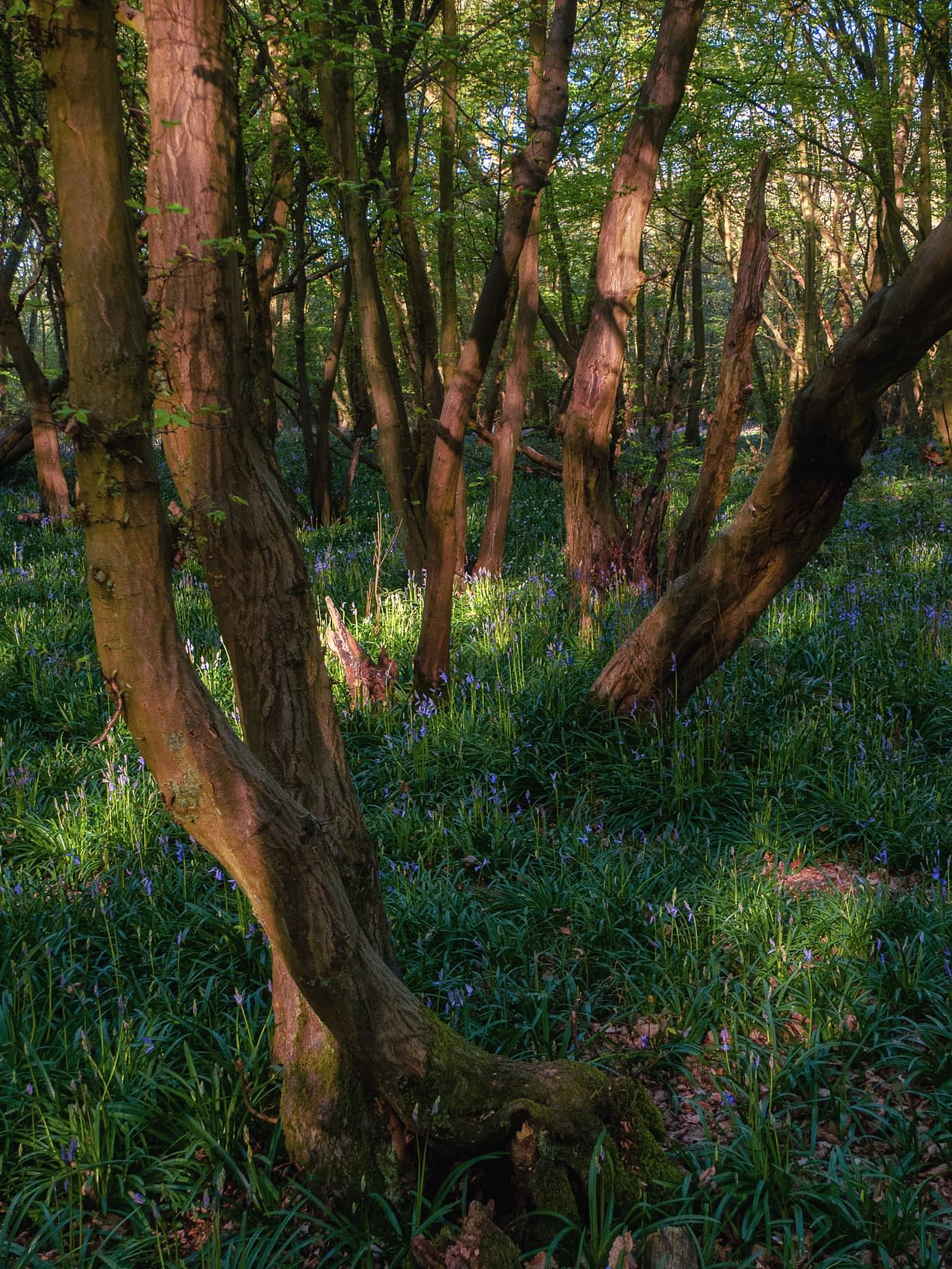
There is a version of this mistake that most photographers make at least once. You have driven to a beautiful bluebell wood, the sun is out, the sky is blue, and everything looks perfect. You set up a wide shot to capture the full scene, and something is not right. The highlights on the bright patches of sky showing through the canopy are blown. The shadows under the densest trees are blocked. The image feels chaotic, busy, and flat all at once.
I know this version well because I have lived it. I turned up at a bluebell wood in the middle of the day in bright sunshine, full of enthusiasm, and spent a frustrating hour trying to make the wide scene work. The contrast was unmanageable. The woodland floor is already a complex tangle of stems, leaves, and shadow even in soft light. Add direct overhead sun and it becomes something close to visual chaos: too many bright patches and too many blocked shadows, scattered randomly across the frame in a way that no amount of processing can fully resolve.
Why post-processing will not save it
The temptation at this point is to reach for HDR, or to push the shadows and pull the highlights in editing. Neither approach works well in this situation. The problem is not simply the difference between the brightest and darkest parts of the scene; it is the randomness of where those tones fall. HDR may control the range, but the result still feels chaotic because the highlights and shadows are distributed throughout the frame without any logic or structure. The chaos remains, just at a lower contrast. You can read more on why I rarely use HDR techniques here.
What to do instead
On that particular visit, I stopped trying to make the wide scene work and started looking for something else. I found a single white bluebell growing amongst the blue and violet of the main display. I used my umbrella to shade it from the direct sun, effectively creating a simple softbox, and made a series of close, intimate images of that one flower. They were not the images I had planned to make that day, but they were far better than anything the wide scene would have given me in those conditions.
The lesson is straightforward: when the conditions work against you, change your subject rather than fight the light. A bright midday sun is not the end of a shoot. It is an instruction to look closer.
Finding Your Own Way In
Hertfordshire is not the first county that comes to mind when people think about bluebell photography. The Peak District gets the attention, or the ancient beech woods of the Chilterns just over the county border. But the woods on this list are genuinely beautiful, and several of them I would put up against anything I have visited elsewhere in the country.
The window is short. If you are reading this in late April, the time to go is now, not next weekend. But if you have missed the peak, do not be discouraged. Go anyway. There is always something to find if you are prepared to look past the obvious.
Take a standard zoom. Get there early. Pay attention to the light, and when the light is wrong, change your subject rather than fight it. The woods will do the rest.

Frequently Asked Questions
When is the best time to see bluebells in Hertfordshire?
Late April to early May is the peak period in most years. By the end of the first week of May the display is usually beginning to fade. A warm spring can bring the peak forward; a cold one pushes it back. Watching for the fresh green canopy filling in overhead is a reliable indicator that conditions are close to perfect.
Is Dockey Wood free to visit?
Dockey Wood is a part of the Ashridge Estate, which is managed by the National Trust. It often charges for access during the bluebell season at peak times - and not just for parking. It is worth checking the National Trust website before you visit to find out the current arrangements.
What lens should I use for bluebell photography?
A standard zoom is a better starting point than a wide-angle. On a full-frame camera, work between 35mm and 85mm. On a crop sensor, the equivalent is approximately 24mm to 55mm. Resist the urge to go wide: woodland is already a visually complex environment, and a wide-angle lens tends to make it more chaotic rather than more beautiful. By all means, pack your wide-angle, but you really need a strong foreground to make a successful wide-angle image amongst the bluebells.
Are the bluebells at Heartwood Forest worth visiting?
Yes, particularly Langley Wood, which is the best of the five ancient woods within the Heartwood Forest site. Head to the far side of the circular walk for the tall hornbeam compositions, and visit in the morning when the light comes from the east. It is managed by the Woodland Trust and is free to access at all times.
What should I do if I arrive and the light is harsh?
Stop trying to make the wide scene work and look for something smaller. Close-ups of individual flowers, details of fresh ferns, intimate studies of a single stem: these subjects suit harsh light far better than landscape-scale shots. A basic umbrella used as a makeshift shade can also help if you have a specific subject in mind.
Are bluebells protected by law?
Yes. English bluebells are protected under the Wildlife and Countryside Act 1981. It is illegal to wilfully damage, pick, or uproot them. In practical terms, this means staying on paths and tracks rather than stepping into the display for a photograph. Stepping on bluebells can damage them for many years, too - in one woodland I visit regularly, I was speaking to the site manager about the bluebells and they'd lost more than two acres of bluebells as a result of people straying from the paths and trampling bluebells.
The good news is that you shouldn't need to: the best compositions are usually made from the path, with a longer focal length doing the selective work for you. If you can't get to the image you want, move on as there will be another opportunity around the corner.
What time of day is best for bluebell photography?
Early morning is the most reliable time. The light is softer, the woods are quieter, and at certain locations, particularly those facing east, the low sun creates backlit conditions that are difficult to replicate at any other time of day. Overcast mornings and rainy days are also excellent: cloud cover and rain acts as a natural diffuser, giving you even light across the scene without the contrast problems that come with direct sun. Also, the general public tends not to visit when the weather is 'bad', so there's less chance of people being in your photos!
Is it worth visiting bluebell woods if it has been raining?
Yes, often more so than on a dry sunny day. A wet woodland has a quality to it that is genuinely worth seeking out. The colours are deeper, the greens are richer, and the damp air holds everything together in a way that feels cohesive rather than harsh. A circular polariser is useful here for managing reflections on wet leaves and deepening the colours further. In fact, if you have appropriate clothing and camera protection, going out in the rain itself is worth considering. A golf cart umbrella holder mounted to your tripod is one of the most useful tools for extending the time you can work in wet conditions. For more on this approach, see: https://www.timsmalley.co.uk/blog/woodland-photography-in-the-rain/
Can I photograph bluebells with a smartphone
You can, and modern smartphones are capable enough to produce a decent record of a scene. The limitation is the lens: most smartphone cameras default to a wide-angle equivalent, which tends to spread the bluebell carpet out and reduce its impact. If your phone has a 2x, 3x or greater optical zoom option, use it. The compressed perspective will give you something much closer to what you actually see standing there.
