Woodland photography location guide · Hertfordshire
Ashridge Estate.
Ancient pollards at Frithsden, bluebells at Dockey, and the estate I photographed almost every week for eleven years.
Updated on 6 July 2026
Ashridge Estate at a glance.
County Hertfordshire, in the Chiltern Hills above Berkhamsted
Best for Ancient beech pollards at Frithsden, bluebells at Dockey Wood, fog and snow
Access Open access on foot. Main car park locked 10pm to 6am; smaller car parks around the edges are ungated
Nearest Station Tring, 1.75 miles away with a footpath to the estate
Size and type 5,000 acres of woodland, commons and chalk downland, the largest woodland in National Trust care, with more than 900 recorded ancient and veteran trees. SSSI and part of the Chiltern Beechwoods Special Area of Conservation
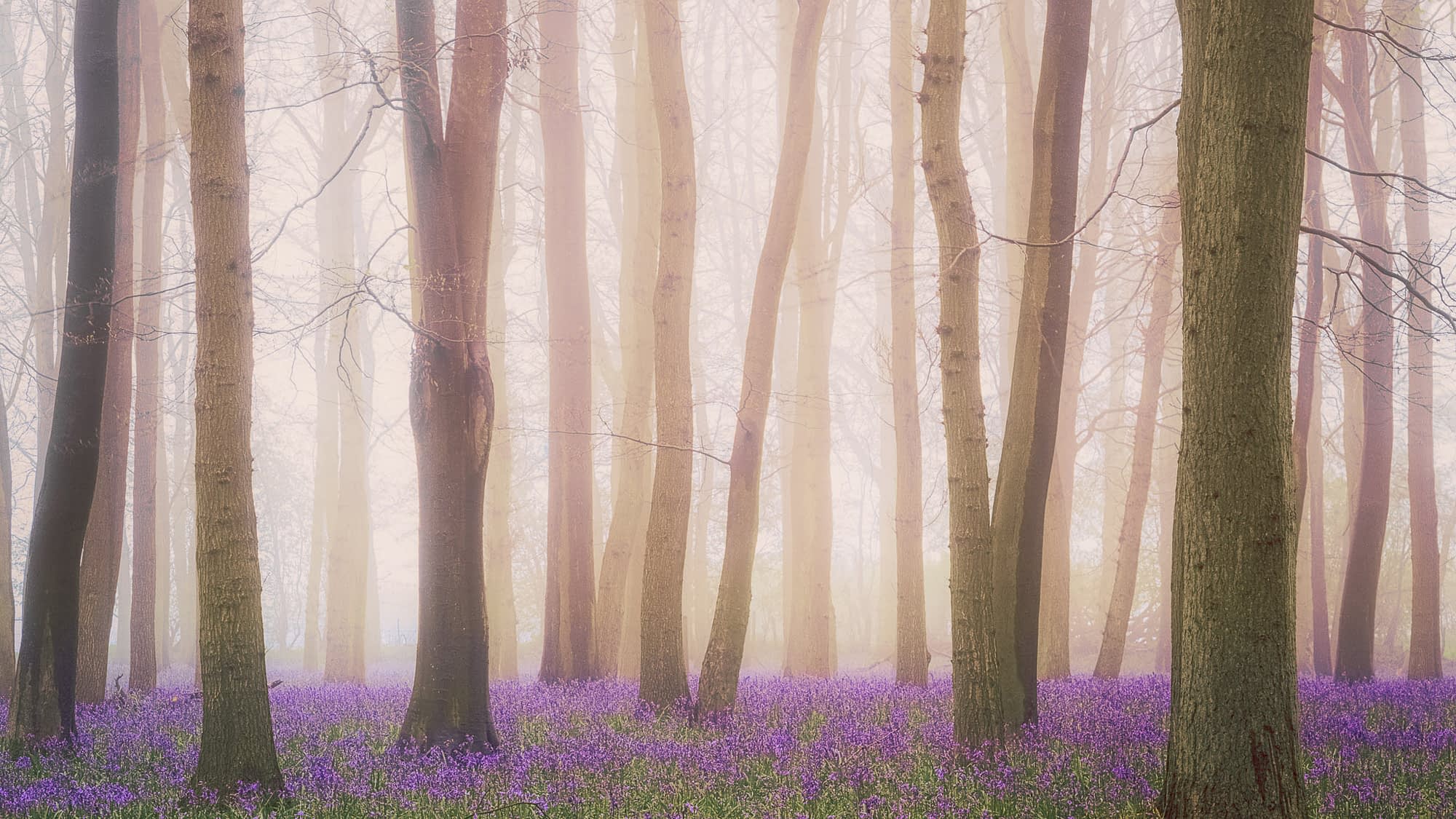
Peak season Bluebells roughly 20 April to 7 May; autumn colour last week of October into the first week of November
Parking Free across the estate. Monument Drive, HP4 1LT; for Dockey Wood use HP4 1NF on Beacon Road
More than 11 years of weekly visits
The wood itself.
It took me eighteen months to make a photograph at Ashridge that I still stand behind. I was learning woodland photography, visiting almost every week, and the wood gave me nothing worth keeping. Then, one morning in Sallow Copse, the fog began to burn and rays broke through the pines. The frame I made is still in my portfolio today.
Ashridge taught me woodland photography. I photographed it almost every week for eleven years; these last five or six it has been a few visits a year, and the knowledge has not expired.
People grazed these commons for centuries, and the beeches at Frithsden were pollarded, cropped above the reach of browsing animals, until the cutting stopped around 200 years ago. The twisted giants standing there now are the direct result: a lapsed wood pasture, a remnant of the medieval Chilterns. A monastic college stood on the estate from the 13th century and Ashridge House followed, but the history that matters to a photographer is written in the trees. If wood pasture and ancient trees are new ideas, start with what ancient woodland actually is.
The Bridgewater Monument, raised in 1832, is the landmark the main drive takes its name from, and the National Trust cares for the whole estate today.
From this wood
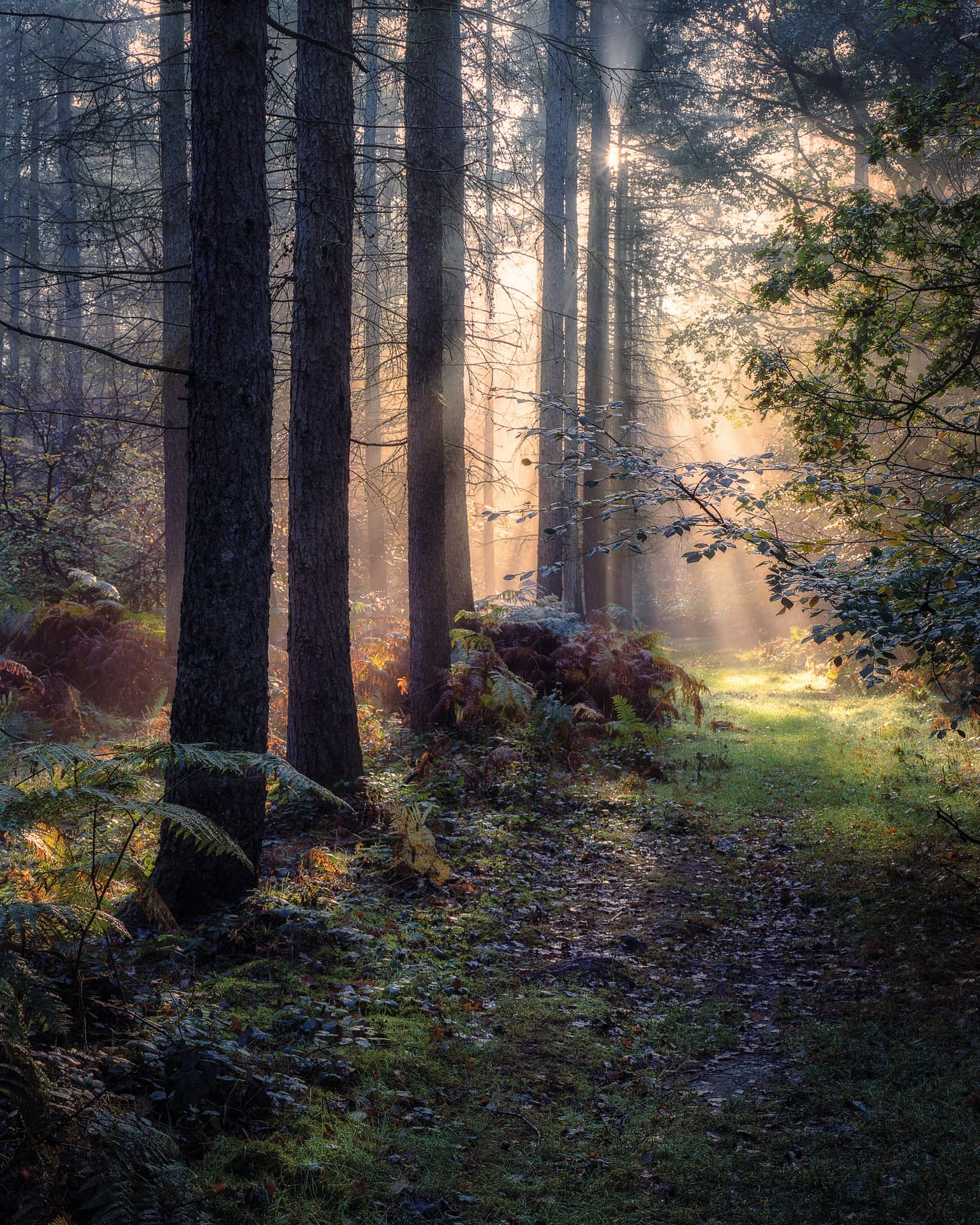
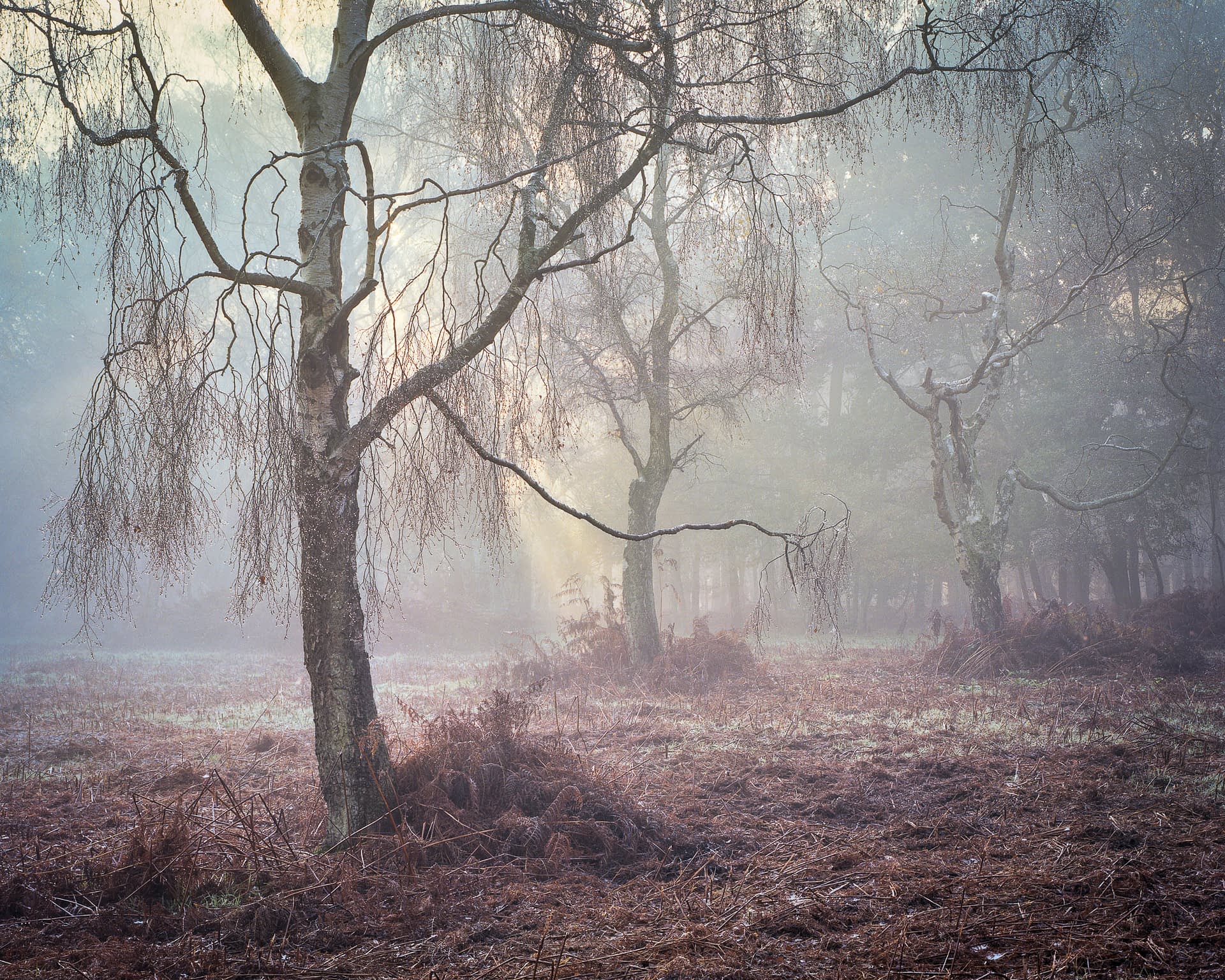
Eighteen months of weekly visits before this frame. The fog burned through the pines in Sallow Copse and it is still in my portfolio today.
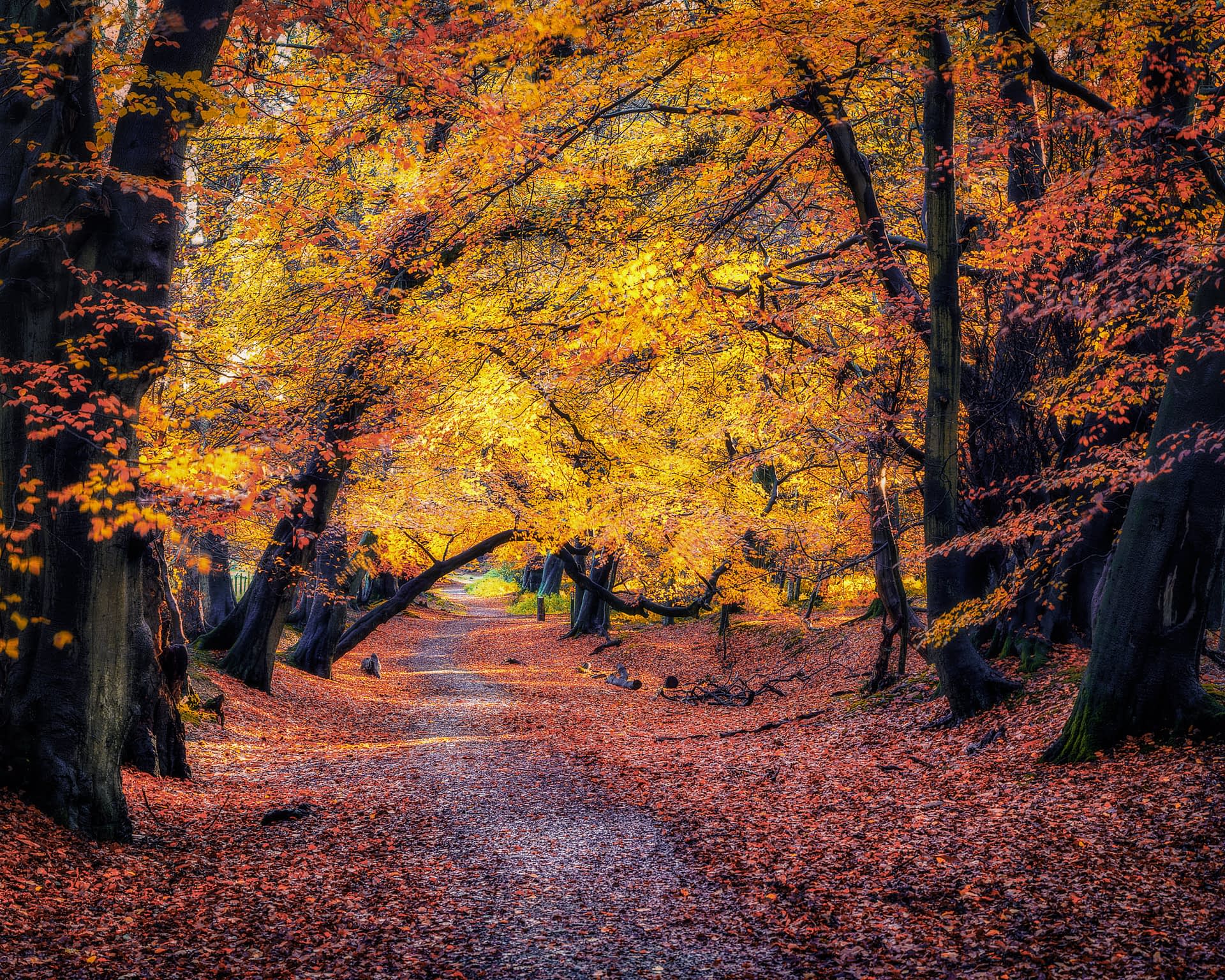
Peak colour lands in the last week of October and the first week of November, led by the beeches.
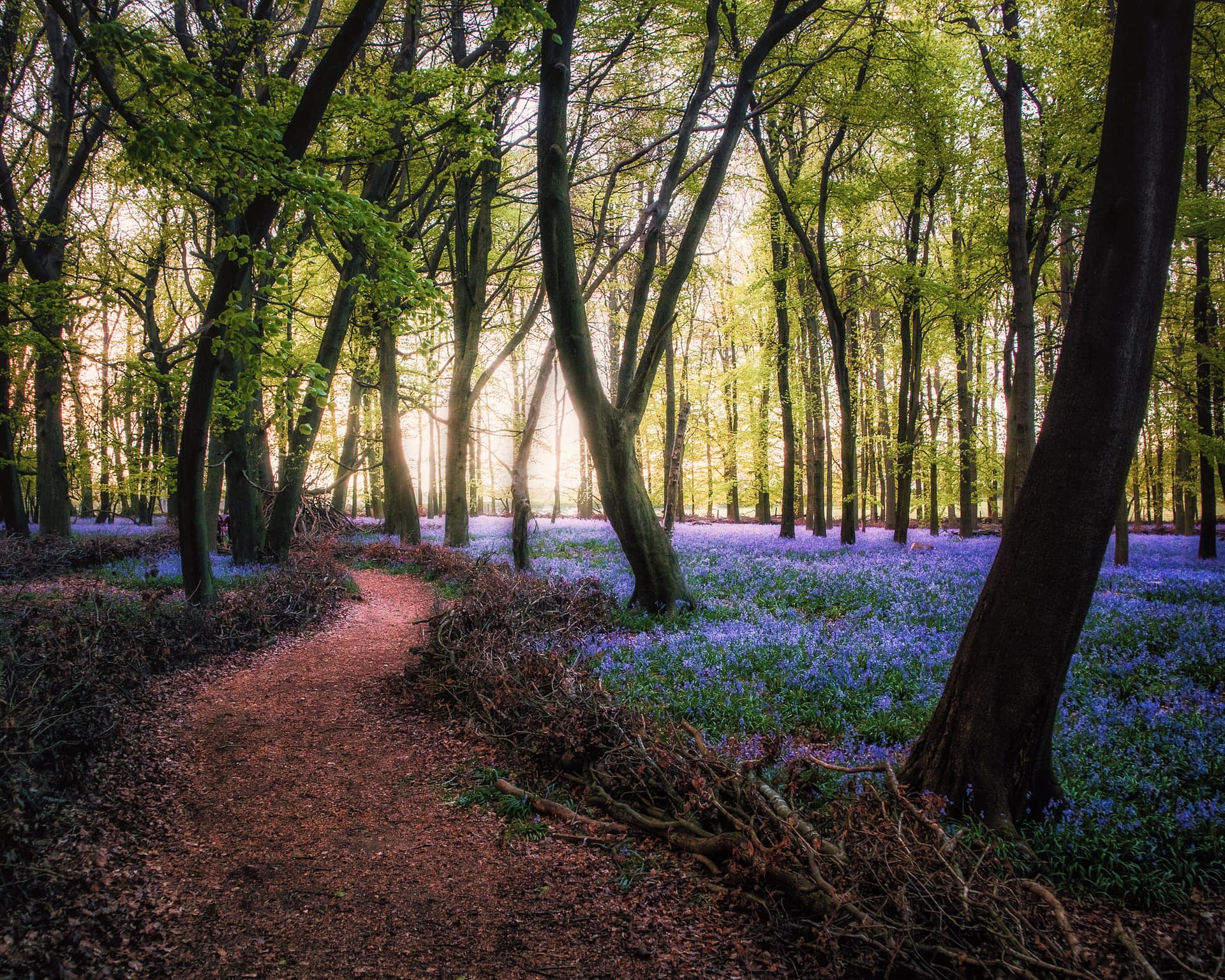
The paths confine you at Dockey, so let them compose for you. Between 35 and 70mm is the range that earns its keep.
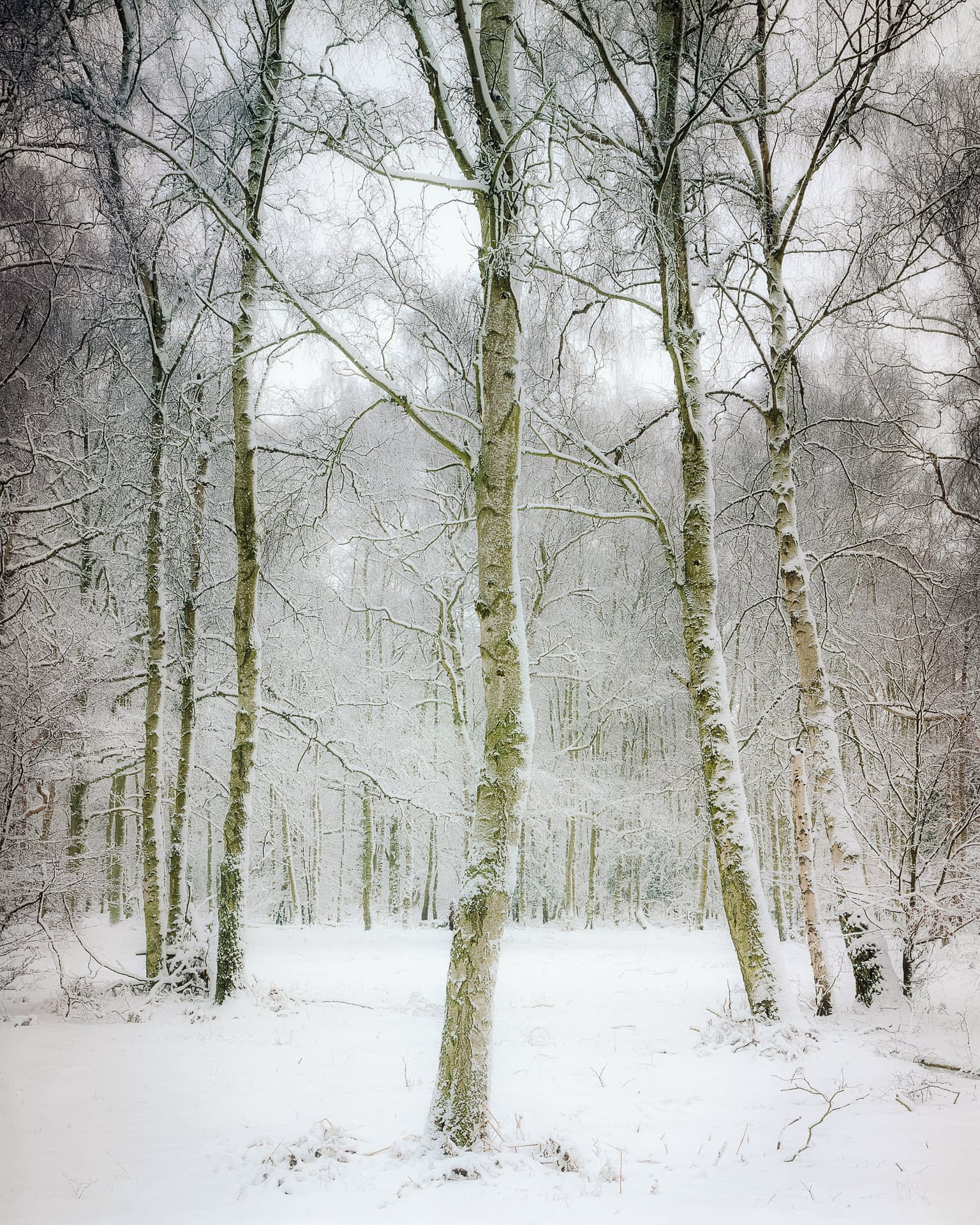
Snow is amazing here, and the hilltop position filters out the crowds. A white Ashridge is often yours alone.
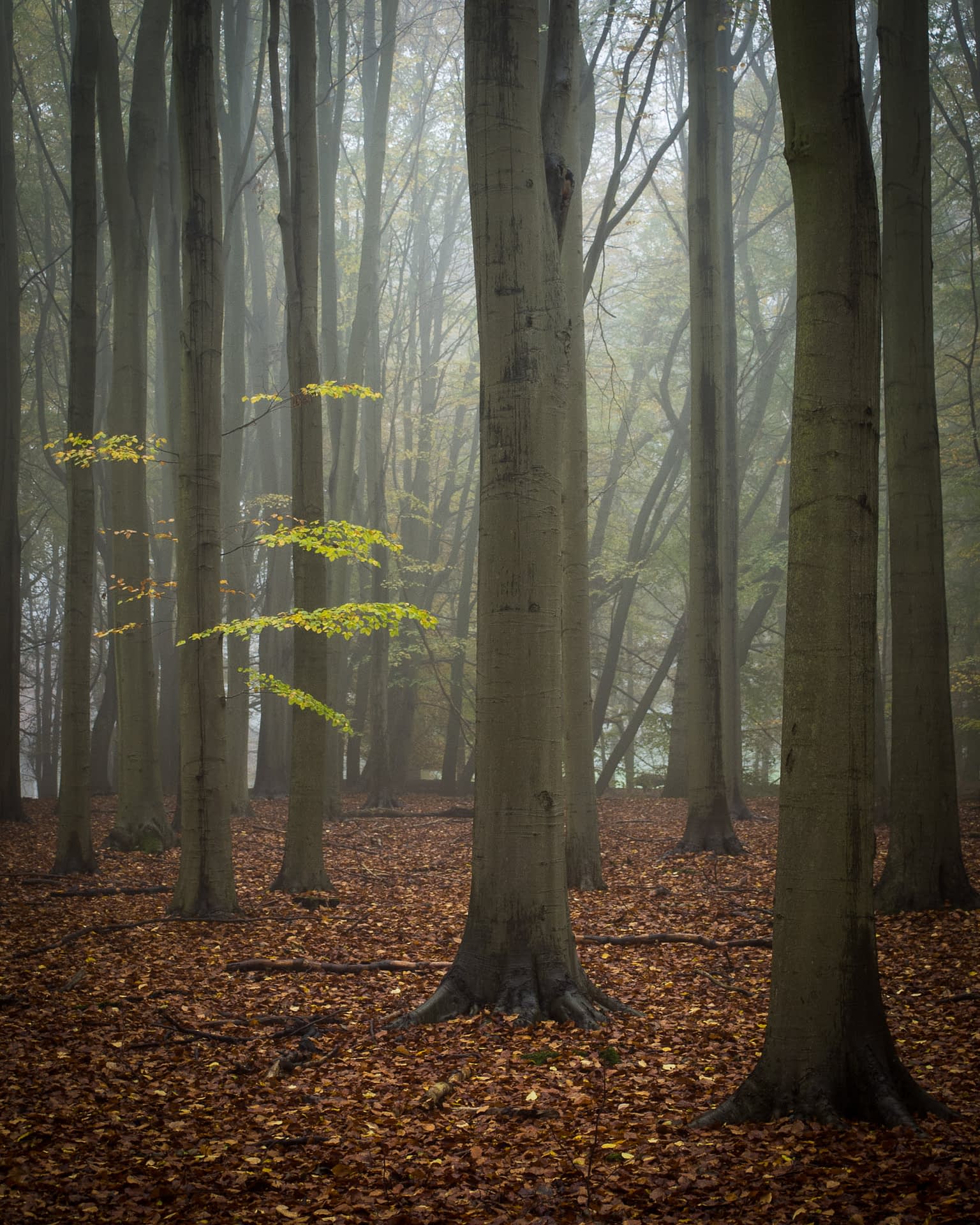
Fog is excellent here, and low cloud and rain often give you the same conditions or better.
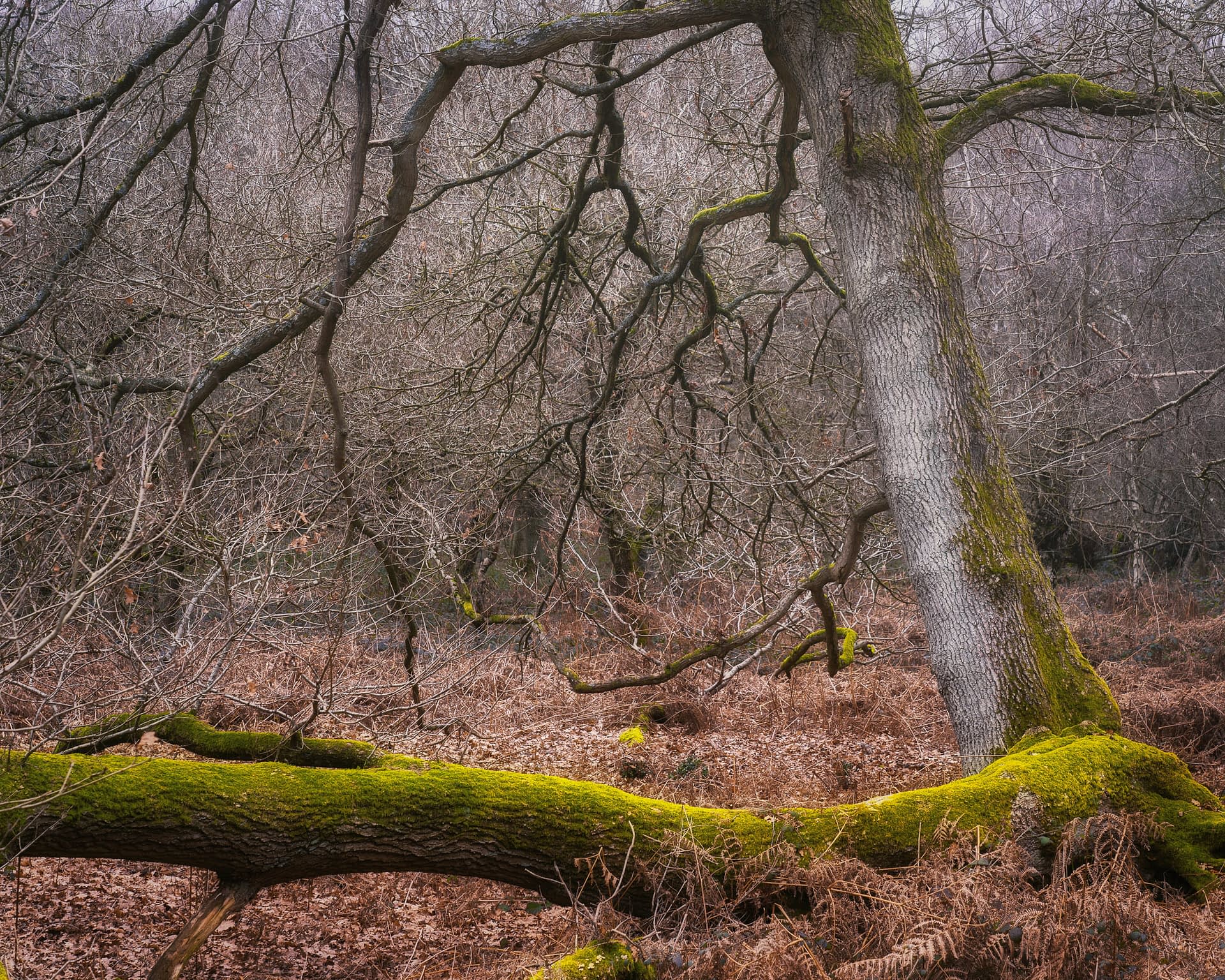
Walk all the way around a pollard before you settle. When you have run out of reasons not to press the shutter, that is your image.
Before you go
Visiting and shooting.
Getting there and parking.
Parking is free across the whole estate, and that is only half of the best thing about it. Car parks ring the entire site, most of them unnamed on the estate map, and there are so many that you can reach almost any part of the 5,000 acres within a 15 to 20 minute walk. The main car park sits on Monument Drive off the B4506, sat nav HP4 1LT. For Dockey Wood, use HP4 1NF: a few hundred metres along Beacon Road after leaving Ringshall, the car park is on the left with the wood opposite on the right.
The exceptions to free parking are some event days and Dockey Wood in bluebell season, covered below.
The Monument Drive car park is locked between 10pm and 6am, which covers first light for most of the year. For midsummer dawns, the smaller car parks around the edges of the estate are ungated, and parking for a dawn start has never once been a problem for me.
Without a car, Ashridge is the easiest wood in this series to reach: Tring station is 1.75 miles away with a footpath running to the estate, and the 378 bus stops in Aldbury, half a mile below the Monument.
Access and restrictions.
Dogs are welcome with the usual caveats: clean up, leads where asked, and never let them near the deer. The fallow herd is part of the estate's character, and in the autumn rut you give the deer proper distance. Drones are banned under National Trust byelaws, and this is SSSI ancient woodland, so a permit would be required in any case.
Bikes and horses have a good bridleway network, but much of the path network is for walking only. Some of the veteran trees are ringed by fencing or dead hedges to protect their roots from compaction; treat the barriers as part of the deal, the way you would a fence around any elder.
Dockey Wood carries an entry charge during peak hours of the bluebell season, around £4 per person this year. Arrive at first light and you will be walking out again before the charge point is staffed, which is also simply the best time to be there.
The visitor centre and cafe by the Monument open 10am to 5pm. The Bridgewater Monument itself opens at weekends from April to October, £3 for non-members, 172 steps to a view over the whole estate.
Best conditions and timing.
Fog is excellent here, and low cloud and rain often create the same conditions or better. When the fog burns off, you get crepuscular rays, and that combination made my first portfolio image at Ashridge. I have written about why woodland photography works in the rain; Ashridge is firmly on that list.
Snow is a lot of fun here, and the estate sits on top of a hill, so not many people make the effort to get out in it. You often have a white Ashridge to yourself.
Golden morning and evening light works too. And I carry an umbrella at Ashridge for a reason: it lets me shoot intimate landscapes on even the sunniest of days. The principle is the one I use everywhere: just go, worry about the subjects when you arrive, and fit them to the light you are given.
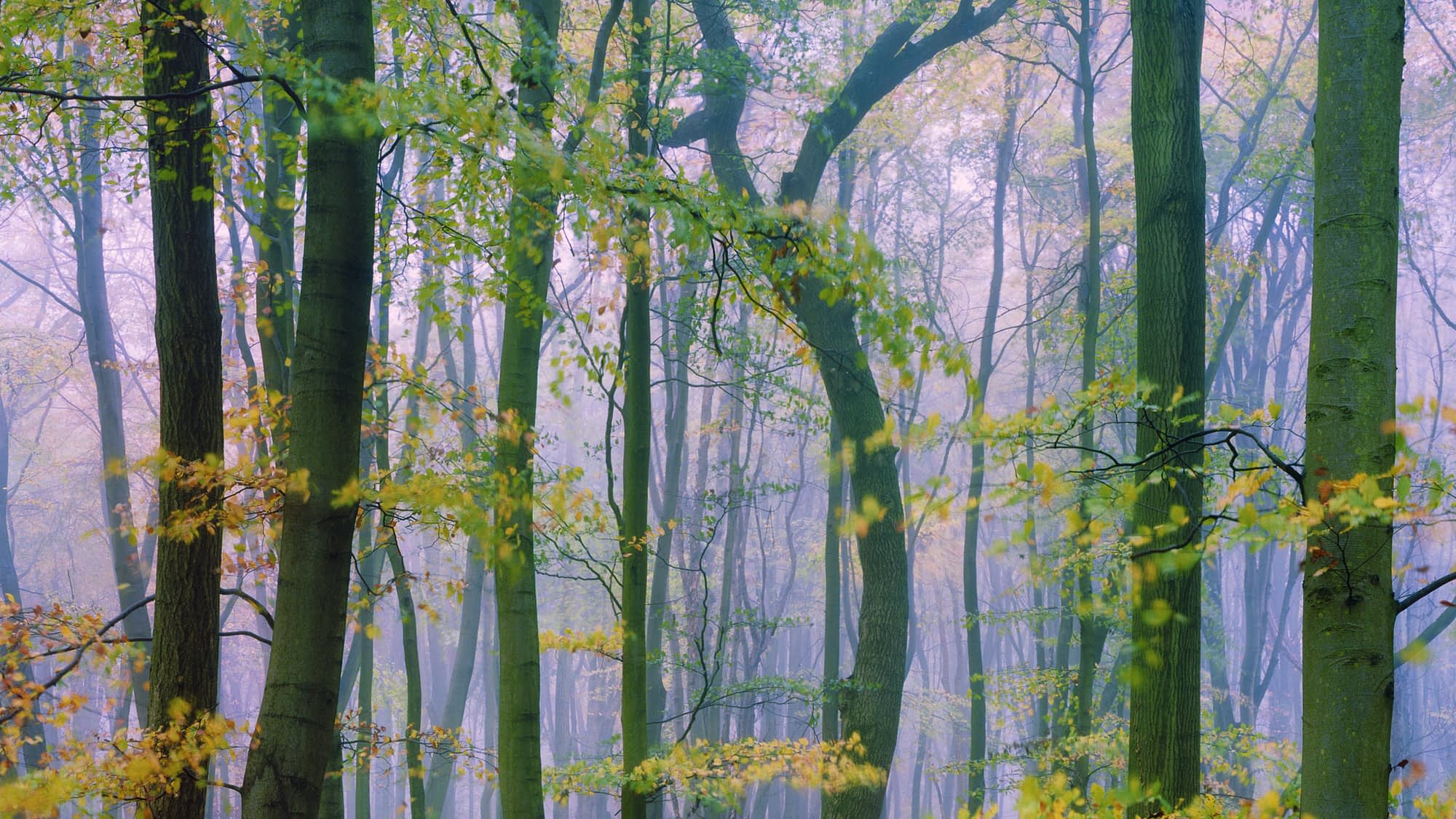
Low cloud doing fog's job. The conditions most people stay home from are the ones this estate is best in.
Subjects and compositions
What to photograph.
The Frithsden pollards first: twisted, hollowed, and unlike anything else in Hertfordshire. Walk all the way around a pollard before you settle; never take the first view you meet. My habit is to keep looking for excuses not to press the shutter, and when I have run out of reasons, that is my image. The fencing around the most vulnerable trees is part of their story rather than a flaw in it.
With the silver birches I look for relationships between trees rather than individuals, unless one tree is genuinely singular. Pairs and small groups, how they lean and answer one another, carry more than a lone trunk.
At Dockey the footpaths confine you, so the working range that earns its keep is roughly 35 to 70mm: sometimes longer, rarely much wider. For the intimate frames I am either working the relationships between small groups of trees or, with a macro lens, individual flowers.
Beyond those, the range: dense high woodland, open wood pasture, conifer blocks and chalk down within one walk, with characterful trees everywhere, not just at the famous sites. The Bridgewater Monument makes an honest secondary subject in wider landscape frames, and the fallow deer will find their way into your mornings whether you plan for them or not.
Golden Valley, Capability Brown's landscaping, is worth a visit but I find it one dimensional for woodland photography. See it on your way to somewhere else. It is best in morning light, in autumn.
Identification and character
Tree species.
Beech. The estate's signature, from the ancient lapsed pollards at Frithsden to the towering high-wood stands elsewhere. Autumn belongs to them, but there is good year-round colour.
Silver birch. Most abundant around Ivinghoe Common, with more across Berkhamsted Common: pale trunks that separate cleanly from everything behind them. There are even some ancient and veteran silver birches spread across the estate.
Oak and sweet chestnut. Mature specimens throughout the estate, but with large concentrations around Sallow Copse and Berkhamsted Common, carrying texture and character where the beeches carry form.
Sycamore and conifer. Sallow Copse includes areas of PAWS, plantation on ancient woodland site, where planted conifers stand over the old wood. Different subjects, and honestly worth your time: my first keeper here was made among the pines.
Holly. Year-round green in the understorey, and berries in winter.
Timing
Seasonal highlights.
Spring. Bluebells run from around the 20th of April to the 7th of May, which is typical across Hertfordshire's bluebell woods. Dockey Wood is the destination carpet, and the commons carry good bluebells too, with a fraction of the visitors. Bluebells in fog is the estate's unicorn: I have seen it two or three times in all my years of visiting. The first time, I was leading a group workshop, and I do not carry my own equipment on group days because my job is the participants' images, not mine. So the conditions I had waited years for played out in front of me while I held a scrapbook camera. A year later, almost to the day, the same conditions returned on a morning with no workshop, and that time I made the images.
Summer. The green months. This is when the umbrella habit earns its keep: intimate frames in the shade while everyone else waits for golden hour.
Autumn. Peak autumn colour lands in the last week of October and the first week of November. The reality is that the shooting window for autumn lasts much longer than that, with fog and mist common in September, October and November.
Winter. Snow is amazing here, and the hilltop position quietly filters out the crowds. One of my favourite winter frames anywhere was made at Ashridge as a snowstorm passed through, back when I was still shooting 4x5 film. Fog and low cloud are fairly common in the cold months. Hoar frost is the holy grail at Ashridge, just as it is at Burnham, and it is not common.
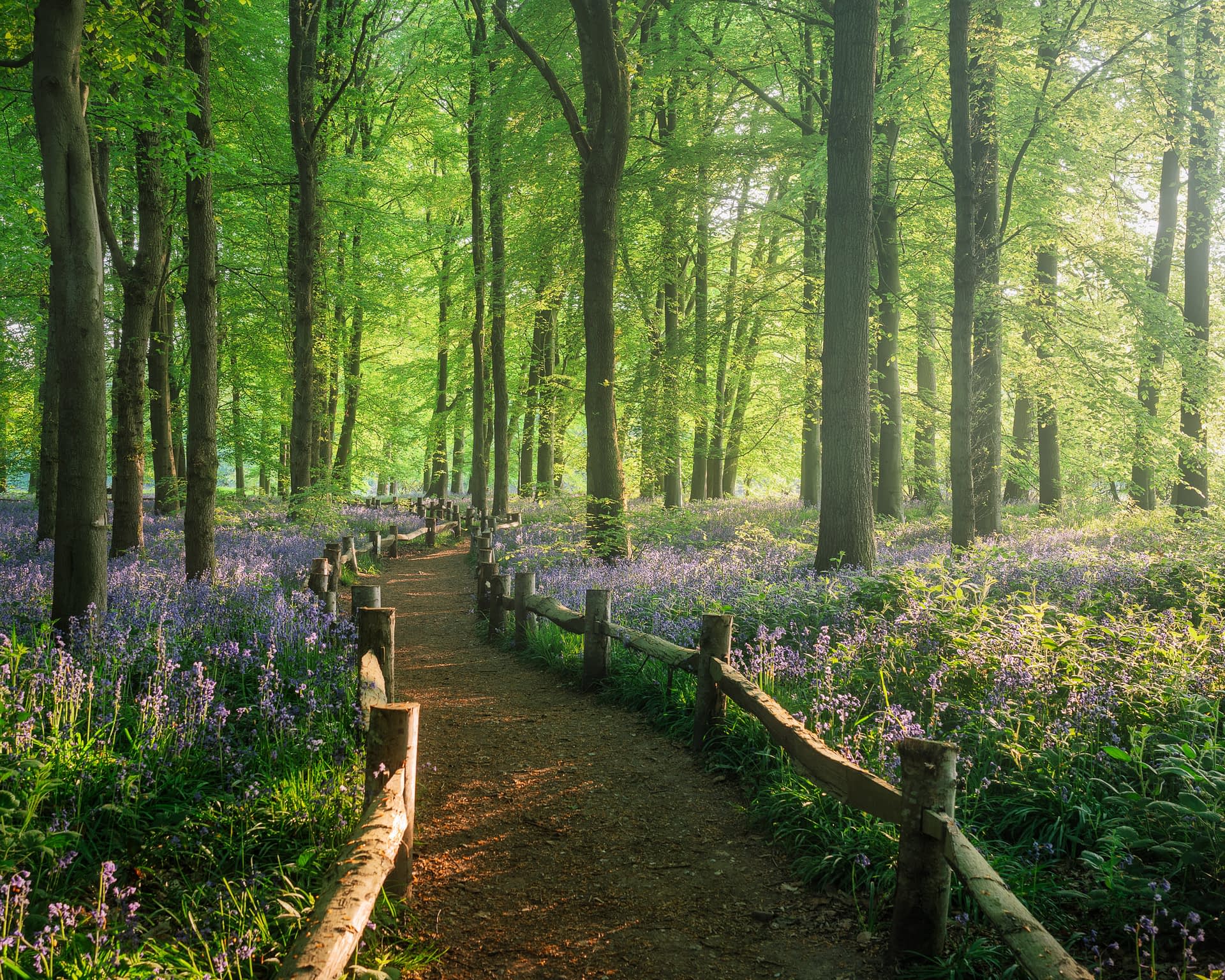
Spring
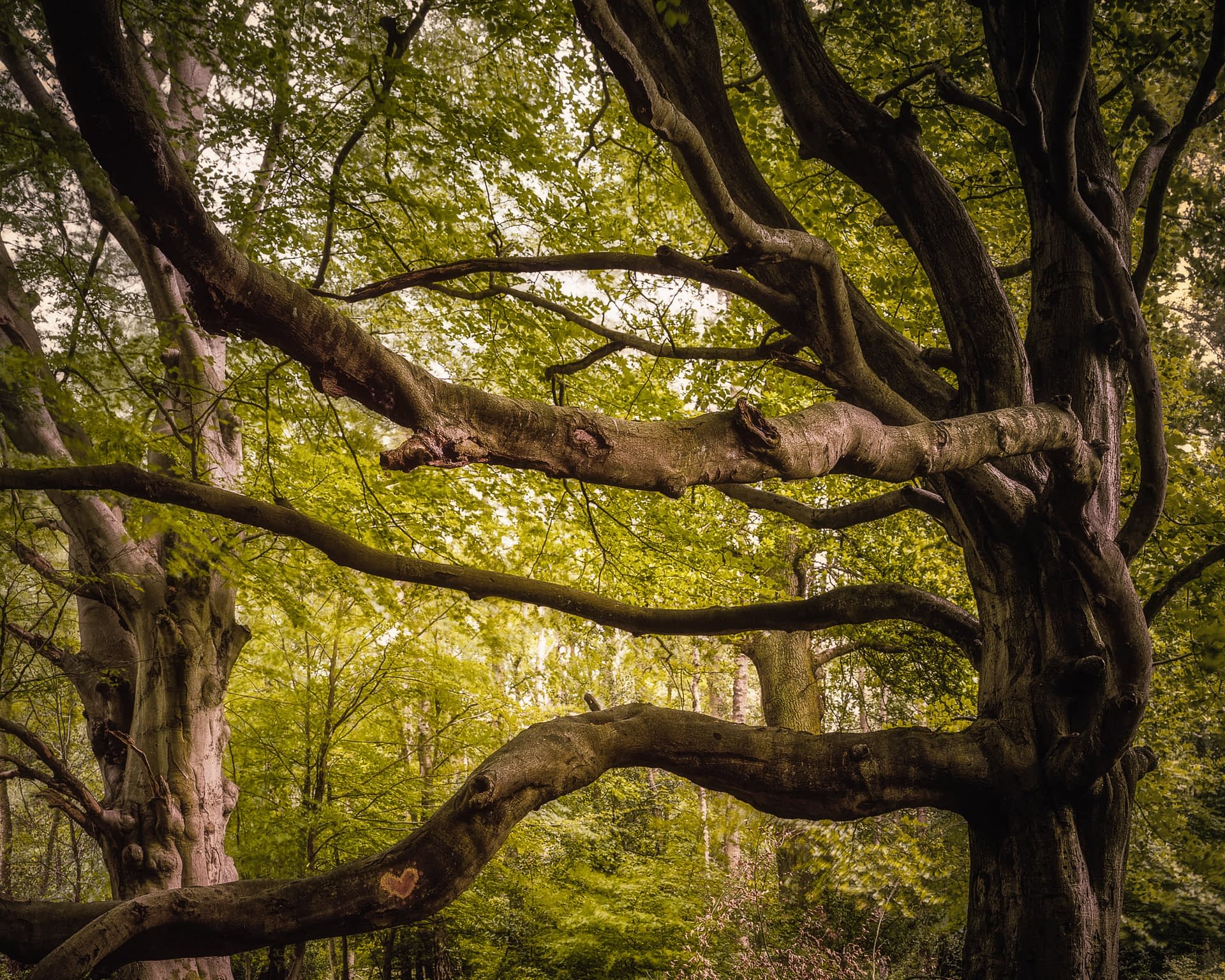
Summer
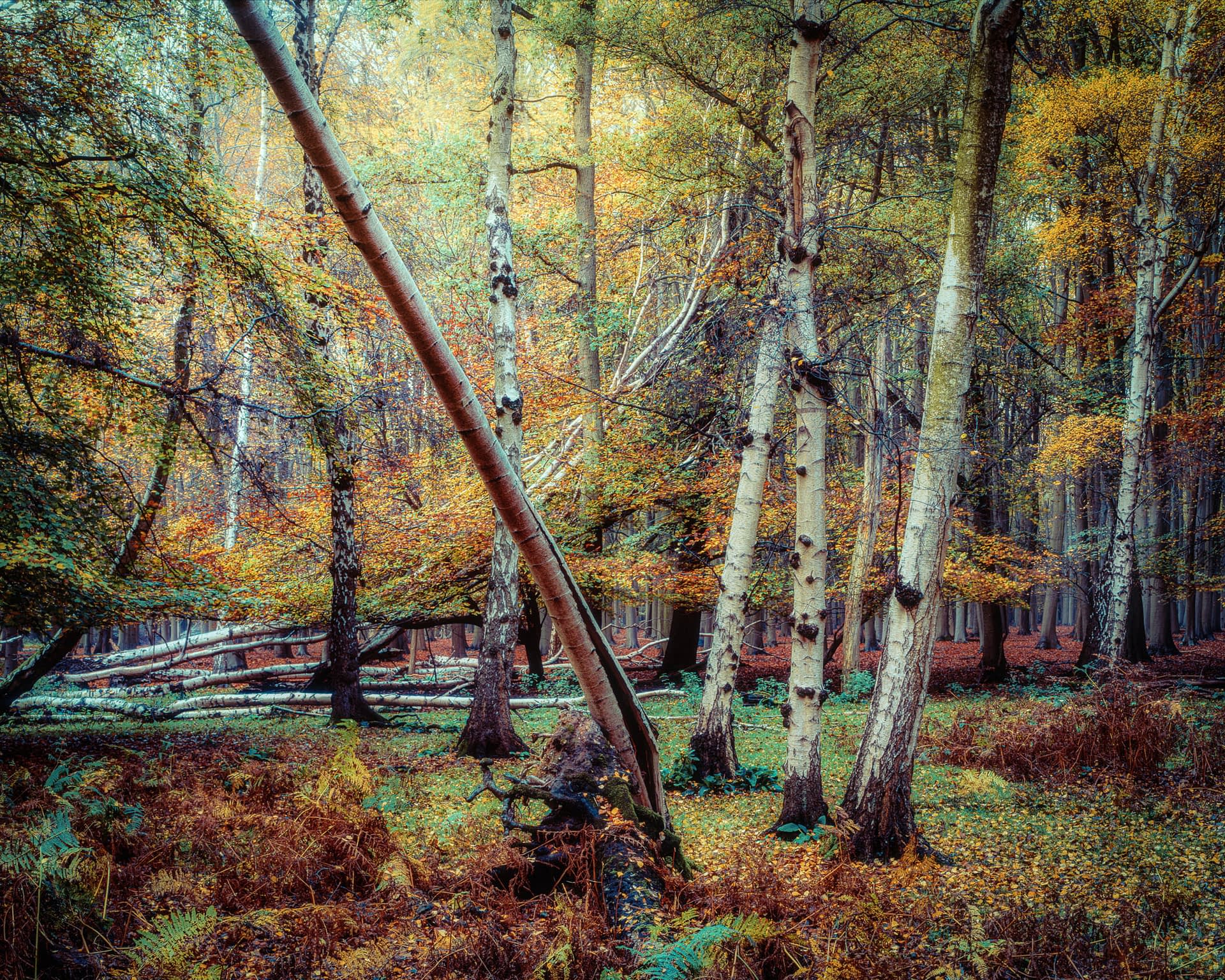
Autumn
Winter
Four ways in
Areas to explore.
Frithsden Beeches.
The ancient pollards, last cut around 200 years ago, standing in what remains of their wood pasture. Early morning or late afternoon light streams through the branches, and they look incredible in heavy rain or fog.
CREATIVE TIP
Save Frithsden for the weather. The early and late light works, but heavy rain and fog are when these trees are at their best, and you will often have them to yourself.
mindful moment
Circle one pollard slowly before you unpack anything. Two hundred years of growth looks different from every side.
Dockey Wood.
The famous bluebell carpet, roughly the 20th of April to the 7th of May. Go at first light or late in the evening: you avoid the daytime crowds, you precede the seasonal entry charge, and the light is better anyway.
CREATIVE TIP
Keep to the paths without exception; the flowers do not recover from feet. Work wider angles for the carpet, isolate groups of trees with a longer lens, and then go intimate for single stems against the trunks.
mindful moment
Look for the occasional white bluebell in among the violet bloom. There are only ever a few.
Ivinghoe Common.
A mix of beech, oak and silver birch, with the pale birch trunks standing in contrast to everything around them, especially in spring and summer. The common has its own bluebell fields, far less visited than Dockey's, and they make pictures you do not see online every April. In summer, the deadwood and the bracken carry the intimate compositions.
CREATIVE TIP
Experiment with monochrome here. The textures and contrasts of the birch stands suit it better than anywhere else on the estate.
mindful moment
Find one birch with its bark mid-peel and look closely. The tree is shedding its skin in paper.
Sallow Copse.
Dense woodland with a lot of characterful trees: a real mix of native species, sweet chestnut, oak and beech with some sycamore, plus a few areas of PAWS where conifers stand over the old wood. This is where the fog burned through the pines and gave me my first portfolio image, eighteen months into learning this craft.
CREATIVE TIP
Seek out the trees with their roots fully exposed. There are a few, and they are unlike anything else here.
mindful moment
The pines give Sallow Copse a scent nothing else on the estate has. Stop and notice it before you start looking for pictures.
Berkhamsted Common.
A mix of open commons, wood pasture and dense woodland, dominated by mature beech, oak, sweet chestnut and silver birch. The fallen and falling trees are the subjects I return to here. Walking away from the roadside car park, the sun rises on your right, which tells you where the first light will rake from. The structure changes every few hundred metres, which makes it the best single area for fitting subjects to whatever light you have.
CREATIVE TIP
Carry the subject-for-the-light principle with you here. Open pasture for golden light, dense wood for cloud and rain, birch for the flat days.
mindful moment
Stand with one of the fallen trees a while. Down is not the same as done.
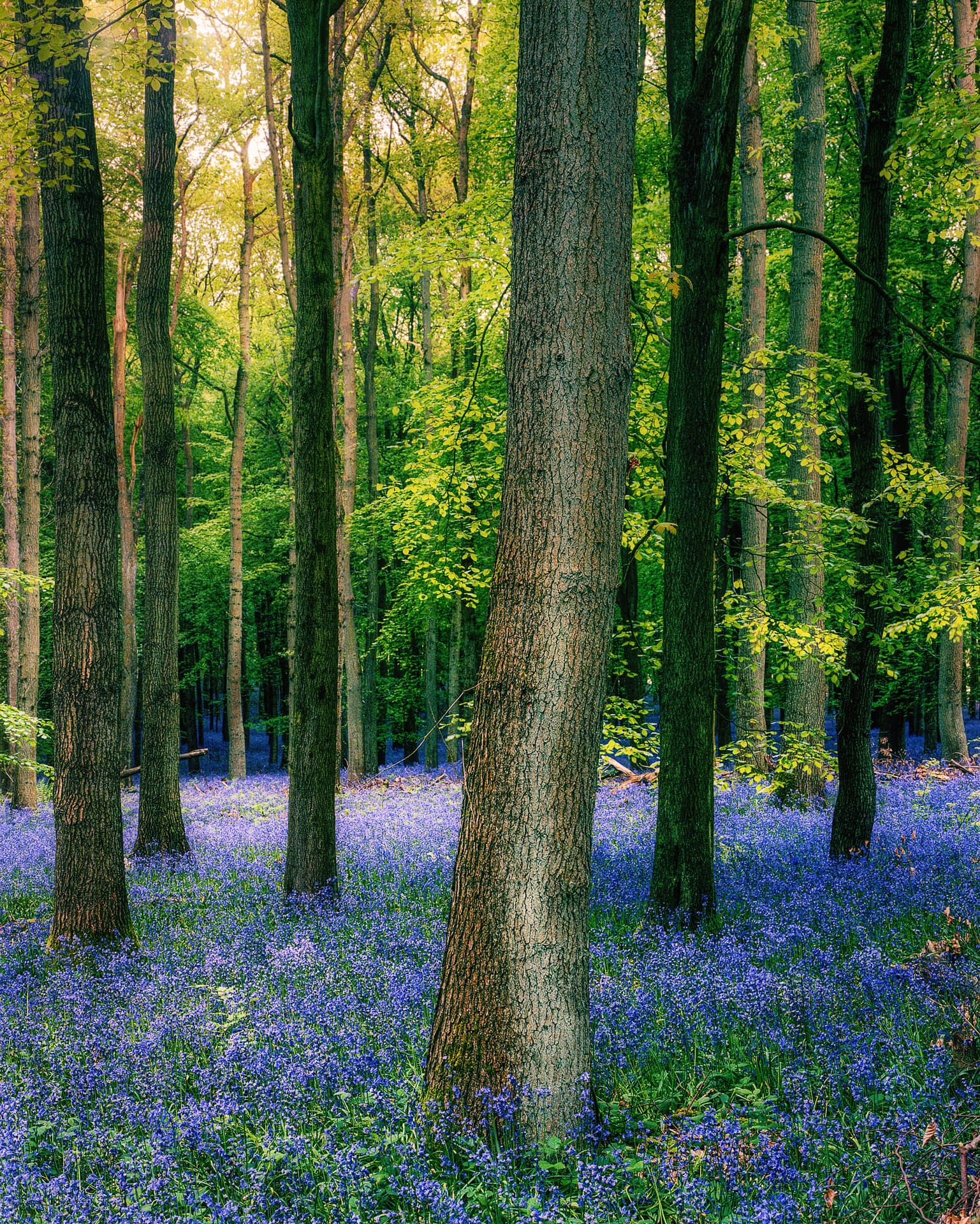
Ivinghoe Common's own bluebell fields, far less visited than Dockey's. Pictures you do not see online every April.
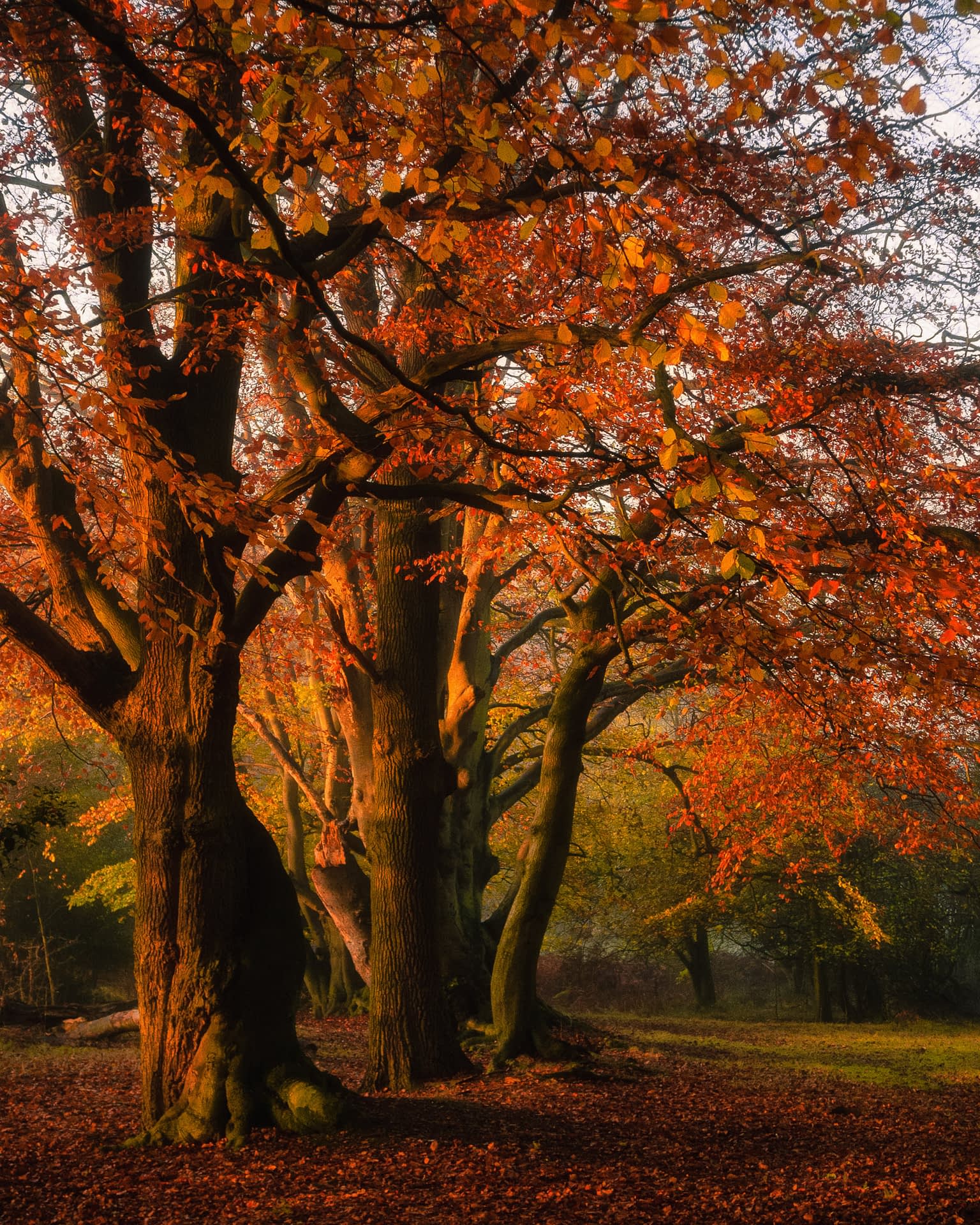
Berkhamsted Common, where the structure changes every few hundred metres. The mature beeches carry the autumn here.
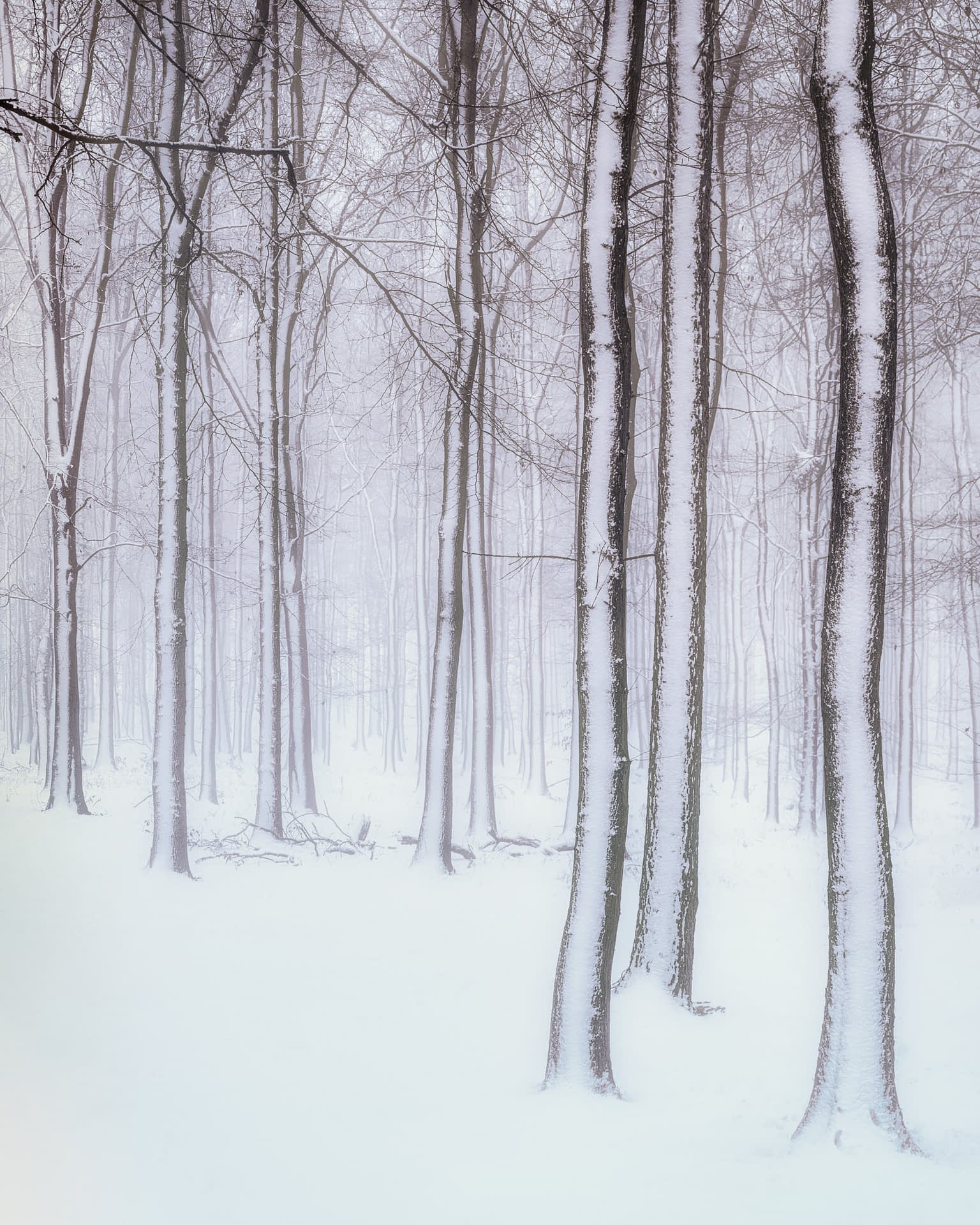
Dockey Wood without its bluebells. The famous fortnight is spring, but the wood is a subject all year, and snow empties it.
Final thoughts
Ashridge taught me woodland photography.
Eighteen months of weekly visits before a single keeper, then eleven years of them. These days I manage a few trips a year, and it turns out the wood keeps everything you learned in it. The car parks are still free, the gates still do not exist, and the pollards are still standing where the commoners left them.
For the other great collection of ancient beech pollards in this series, under a different steward, read my guide to Burnham Beeches. Every guide lives at the location guides index.
Before you visit
Common questions about Ashridge Estate.
Where do I park at Ashridge Estate?
Parking is free across the estate. The main car park is on Monument Drive, sat nav HP4 1LT, locked between 10pm and 6am. Dozens of smaller car parks ring the estate, most unnamed, so you are rarely more than a 15 to 20 minute walk from where you want to be. For Dockey Wood, use HP4 1NF on Beacon Road.
When are the bluebells at Ashridge, and does Dockey Wood charge?
Roughly the 20th of April to the 7th of May. Dockey Wood charges around £4 per person during peak hours of the bluebell season; arrive at first light and you will precede both the charge point and the crowds. The commons carry good bluebells too.
Can I get into Ashridge before sunrise?
Yes. The main car park opens at 6am, which covers first light for most of the year, and the smaller car parks around the estate edges are ungated for midsummer dawns.
When does autumn colour peak at Ashridge?
The last week of October and the first week of November, led by the beech trees.
Are dogs allowed at Ashridge Estate?
Yes, with the usual caveats: clean up after your dog, use leads where asked, and keep dogs well away from the fallow deer, especially during the autumn rut.
Previous Guide
Next Guide
Free composition guide
Learn how to tame the chaos in the woods.
Woodland is the hardest landscape to compose. This free guide gives you a practical way to cut through the visual mess and find the picture, in Hainault or any wood you walk into.