
There’s nothing more frustrating than reviewing a photo you were excited about, only to spot a distracting branch or bright patch of sky in the corner. It’s an easy mistake to make, especially in woodland photography, where scenes are often chaotic and every part of the frame matters.
That’s where edge patrol in woodland photography helps. This simple habit of checking the edges and corners of your frame before pressing the shutter can dramatically improve your woodland photography composition. It helps eliminate distractions, create cleaner lines, and guide the viewer’s eye through the image with more clarity.
If your forest photos often feel cluttered, unbalanced, or just not quite right, edge patrol might be the missing piece. It won’t slow you down. In fact, it will sharpen your awareness and make you more intentional behind the camera.
For a handy reference to take with you into the woods, download my free guide: Taming The Chaos: The Key to Better Woodland Photography Compositions. It’s a great companion for developing cleaner, more thoughtful compositions.
In this guide, you’ll learn what edge patrol is, why it matters in woodland photography, and how to build it into your process. Along the way, I’ll share examples from my own work and offer tips to help you take more deliberate, balanced images.
Table of Contents
What Is Edge Patrol in Woodland Photography and Why Does It Matter?
Edge patrol is the simple habit of checking the outer edges of your frame before pressing the shutter. That includes the corners, where distractions tend to creep in unnoticed. This final scan often happens just before taking the photo, but it can be one of the most important steps in producing a clean, intentional composition.
Woodland photography is particularly prone to edge distractions. The forest is full of complex visual information such as branches, leaves, shadows, trunks, and light holes. All of these can create unintentional clutter. Something as subtle as a bright patch of sky in the corner or a branch intersecting the edge of your frame can shift the balance of the image. Even if the main subject is strong, those edge details can pull the viewer’s eye in the wrong direction.
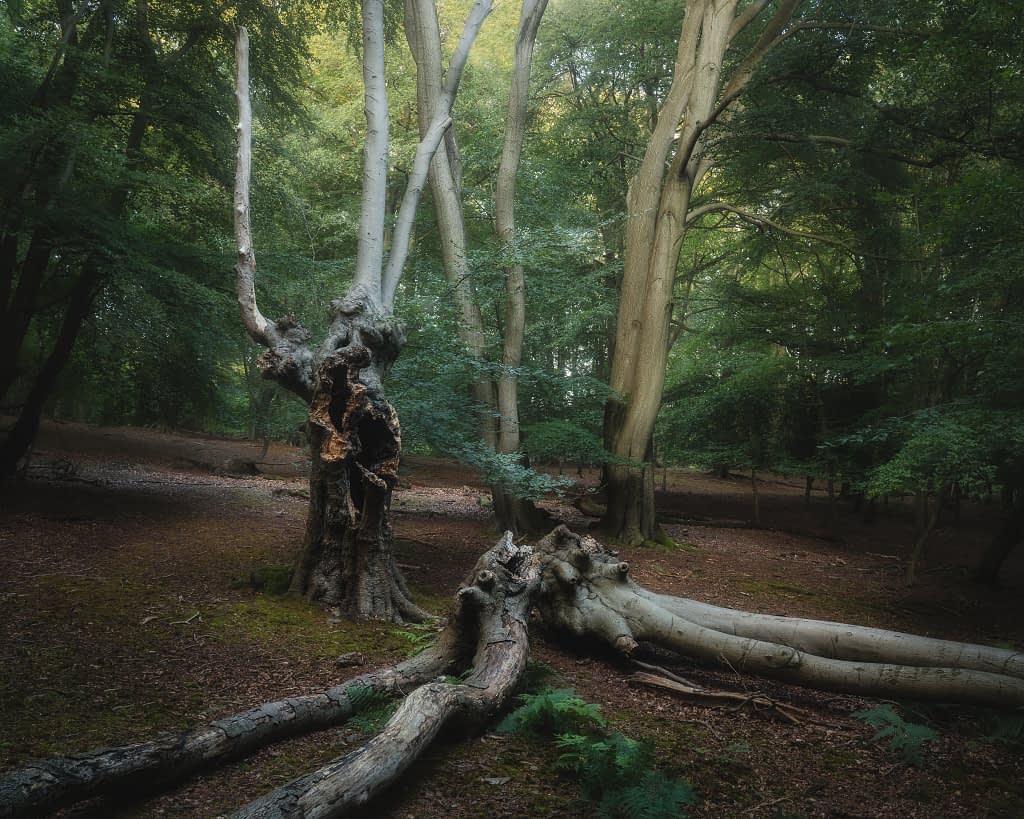
I learned this the hard way. One day I was photographing a beautifully backlit scene with soft, dappled light falling across the forest floor. The composition felt solid, and I was confident I had captured something special. But when reviewing the image later, I noticed a decaying branch near the bottom left corner. The bark had rotted away, exposing pale, weathered timber that practically glowed against the darker tones of the surrounding ground. It was just a small thing, but once I saw it, I couldn't unsee it. It ruined the rhythm of the composition and dominated the foreground. I never shared that photo.
That moment stuck with me. Since then, edge patrol has become part of every frame I make. I don’t think about it as a rule. Instead, it’s a respectful pause before committing to the exposure. In woodland photography, where everything extends outward (branches, ferns, fallen leaves, glimpses of sky) you have to treat the whole frame as your canvas. Not just the subject in the centre, but the space around it too.
Common Edge Distractions in Woodland Photography
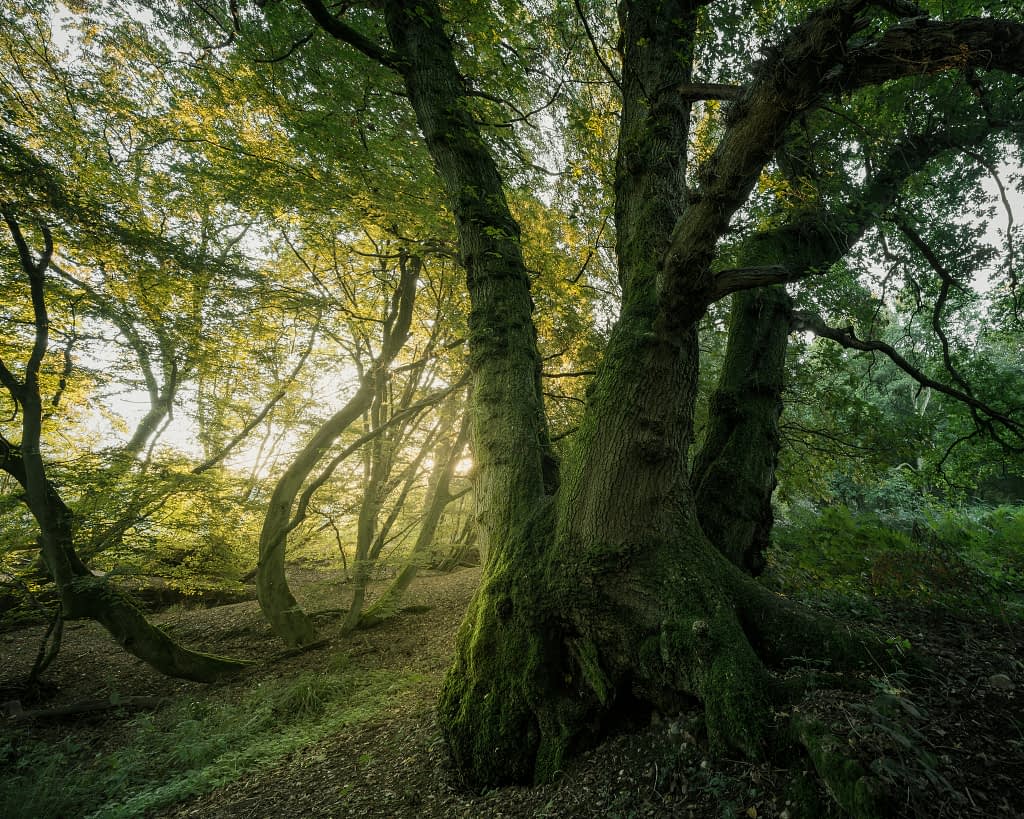
In woodland photography, distractions often build up along the edges of the frame and sometimes go completely unnoticed until you're back at your desk reviewing images. One of the most common problems is a patch of bright leaves or sky poking through a corner. These lighter elements naturally catch the eye and can draw attention away from the main subject.
Fallen branches are another frequent issue. I once made an image where everything felt just right. The light was soft, the composition felt balanced, and the overall mood worked well. But near the bottom edge of the frame, a pale, weathered branch caught the light in a way that made it pop out against the otherwise dark woodland floor. The bark had long since rotted away, leaving exposed timber that felt glaringly bright in the scene. That one element pulled so much attention that I couldn’t bring myself to share the photo.
Other issues include half-cut trees or trunks that have been unintentionally cropped in a way that feels awkward or distracting. Human-made elements like footpaths, signs, or even bits of litter can also creep into corners and break the sense of immersion in the natural world.
You may also encounter compositions where branches or tree trunks merge visually, making it hard to separate one subject from another. These overlaps can confuse the viewer's eye and make the photo feel messy or unresolved. If you're curious about why your eye keeps drifting to certain parts of the image, this article from Psychology Today, Why We See What We Want to See, explains how our brain filters what we notice based on expectations and intent. It’s a useful perspective when thinking about why we miss edge distractions in the moment. Even a single bright leaf near the edge of the frame can throw off the visual balance.
These are exactly the sorts of issues that edge patrol helps you catch and correct while you're still in the field.
How to Build Edge Patrol Into Your Woodland Photography Workflow
Start by giving yourself a moment before pressing the shutter. It’s easy to get caught up in the excitement of a strong composition or a fleeting patch of light, but rushing can lead to regret later. Slowing down gives you a chance to be more deliberate with your framing.
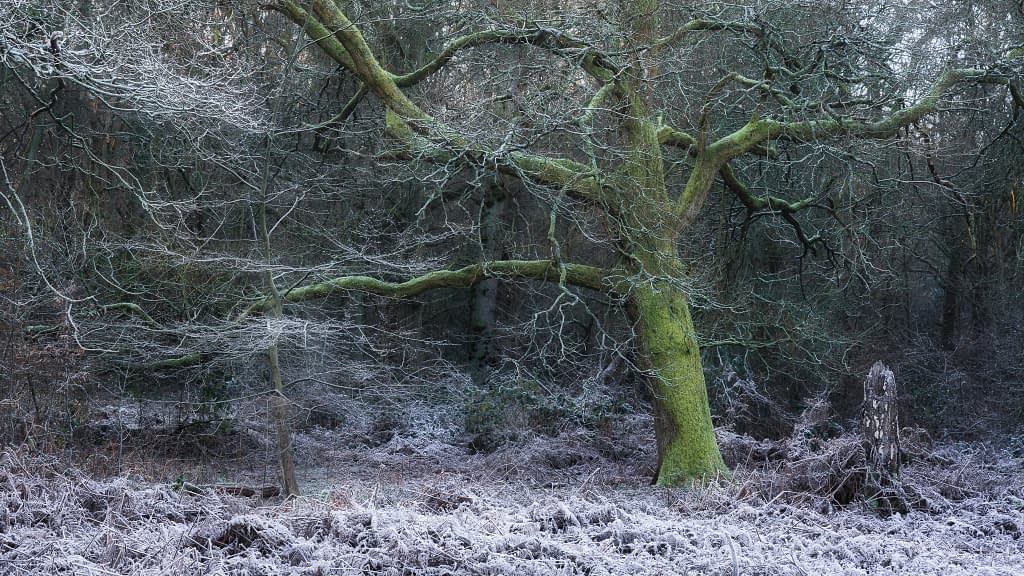
Once you've composed your shot, scan the outer edges of the viewfinder or your LCD. I’ve found it helpful to trace a slow mental line around the border of the frame, moving corner to corner. Sometimes I’ll use my thumb or finger just below the screen as a physical reminder to check for distractions. It might seem excessive, but this habit has saved me countless hours in post-processing. It has also prevented many promising shots from being scrapped altogether.
I remember one autumn morning where the light was just stunning. I was photographing a line of birch trees, and the colours were rich and layered. Everything felt in place, so I took a few frames quickly and moved on. When I reviewed the images later, I spotted a branch poking into the top-left corner, catching just enough light to be distracting. Had I taken ten seconds longer to scan the frame, I would have seen it and slightly adjusted. I didn’t end up using that image, even though the rest of it was strong.
If something along the edge feels questionable, try zooming in slightly or adjusting your position. Sometimes I’ll shoot a few variations of the same scene, not just to hedge against movement or light changes, but to bracket for composition. It's especially helpful in dense woodland scenes where clutter can shift dramatically with a small change in framing.
When conditions allow, such as when the light is soft, the air is still, and you're not under pressure, give yourself permission to slow everything down. These are the moments where edge patrol really pays off. What takes five or ten seconds in the field can prevent hours of indecision or frustration later. It’s a small act of care that makes a big difference in the quality of your woodland photography composition.
When to Let Go of Perfection
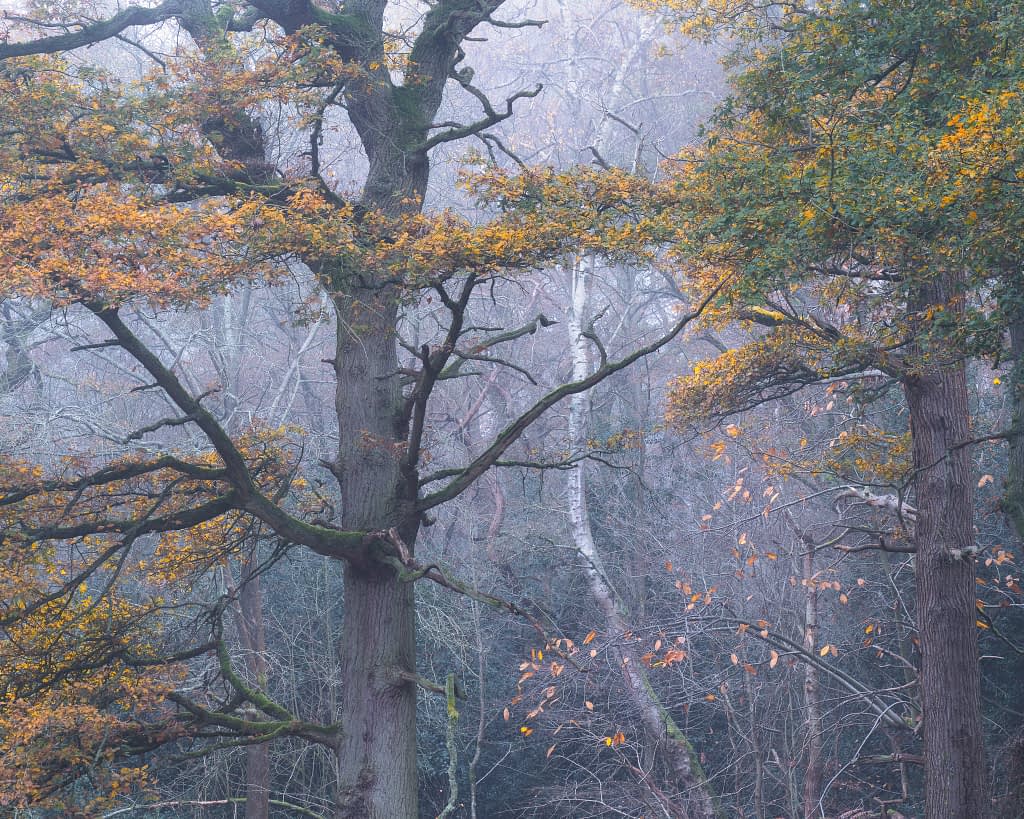
Not every strong woodland composition needs to be clean at the edges. In fact, sometimes a little tension can make a photo more engaging. A bright or oddly placed element near the edge might help reinforce the mood or visual energy in the scene if it feels intentional.
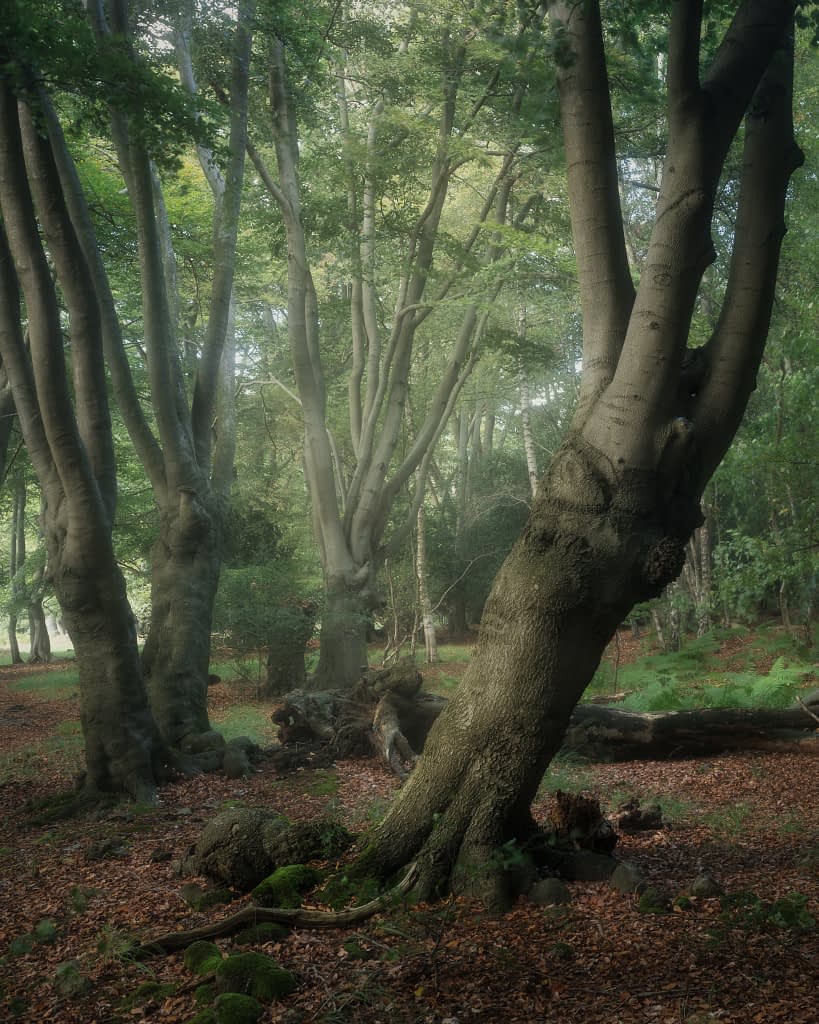
I remember photographing a stand of twisted hornbeam trees on a foggy morning. One branch jutted into the corner of the frame at an angle that initially made me hesitate. It wasn't neat, and it certainly wasn’t subtle. But in the context of the scene, it added a kind of uneasy energy that echoed the gnarled shapes throughout the image. I kept it in and it became one of my favourite photos from that walk.
There are times when a little imbalance or visual friction pulls a viewer in rather than pushing them away. You might find that framing a subject off-centre, or letting a tree trunk run just into the border of the frame, creates a sense of tension or narrative. The key is to do it deliberately. If it looks like a mistake, it probably feels like one. But if it supports the emotion or composition in some way, it’s worth trusting your instincts.
In the end, woodland photography composition isn’t about obeying rules. It's about responding to the scene in front of you and making choices that reflect how it felt to be there. Let the edges support your story. Sometimes that means breaking your usual habits and trusting what feels right in the moment.
Bonus Tips for Stronger Woodland Composition
One of the best ways to refine your woodland photography composition is to combine edge patrol with an energy flow check. Ask yourself how the eye moves through the image. Are you guiding the viewer smoothly through the scene, or is their attention being pulled away by something unintended?
I often step back and look at the entire image, starting from the edge and moving inward. This helps me assess whether the photograph is holding together as a whole. If my eye keeps jumping to one corner or gets stuck in a tangled section of branches, it's usually a sign that something needs adjusting.
Creating separation between trees is something I come back to often in my workflow. In dense woodland, it’s surprisingly easy for branches to merge into each other. The result is usually a flat or visually confusing image. But if you find a spot where trunks have space between them, or where there’s a clear sense of depth between foreground and background, the composition starts to breathe. It feels calmer, more deliberate.
In my experience, the corners of an image are where problems tend to hide. You can frame a strong centre and have good balance across most of the photo, but one messy corner, such as a bright leaf or awkward stick, can quietly spoil the image. I’ve made that mistake too many times to count. These days, I often flip the image horizontally or view it upside down. Doing this shifts how I see the photograph and helps me notice things I would otherwise miss.
These small habits, such as checking how the eye flows through the frame, finding separation, and seeing the image from a fresh angle, are all tools to help you become more aware of your composition. If you want to explore these ideas in more depth, have a look at my full guide to woodland photography composition basics. And if you'd like something you can refer to in the field, download my free guide: Taming The Chaos: The Key to Better Woodland Photography Compositions. It's a helpful starting point for applying these concepts with purpose and clarity.
Conclusion
A great woodland composition isn't just about what you include. It's just as much about what you allow to remain. Edge patrol in woodland photography is one of those small, consistent habits that quietly transforms your forest shots. It sharpens your awareness, encourages you to slow down, and helps you treat the entire frame with care, not just the subject at the centre.
You’ll begin to notice more: clutter in the corners, branches that feel out of place, light spots that pull the eye away. And once you start seeing these things, you’ll naturally start composing more deliberately.
Like most improvements in woodland photography, this takes time. But when edge patrol becomes part of your process, your compositions start to feel more balanced, more refined, and more intentional. You can achieve this without adding more gear or spending extra time editing.
If you’d like to continue developing these habits, take a look at my guide to common woodland photography mistakes. It’s a useful complement to this one and will help you avoid the things that quietly undermine your best shots.