
Woodlands are beautiful, but often overwhelming. Tangled branches, chaotic undergrowth and complex visual layers can make it hard to see a clear composition.
If you've ever stared at a scene and thought, "This is a complete mess," you're not alone. Learning how to simplify busy woodland scenes to create better photos is one of the biggest challenges beginners face - and also one of the most rewarding to overcome.
By learning how to reduce visual clutter and find structure, you can create photographs with stronger composition, visual flow and emotional impact. We'll explore how to bring clarity to your images using light, focal length, mindful observation and post-processing techniques.
If you're new to photographing forests, my Woodland Photography Basics guide is a great starting point.
Let’s explore how to bring order to the chaos and make your forest photos truly stand out.
Table of Contents
Why Simplicity Matters in Woodland Photography
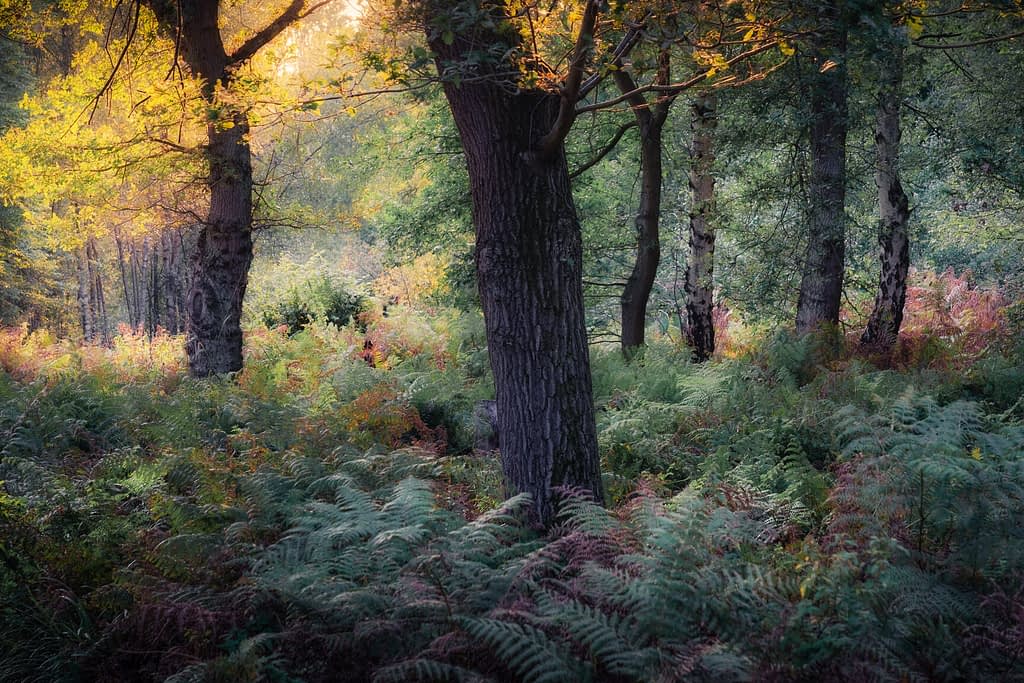
Dense woodland environments are inherently chaotic. Every inch can be filled with tangled textures, overlapping branches, shifting light and shadows that move with the wind. When I first started photographing forests, I often felt overwhelmed. I'd find what I thought was a strong composition, take the shot, and then later think, "Why does this just look like a mess?"
The issue was visual clutter. Too many competing elements pull the eye in multiple directions. Without a clear focal point or a sense of structure, the viewer gets lost. Over time, I realised that my most effective woodland images all had something in common: simplicity. I realised I had to learn how to simplify busy woodland scenes.
That doesn’t mean stripping a scene down to nothing. Simplifying woodland photography scenes means helping the viewer navigate the space. It’s about composing your images in a way that feels intentional, calm and clear. Complex scenes can work, but only if the elements resolve into a coherent whole - there has to be some structure.
One of the first moments this clicked for me was while shooting a wider scene at around 40mm on a full-frame camera. I was in a familiar patch of woodland, trying to compose a frame that felt clean despite the natural chaos. The trees were scattered in all directions and the background was full of stray trunks that threatened to pull the eye away from the main subjects.
Rather than zooming in or changing lenses, I started moving - just a few steps to the left or right. With every adjustment, I watched how one tree could block or reveal another. Eventually, I found a position where a few of the messier, poorly lit trunks were hidden behind stronger, more defined elements. That small shift changed everything. What had started out as cluttered became structured. The frame suddenly had flow and balance.
I didn’t remove anything from the scene - I just changed my relationship to it. That moment taught me a lot about how to simplify busy woodland scenes by moving the camera, not fixing it later in post-production. It’s often about looking more carefully and being patient enough to solve the puzzle in front of you - small movements in the camera's position can make a huge difference.
If you've ever compared two images of the same spot (one busy, one more refined) you’ve probably felt how much stronger the simpler one is. It just feels more balanced, more focused.
Simplifying isn’t about removing the forest’s character. It’s about giving it room to breathe.
How to See With Simplicity in Mind
Learning to simplify woodland photography compositions starts with how you see, not just what you shoot. Rather than focusing on objects, try training your eye to follow visual flow - the path the viewer's eye will naturally take through your image. Look for connections between shapes, tones and lines and how they guide the gaze.
This shift in seeing takes practice. I’ve found that slowing down makes a big difference. Wandering through the forest with no pressure to shoot helps you tune in to what's actually working visually. You start to notice how a leaning trunk leads into a path of light, or how a gap between trees opens up space that feels calm.
Start looking for natural frames: tree trunks, arching branches or foliage that borders your subject. These subtle elements help define your composition and keep the viewer engaged. Leading lines don’t need to be obvious either; they can be soft light patterns, fallen branches, or pathways that hint at direction.
Negative space is another key tool. Don’t be afraid of empty areas - they give the eye room to rest. That pause can often make the main subject feel stronger, not weaker.
Most importantly, ask yourself: what is the dominant element here? What’s the one thing I want people to notice first? Whether it’s a tree with character, a burst of light or a compelling shape, build your composition around it. Let everything else support that moment.
This way of seeing takes time. But once it clicks, your photos become more intentional, balanced and emotionally resonant - even in the busiest of woodlands. You may find my beginner's guide to woodland photography composition useful if you're just starting out.
Compositional Techniques to Simplify the Scene
One of the simplest and most effective ways to simplify woodland photography scenes is to remove distractions at the edges. I always make a point to perform what I call an "edge patrol" before pressing the shutter. It's a final scan around the frame to spot stray twigs, awkwardly lit branches or anything creeping in that doesn’t need to be there. These small elements can easily disrupt the visual flow of the image.
Depth and layering help bring a sense of structure. By carefully choosing your camera position, you can stack foreground, midground, and background elements in a way that leads the viewer's eye through the scene. I’ve found this particularly helpful in denser forests where there’s a lot going on - it helps break the chaos into manageable planes.
Framing and angle are key to isolating your subject. Sometimes I crouch low to hide distracting trunks behind ferns or use a tree to block out visual noise from the background. Light also plays a big role - a shaft of backlight can pick out a subject beautifully and create natural separation.
Shapes and patterns are worth paying attention to. A triangle formed by leaning trees, or a repeating pattern of trunks, can give your composition rhythm and a sense of cohesion. You’re not always trying to create something symmetrical or perfect, but looking for repetition or visual logic can help bring order.
And rather than relying on compositional rules like the rule of thirds, I prefer to think about visual weight and flow. Where does the eye go first? Is there balance? Does the image breathe? These questions help guide decisions that make a scene feel harmonious, even if it’s filled with complex elements.
Often, a small shift in camera position (or a pause to study how shapes and light interact) is all it takes to turn a cluttered forest scene into something calm and intentional.
Using Light to Simplify Busy Woodland Scenes
Light plays a powerful role in simplifying woodland photography scenes. Overcast skies, light mist, and gentle rain all help reduce visual clutter by softening contrast and lowering dynamic range. Everything feels more even and subdued, allowing key subjects to stand out without the distraction of harsh highlights or deep shadows.
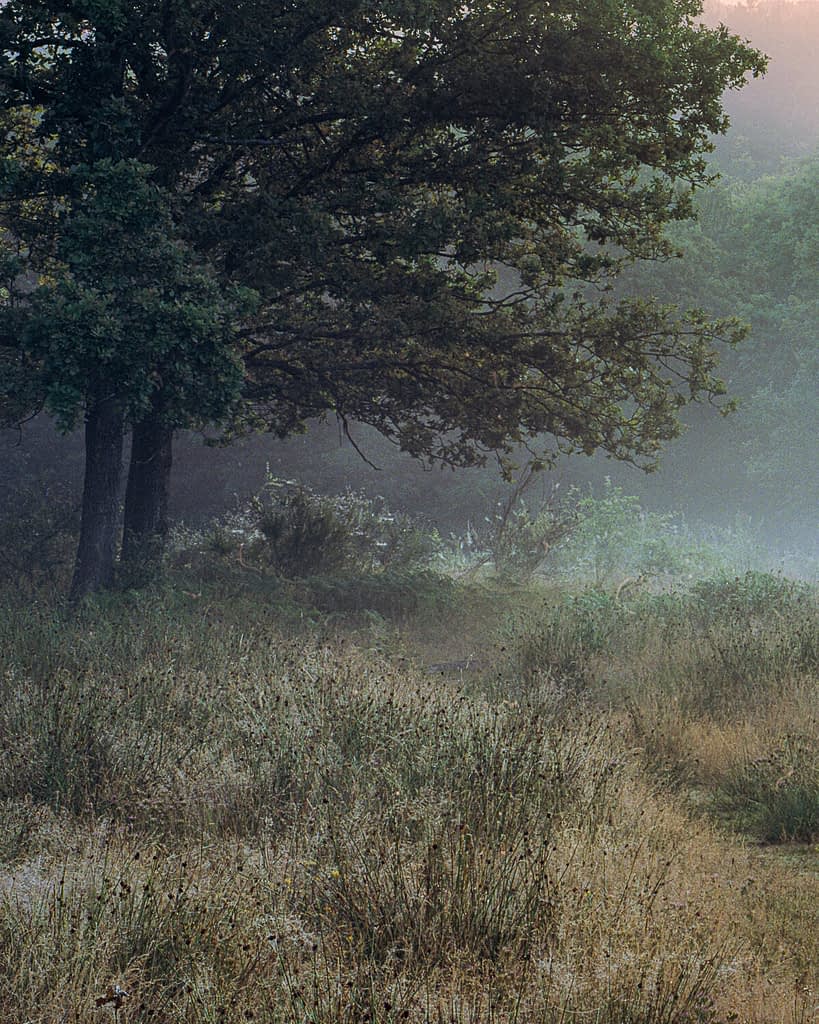
Some of my favourite images have been taken on damp, misty mornings. There’s something about the way mist settles between trees that naturally separates them into layers. It simplifies the scene in a way that no amount of editing can replicate. You don’t have to work as hard to create depth or clarity - the atmosphere does it for you.
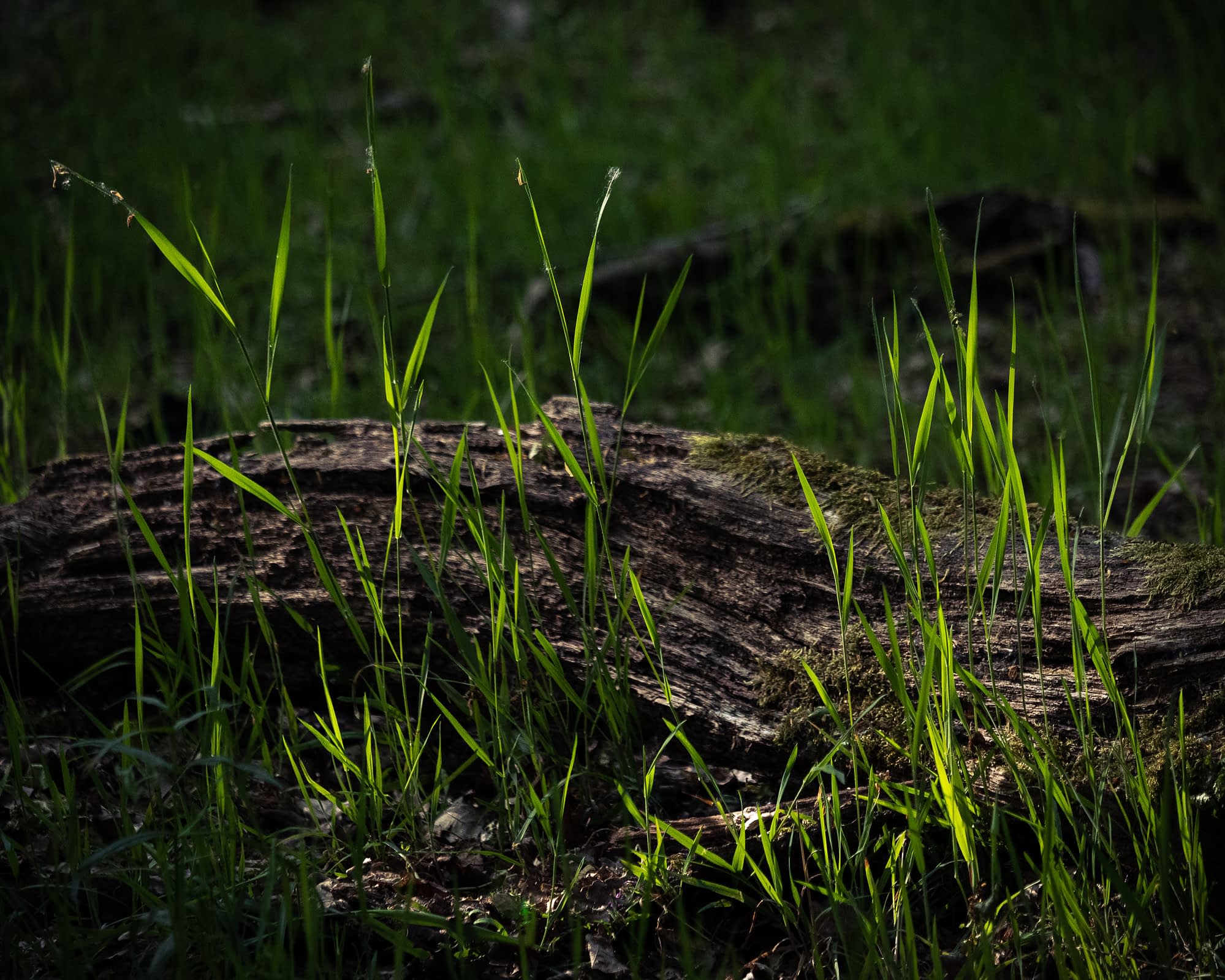
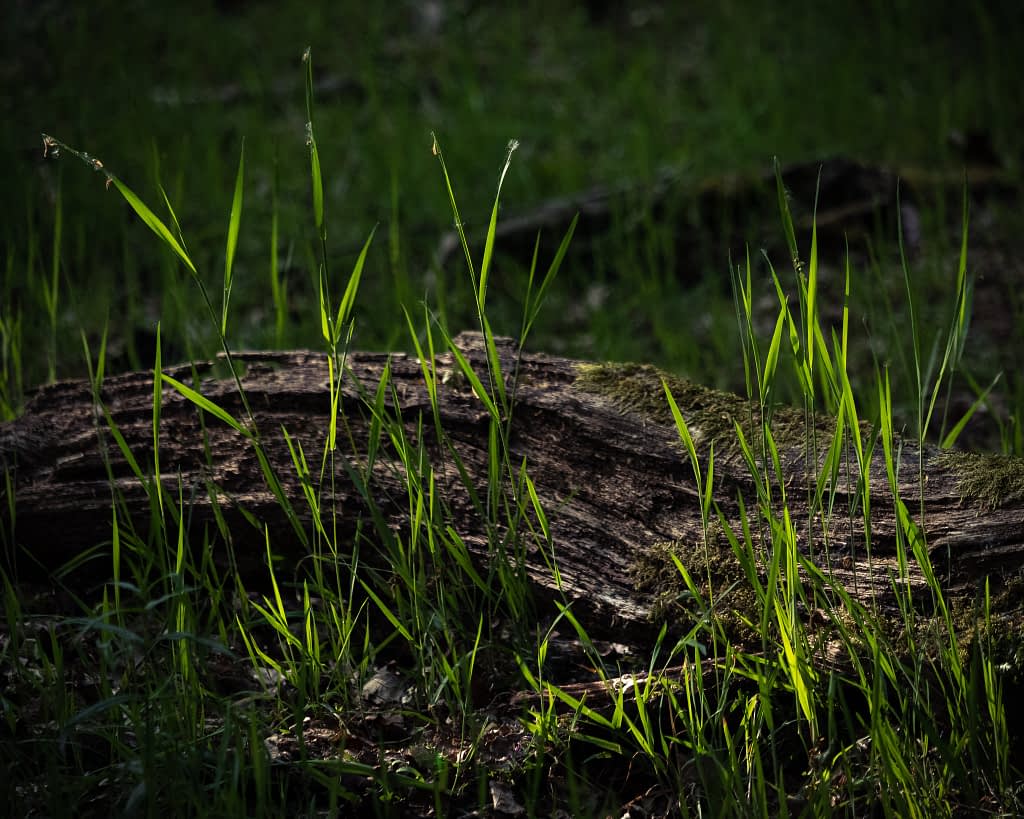
Backlight is another incredibly useful tool. If you catch it at the right angle, it can help isolate your subject by illuminating edges or creating a gentle glow through foliage, like in the image of the grasses above. I once spent nearly an hour composing a shot of a copse of trees where the sun filtered through a gap in the canopy. Creating dynamic shadows across the understory. That contrast added instant focus and helped me reduce the visual noise.
In contrast, harsh midday light can often make woodland scenes more chaotic. The light bounces off every surface, creating scattered highlights and unwanted distractions. Unless you’re using it very deliberately, it usually exaggerates the complexity rather than calming it.
Understanding how lighting conditions change a scene's complexity is key. The same woodland shot in hard sunlight can feel overwhelming, while in overcast or misty conditions, it might feel calm and inviting. Learning to read the light (and choose your moment) is one of the most effective ways to simplify your forest photography.
Choosing the Right Lens and Focal Length
Choosing the right focal length plays a crucial role in simplifying woodland photography scenes. Longer lenses, like a 70-200mm, tend to simplify the frame by narrowing your field of view. This makes it easier to exclude distracting elements and compress the scene, helping to organise the layers of trees into a cleaner, more structured composition.
I often use my standard lens between 50-105mm when I’m trying to isolate a particular arrangement of trunks or focus on a single character tree. The compression subtly flattens the space, reducing chaos and bringing background elements closer to the subject in a way that feels cohesive rather than cluttered.
That said, there are times when I’ll shoot wider (at 35mm, 24mm or even use my 12-24mm ultra-wide angle lens) especially if I want to show more of the surrounding environment or create a sense of immersion. But using a wide-angle lens in the woods requires a lot more discipline. You need to be even more conscious of your edges and how each element interacts within the frame.
A wide scene only works when there's a clear focal point and the supporting elements don’t compete for attention. I'll sometimes use it to isolate and enhance the relative size of an ancient tree in relation to the trees surrounding it, setting my camera up very close to the subject in order to create dramatic and dynamic images.
One approach I use when going wide is to let the foreground do some of the heavy lifting. A patch of bracken, a fallen log, or even a shadowed clearing can provide structure that holds the viewer’s gaze and leads it into the frame.
Ultimately, your choice of lens affects the mood, layering, and clarity of the scene. There’s no right answer, but if you're struggling with busy compositions, a slightly longer focal length is often a good place to start. It gives you more control over what you include, and what you leave out.
Post-Processing to Refine and Simplify
Post-processing is your final chance to simplify busy woodland scenes and refine your composition. Cropping is often the first step. Sometimes, despite your best efforts in the field, distractions sneak in at the frame’s edge or the balance feels slightly off. A thoughtful crop can dramatically improve the composition and help guide the eye where you want it to go.
When editing forest scenes, I often reduce contrast in the background while gently increasing clarity on the main subject. This subtle shift helps separate layers and keeps the focus where it matters. It’s especially useful in foggy or overcast conditions, where you want to preserve atmosphere but still create depth.
Selective adjustments are powerful but easy to overdo. I usually use radial or linear gradients to gently darken or blur areas that pull attention away from the subject. Think of it like stage lighting - you're not changing the scene, just spotlighting the lead.
Colour plays a huge role too. Woodland images often have a lot of competing greens and browns. By cooling down the shadows or gently muting secondary colours, you can simplify the palette and improve harmony. Sometimes it’s a small adjustment to saturation or tone that brings everything together.
As for removing elements - yes, I occasionally clone something out. But I do it sparingly, and with the intention of not materially altering the scene. If a twig or small branch is genuinely distracting and couldn’t be avoided on location, I’ll take it out. If it adds authenticity or depth, I leave it in. The key is intention and authenticity. You're not aiming for perfection, you're aiming for clarity and focus.
Editing should always support the story you're telling, not rewrite it. Think of it as the final polish, not a fix.
If you’d like more help with editing your woodland images, download my free guide to Simple Editing Techniques for Woodland Photography. It’s full of practical tips to help you enhance your photos without overcomplicating them.
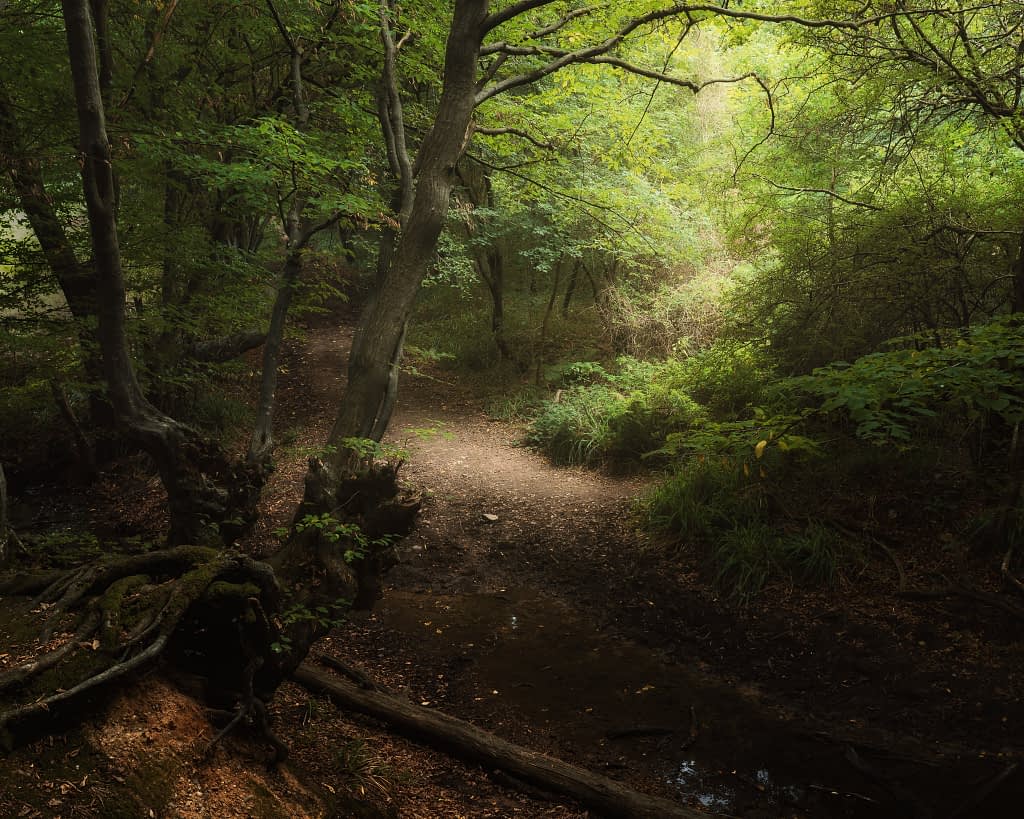
Common Mistakes When Trying to Simplify Busy Woodland Scenes
It's easy to overdo things when you're trying to simplify a scene, especially in post-processing. One of the most common mistakes is over-editing to the point that the image loses its life. I’ve done this myself; flattening contrast too much, softening everything in an effort to 'clean up' the image. The result? Something technically tidy, but emotionally hollow.
Another trap is relying too heavily on focal blur or shallow depth of field instead of creating real compositional clarity. Blurring the background might help your subject stand out, but it won’t fix a cluttered or poorly structured frame. It’s much more powerful when separation is achieved through light, subject choice, or framing.
It’s also tempting to centre the subject in an attempt to create balance, but that can backfire. A centred tree, for example, can feel static unless there’s a strong supporting structure in the rest of the frame. Off-centre placement, guided by visual weight rather than rigid rules, often leads to a more dynamic composition.
And perhaps the biggest mistake? Forgetting the emotional or narrative impact of the scene. When you’re focused on tidying, it’s easy to lose touch with the feeling that drew you to the location in the first place. Ask yourself: what was the mood here? What story am I trying to tell?
For more on this, you might find my common woodland photography mistakes article helpful - it goes deeper into some of these pitfalls and how to avoid them.
Simplicity is a Mindset, Not a Shortcut
Learning to simplify busy woodland scenes isn’t just about making things look neat. It’s about learning to see differently, to recognise what really matters in the frame and quietly let go of everything else. When you approach photography this way, your images begin to feel calmer, more focused, and more intentional.
Next time you’re out in the woods, pause for a moment. Ask yourself: what’s pulling my attention right now? What story am I trying to tell? You might find that just asking these questions leads you to a more refined image.
If you want help putting all of this into practice, my free guide - Taming The Chaos: The Key To Better Woodland Photography Compositions - shares practical, beginner-friendly advice on improving compositional skills that you can use on your very next walk.