There are two pieces of received wisdom in photography that circulate endlessly, repeated by educators, YouTubers, and workshop leaders with the confidence of settled truth.
The first: F8 and be there. The second: just go and make work.
Both are right, as far as they go. The photographers who show up, who simplify, who don't wait for perfect conditions, who press the shutter, are better served than the ones who don't.
Both pieces of advice stop precisely where the more interesting question begins.
The Question Behind the Advice
Be there. Where? Another three-hour drive to an approved location, somewhere that appears on the accepted list of places serious photographers are supposed to care about? Because that's six hours of driving plus whatever time you had to make photographs, all dedicated to a place you may visit once or twice a year and never truly know. Or somewhere close? Somewhere unremarkable by the standards of the approved list, where the dog walkers raise an eyebrow at the camera, where nothing announces itself as worth photographing until you've been back enough times to understand what you're looking at?
Just go and make work. And then what? Where does it go? What do you do with the images that aren't the one, the frames you make on the way to the frame you were looking for, the coin you drop in without examining?
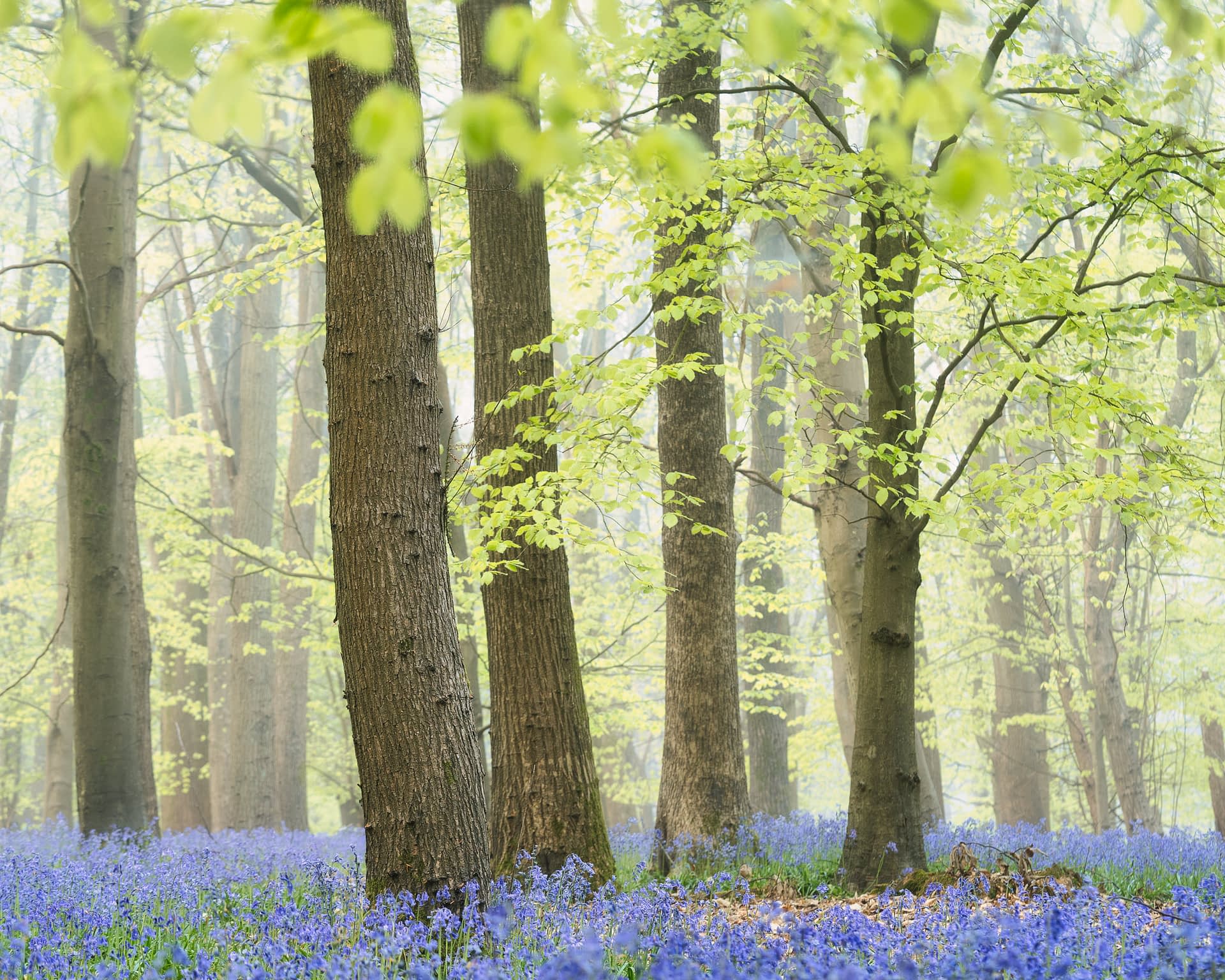
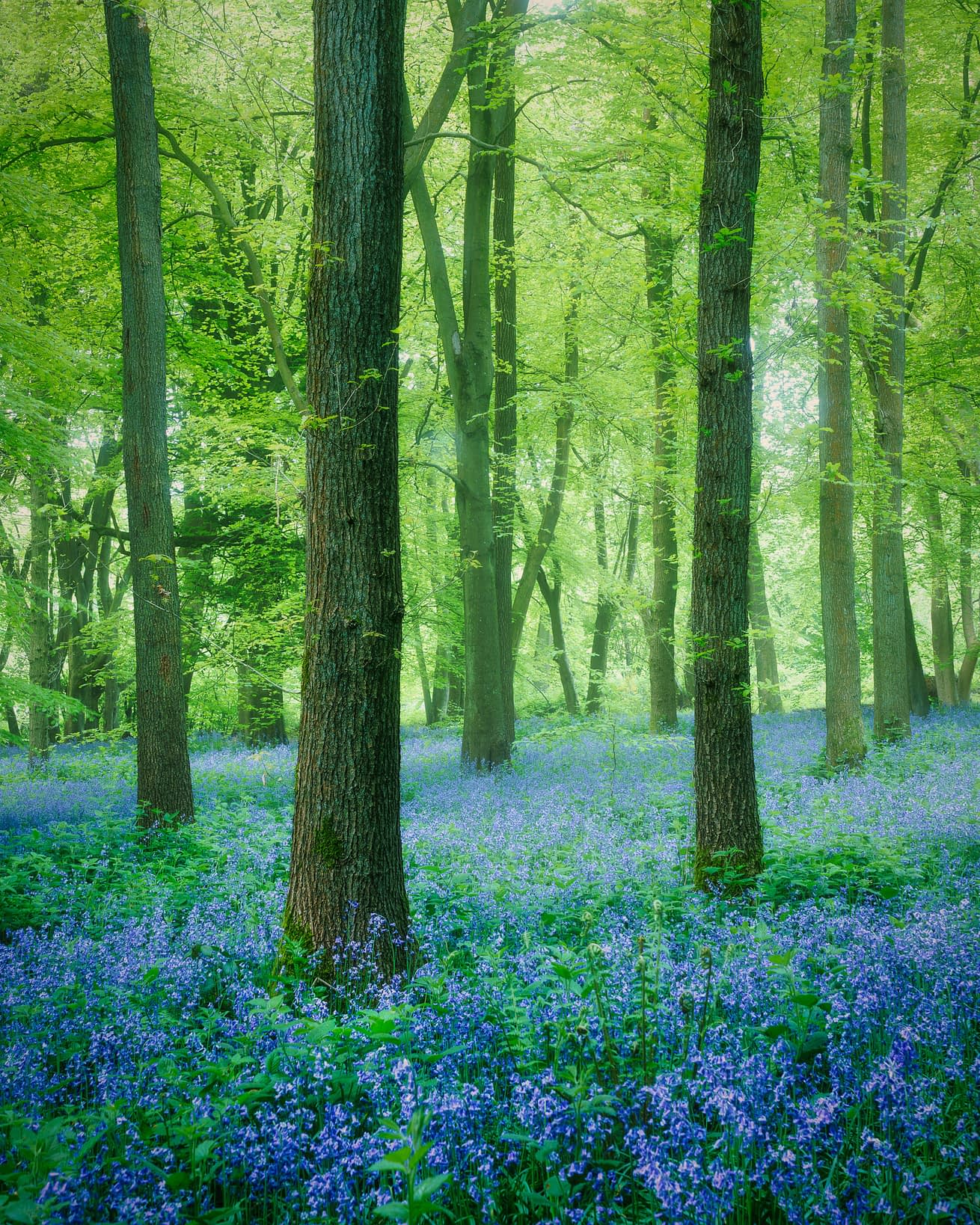
Tall trees with fresh green leaves rise in a misty Hertfordshire wood, bluebells carpeting the floor as sunlight softly filters through. It's an image that belongs in the jar, but may not be a standout image on its own.
The Metaphor of Accumulation
I have a jar in a cupboard at home. The spare change goes in when I get ready for bed, unexamined, and occasionally when I tip it out there is more there than I expected.
That choice, made hundreds of times over years of working, is what determines what ends up in the jar.
I photograph woodland. Specifically, the woods and forests of the Home Counties, Hertfordshire, Essex, Buckinghamshire, a part of England that serious landscape photographers have historically driven through on their way to somewhere more dramatic. I have been photographing these places for the better part of two decades, across more locations than I can easily count, ranging from ancient woodlands of five thousand acres to quiet fifty-acre patches where dog walkers look at you with an expression that doesn't quite ask the question out loud, but doesn't need to. Why are you here with a camera?
Because depth is the answer to that look. And depth takes time. And time means coins in the jar, most of them unremarkable, some of them, you discover later, not unremarkable at all.
Why I Photograph Woodland in the Rain
I love photographing the woods in the rain. The light can be otherworldly: the way wet bark absorbs colour, the way the canopy changes its character entirely when it's being rained through rather than lit from above. A woodland in the rain is not a compromise. It is an invitation.
I have been accepting that invitation for a long time. Rain, fog, mist, crepuscular light breaking through after a storm, the particular stillness of a clear winter morning, the quietness of twilight when most people have gone home. The conditions don't determine whether I go. I go, and the conditions are what they are, and I make something from them, and the coin goes in the jar.
What I don't do, what I have trained myself not to do, is evaluate the denomination at the moment of deposit. That's not the moment for that question.
The Image That Waited Four Years
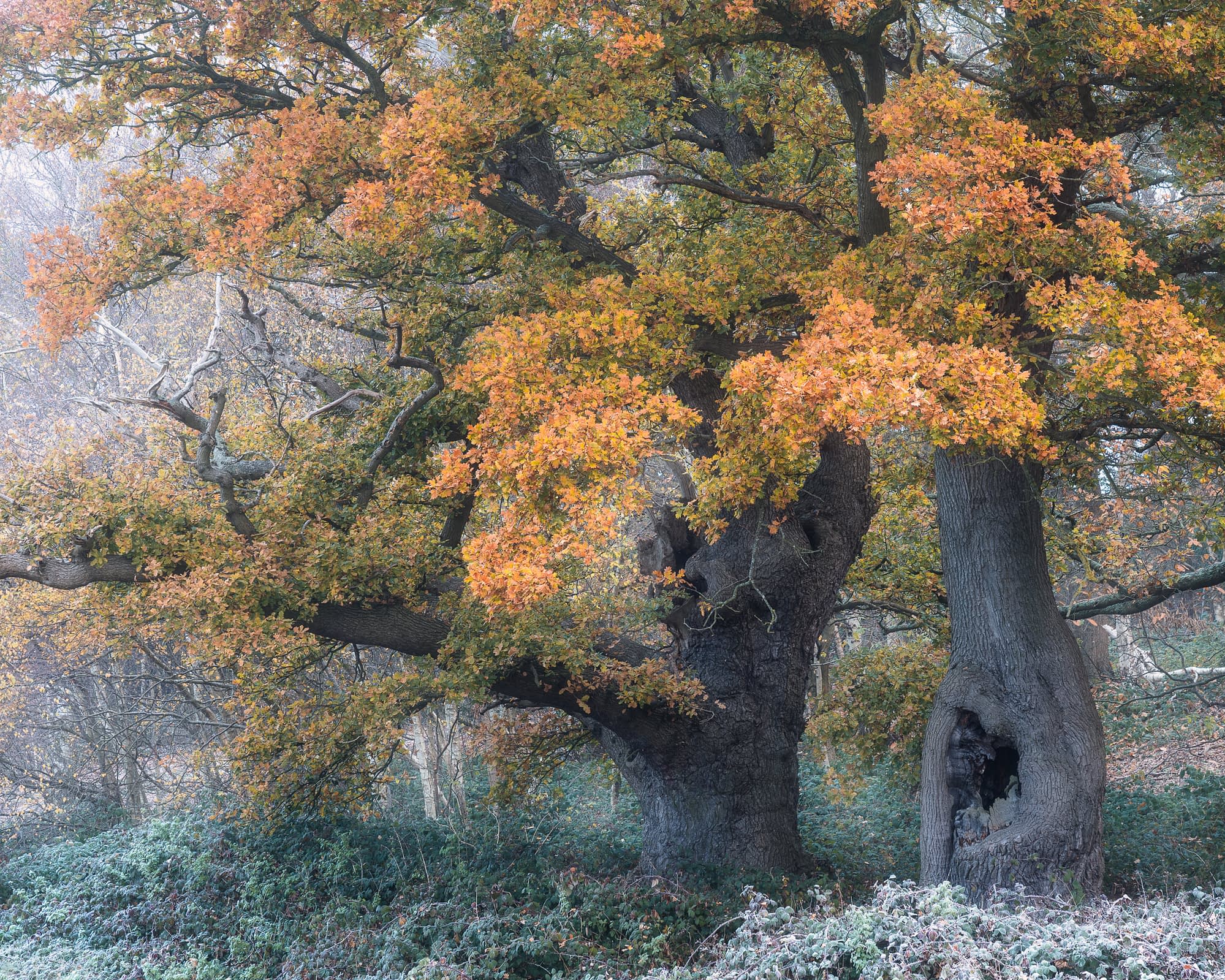
A few years ago, during peak autumn colour in Epping Forest, I made an image in the rain. The light was doing something I had never quite seen before: a glitter effect, rain catching the light as it fell through the canopy, the whole scene alive with it. I made the photograph, moved on, and came back to the same patch of woodland twice more. The second and third visits produced two further images, and for a long time I considered those the stronger two. The first image had shown me the possibility; the later ones felt like the realisation of it.
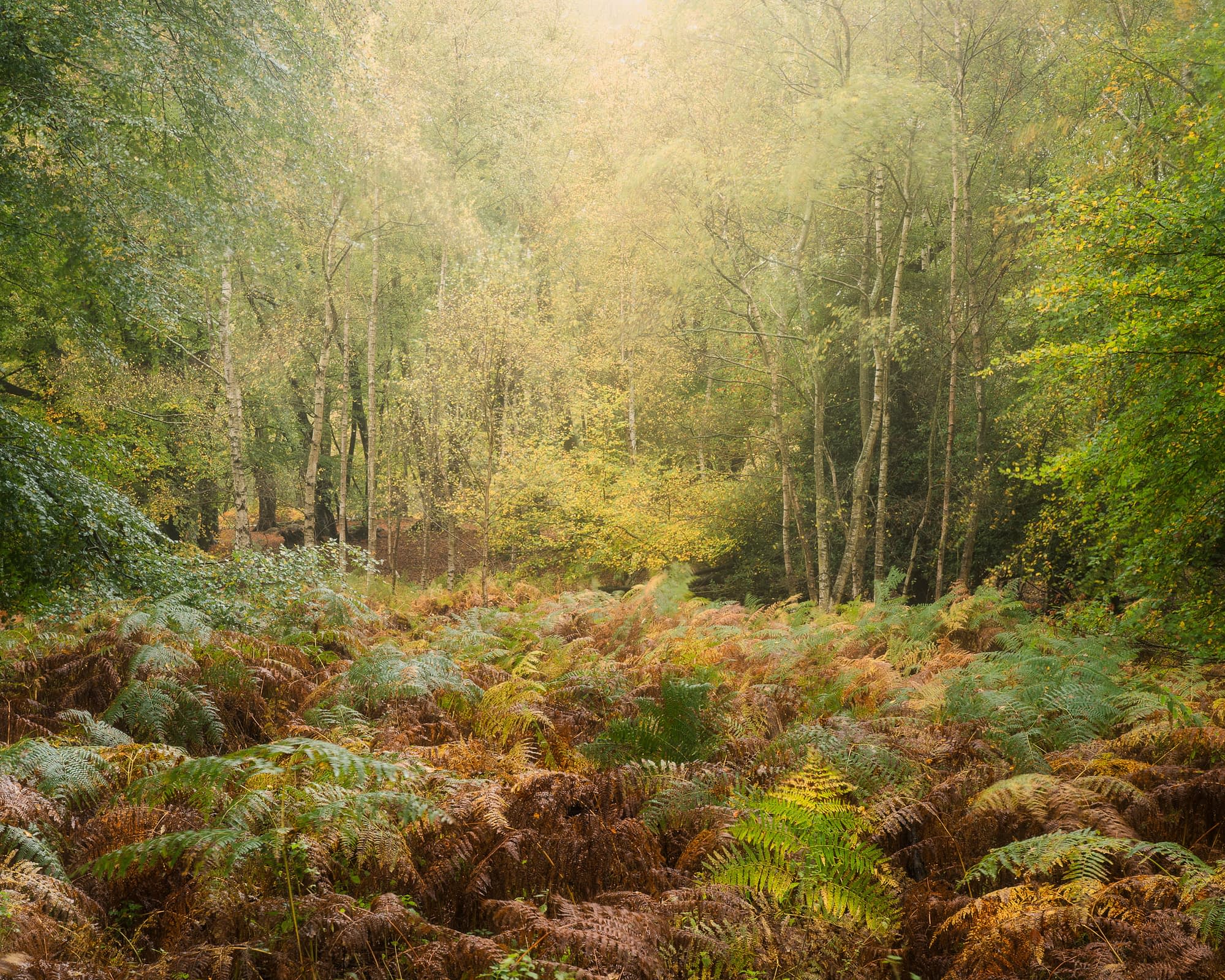
Then, earlier this year, while building a body of work around rain in woodland for a printed exhibition, I went back through the archive. The third image, which I had never processed, never looked at seriously, never held up to the light, had been sitting in my library for three or four years, unexamined.
When I finally opened it, it turned out to have two qualities I hadn't registered at the time of making. The glitter rain was falling from the top of the frame in a way that gave the image a quality the others didn't have. And there was a brief moment, perhaps a few seconds, where the light had warmed slightly, bathing everything in a subtler, richer tone than the cooler frames either side of it.
It had been waiting in the jar for four years while I was busy deciding that the other coins were the valuable ones.
That image is now among the strongest in the exhibition body of work. I didn't know that when I made it. I didn't know it for years afterwards. The jar knew before I did.
When the Jar Fills Without You Counting
Recently, taking stock of that rain work, I went to the archive expecting to search hard. I expected gaps.
I found more than one hundred and ten images I considered strong.
That number surprised me. Not because I had forgotten making the photographs, I remembered most of them, the mornings, the locations, the particular quality of the light on each occasion, but because I hadn't been counting. The jar had been filling while I was thinking about other things.
And yet, even standing in front of one hundred and ten images, the feeling that arrived wasn't satisfaction. It was the familiar, slightly uncomfortable sense of not quite enough. Not in quantity. Clearly the quantity was there. But a printed exhibition is not a folder of strong images. It is a cohesive and complete statement, and cohesion and completeness are a different standard entirely. The jar can be full and still not contain exactly the right coins.
That feeling, I have come to understand, doesn't go away. I don't think it's supposed to.
Depth Over Variety
In my essay The Long Way Into The Woods, I wrote about depth over variety, about the idea that when you commit to depth in your relationship with a location, the variety comes. You don't need to seek it. It arrives, because you keep arriving. The jar is the practical expression of that same philosophy: not a strategy for building a portfolio, but a way of being in relationship with a place over time, and trusting what that relationship produces.
But depth is a word that can be misread as a function of frequency. I am out with a camera twice a week. That is the privilege of photography being my profession, and I don't take it lightly. But I think often about the photographer for whom once or twice a month is the reality. Twelve outings a year, hard-won, each one needing to count.
The temptation is to use those twelve outings to see twelve different places. Maximum variety, maximum exposure to what's out there. I understand the logic. But I'd gently suggest a different use of those twelve outings: three locations, returned to again and again, through different seasons and different light, until something starts to happen between you and the place. Until you stop being a visitor and start being someone the woodland recognises.
Depth isn't about frequency. It's about relationship. And relationship is built through return, however often return is possible.
The Different Codes of Different Woods
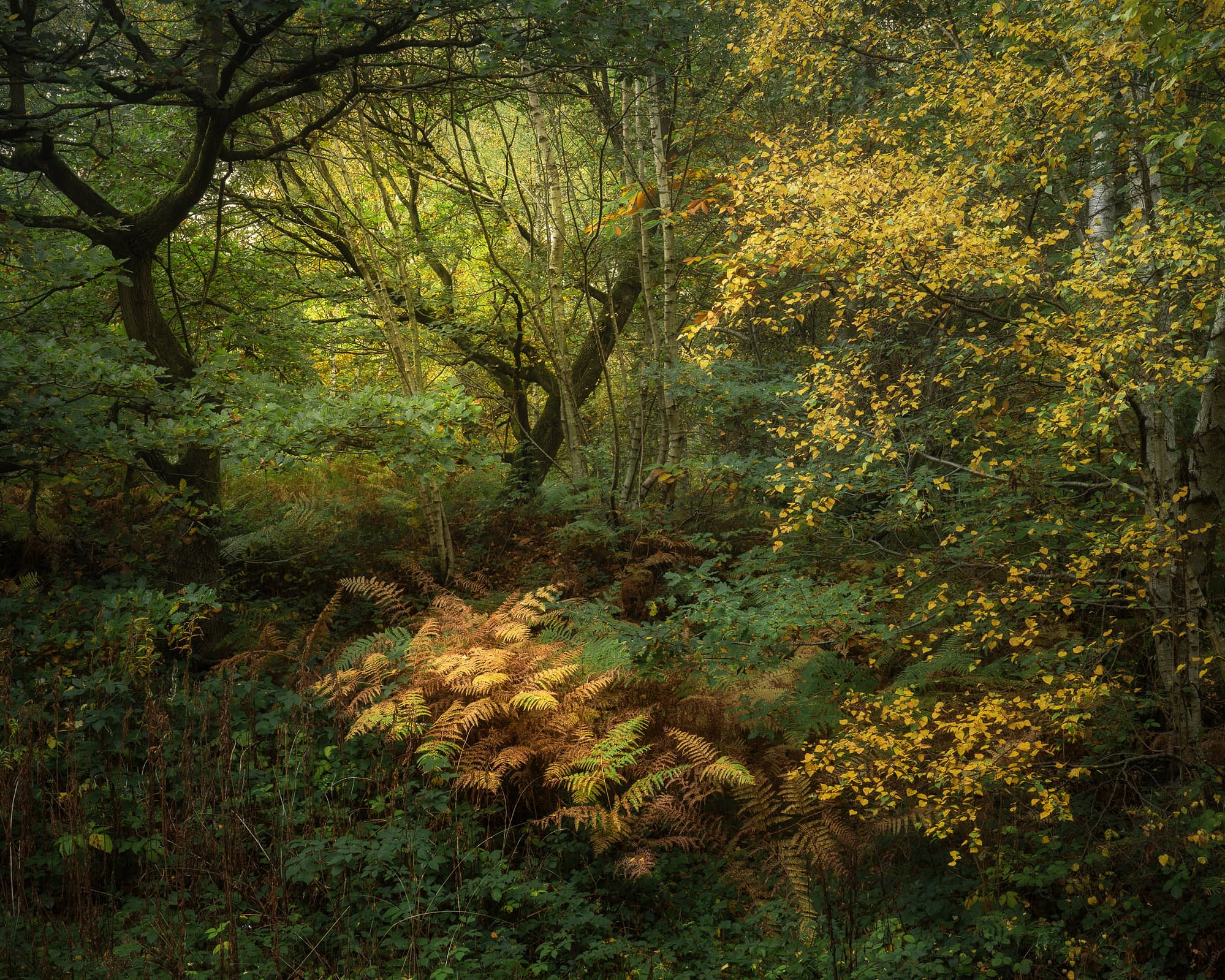
Some of the locations I work are grand in scale, ancient woodlands where the veteran trees are the undisputed stars, where the age and character of individual trees commands the frame. Others are more subtle.
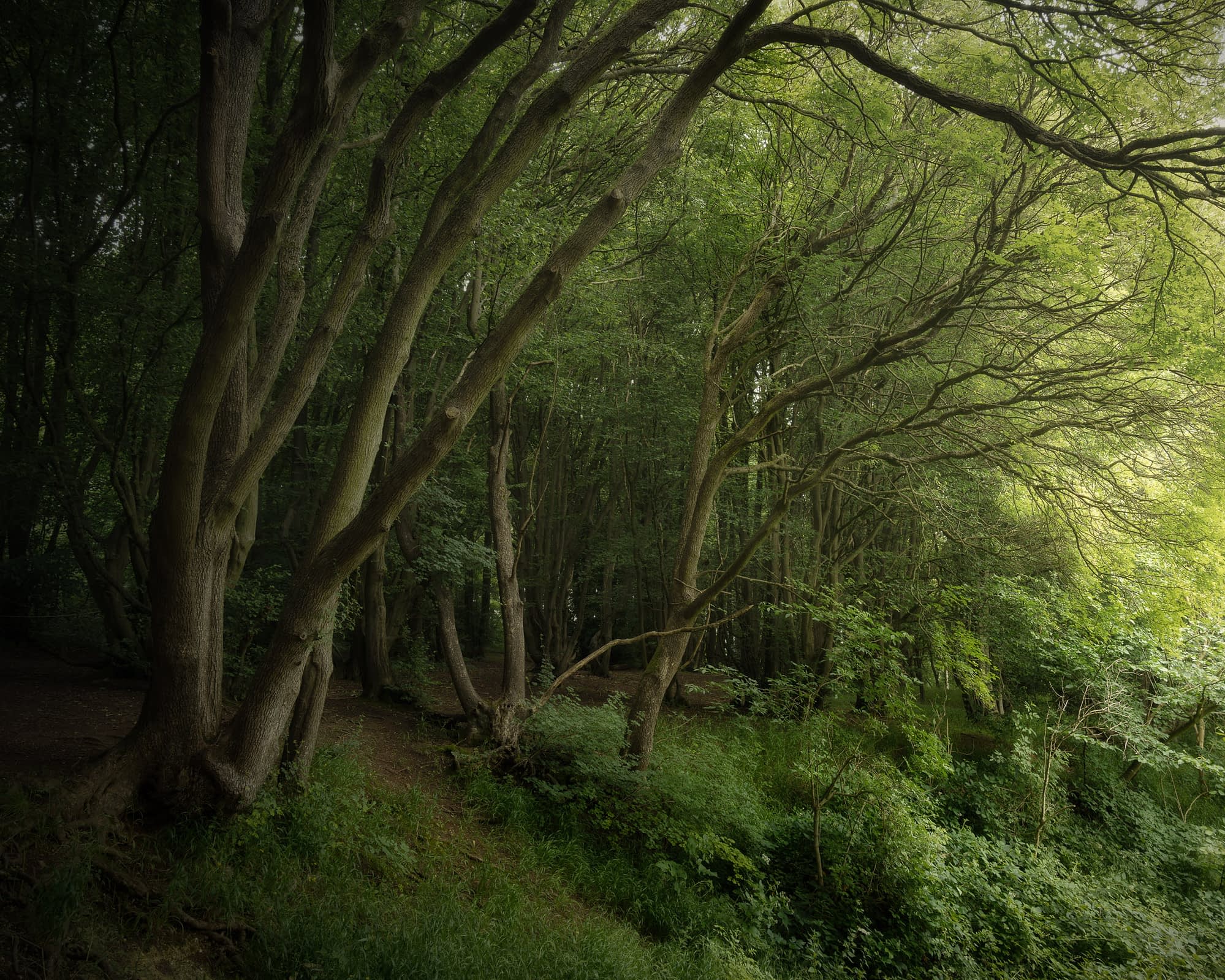
In some woods it's the way the trees gesture with each other, lean and reach and respond to one another across the space between them.
In others it's the particular quality of the light at a specific hour, the way it enters the canopy from an angle that only exists for a few weeks of the year.
And in some, the ones I find most interesting perhaps, I am still trying to solve the woodland. Still trying to understand what it wants to give, what the right question is to ask of it. It's possible that some of these codes aren't meant to be cracked. That the value is in the attempting, not the solving.
All of these locations produce variety. And variety, encountered through sustained return rather than one-off visits, is what produces growth, the slower, stranger growth that comes from returning to the same place until it starts to surprise you in ways it couldn't when you were still a stranger to it.
Eleven Years in Ashridge Forest
The oldest location in my practice is Ashridge Forest, a large ancient woodland in Hertfordshire. I worked there with a sustained commitment, returning through every season, in every weather, year after year, for eleven years before I felt I had said everything I needed to say about it. Multiple bodies of work, from wider forest scenes down to intimate studies of the understory. The kind of slow accumulation that only makes sense if you stop asking when it will be finished and simply keep going back.
I still go back. Once or twice a year, even now, seven years after I called it complete.
Because there are still gaps. Not gaps that most photographers would see. The work is substantial, the range is broad, the jars from those eleven years are full. But I can see the gaps, precisely because I know the place well enough to know what's missing. Mastery doesn't close the distance between what exists and what could exist. It sharpens your eye for it.
I still drop coins into the Ashridge jar. They go in quietly, and I don't examine them, and I walk away.
The Jar Is Not a Project
This is the thing about the jar that took me a long time to understand: it is not a project container. You don't start a jar because you have decided to make a body of work. The jar exists because you keep showing up, to the same locations, in the same rain, in the same early morning light that nobody else thought was worth getting out of bed for. The body of work is what the jar becomes, eventually, when you tip it out and look at what's there.
The exhibition didn't create the one hundred and ten images. The one hundred and ten images created the possibility of an exhibition. That sequence runs in the opposite direction to how most photographers think about building a portfolio.
Most photographers, at some point, decide they want to produce a body of work and then go out to make it. There is nothing wrong with that. But there is another way, and it produces something different: an archive that accumulates ahead of your intentions, that surprises you with its own coherence, that contains images you had forgotten making, or never properly looked at, and that you rediscover with the particular pleasure of finding something valuable in a coat pocket.
The rain exhibition existed before I went looking for it. It was already there, waiting in the jar.
Go Somewhere You Can Return To
So: just go and make work. Yes. F8 and be there. Also yes.
But go somewhere you can go back to.
Go somewhere close enough that the six hours you might have spent driving to and from the approved location become six hours spent in a place you are slowly learning to read.
Go somewhere that will still be there next week, and the week after, and in three years when the light does something you have never seen before and you happen to be standing in exactly the right place because you know that patch of woodland well enough to know where to stand.
The coin goes in the jar. You walk away. You keep going back.
That's the whole of it, really.