Woodland photography location guide · essex
Epping Forest.
Fifty thousand ancient trees across 2,400 hectares, and fifteen years of visits that still feel like scratching the surface.
Updated on 7 July 2026
Epping Forest at a glance.
County Essex, on the north-east edge of London
Best for Ancient beech and hornbeam pollards, rain, fog and snow, and sheer abundance of subjects
Access Open on foot at all times. Car park gates open 8am and close at or around dusk
Nearest Station Several Underground stations sit close to different parts of the wood. Wanstead and Redbridge are the easy way in for Chalet Wood's bluebells
Size and type 2,400 hectares of ancient woodland, wood pasture, heath and ponds, holding around 50,000 ancient trees. SSSI and Special Area of Conservation
Peak season Last week of October to mid November, sometimes running into December
Parking More than 30 car parks. Favourites with postcodes are listed below. All chargeable, check the boards
Scratching the surface after 15 years
The wood itself.
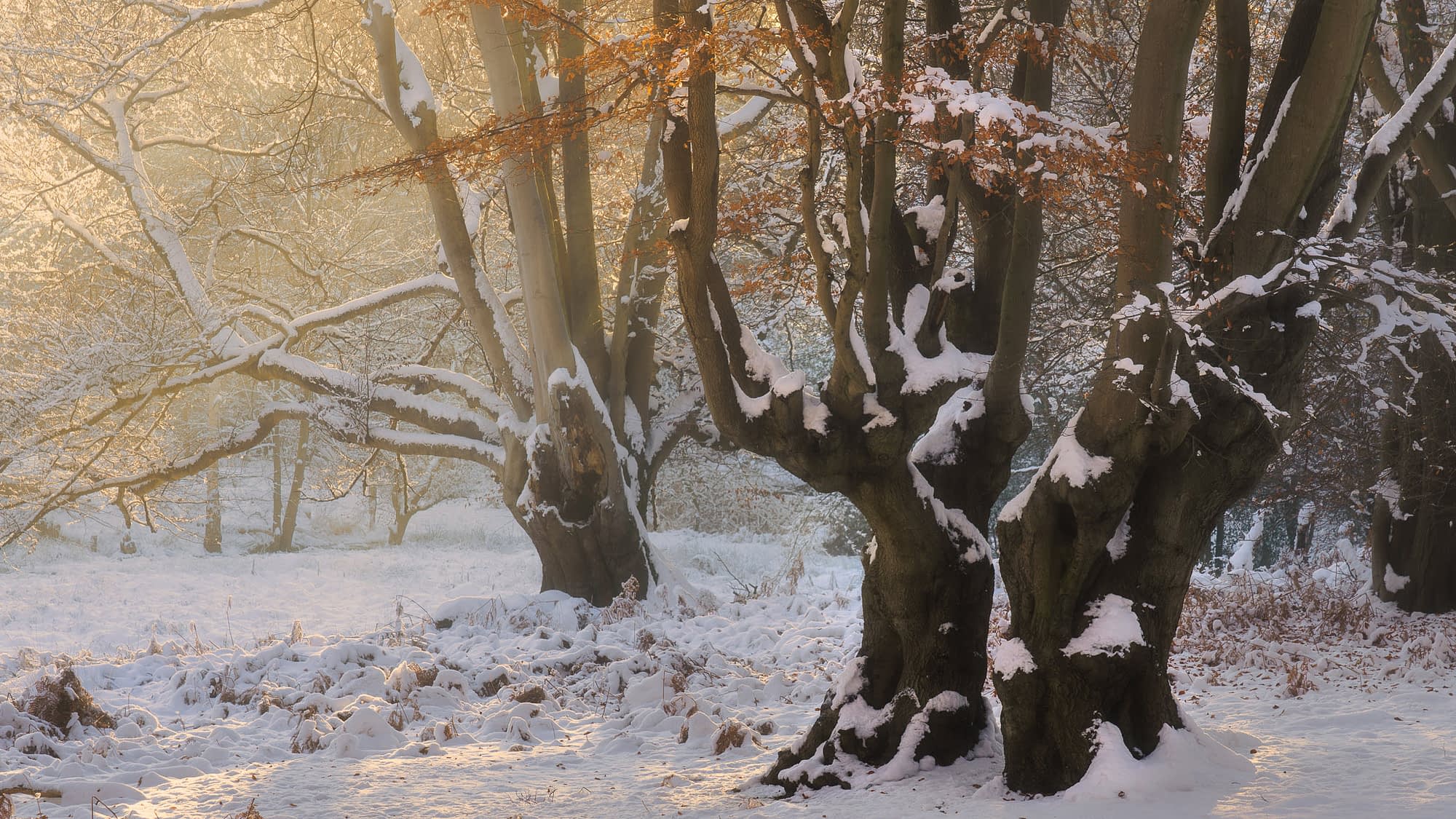
I once stood in an Epping snowstorm for a whole evening. I stuck it out without making images while the snow fell, which I regretted afterwards. Then the clouds began to clear, golden light broke across a grove near Ambresbury Banks, and I made more pictures in the hour that followed than some months give me.
That evening is Epping Forest in miniature. The place rewards being there, in the conditions other people sit out, more than it rewards any plan.
I have been photographing this wood for fifteen years. I started slowly and now visit almost every month, and I still feel like I am scratching the surface. Across 2,400 hectares there are photographs I have not seen and probably never will, despite walking past them many times.
The trees were pollarded here for centuries, cut above browsing height so they could be cropped again and again, and the multi-limbed giants that fill the wood today are the direct result. When neighbouring Hainault Forest was largely destroyed, the loss helped drive the campaign that produced the Epping Forest Act of 1878, and the City of London has looked after the wood ever since.
From this wood
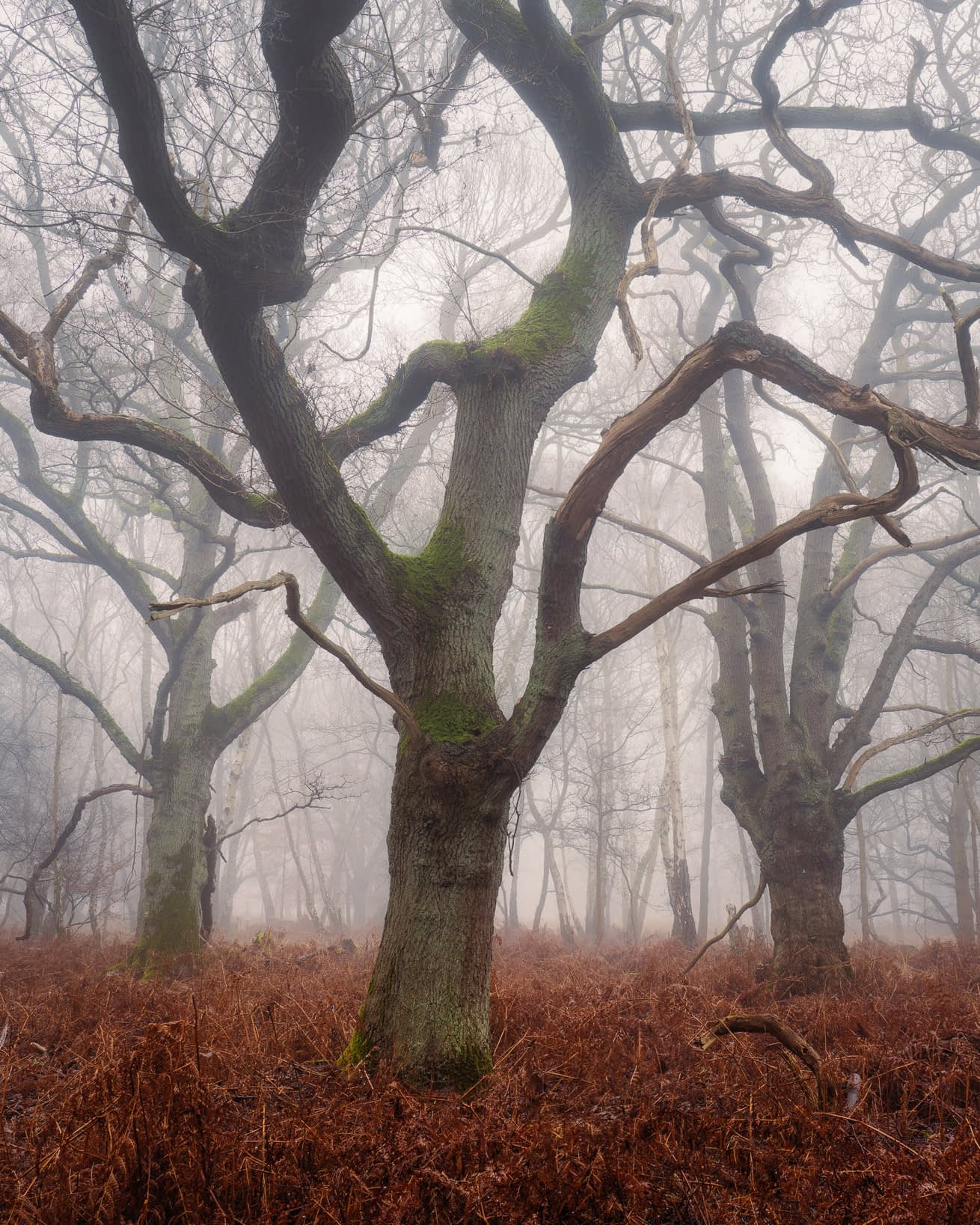
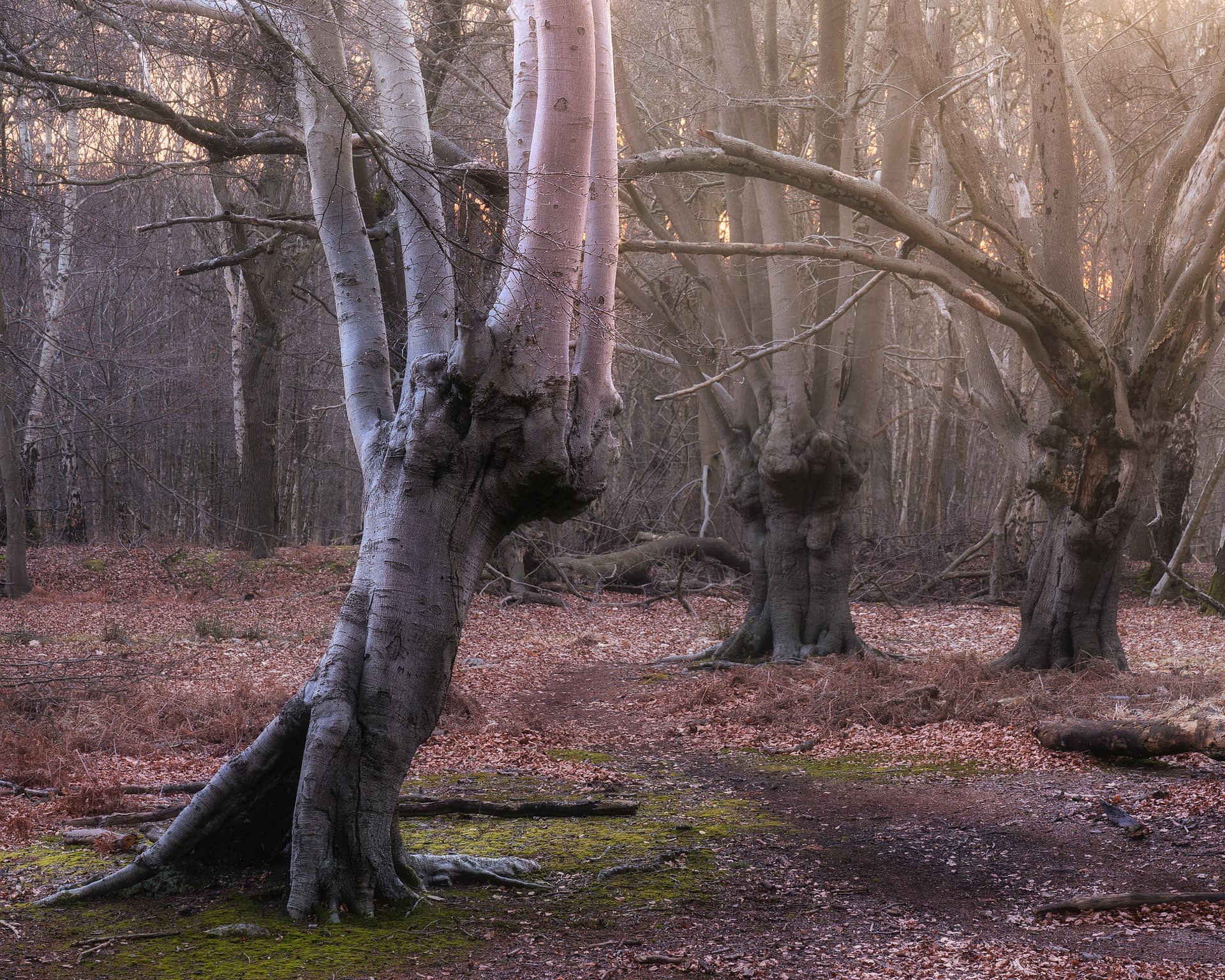
The pollards in fog. I visit when other people are at home: early, or in weather like this.
Around 50,000 ancient trees grow here. Fifteen years in, I am still meeting new ones.
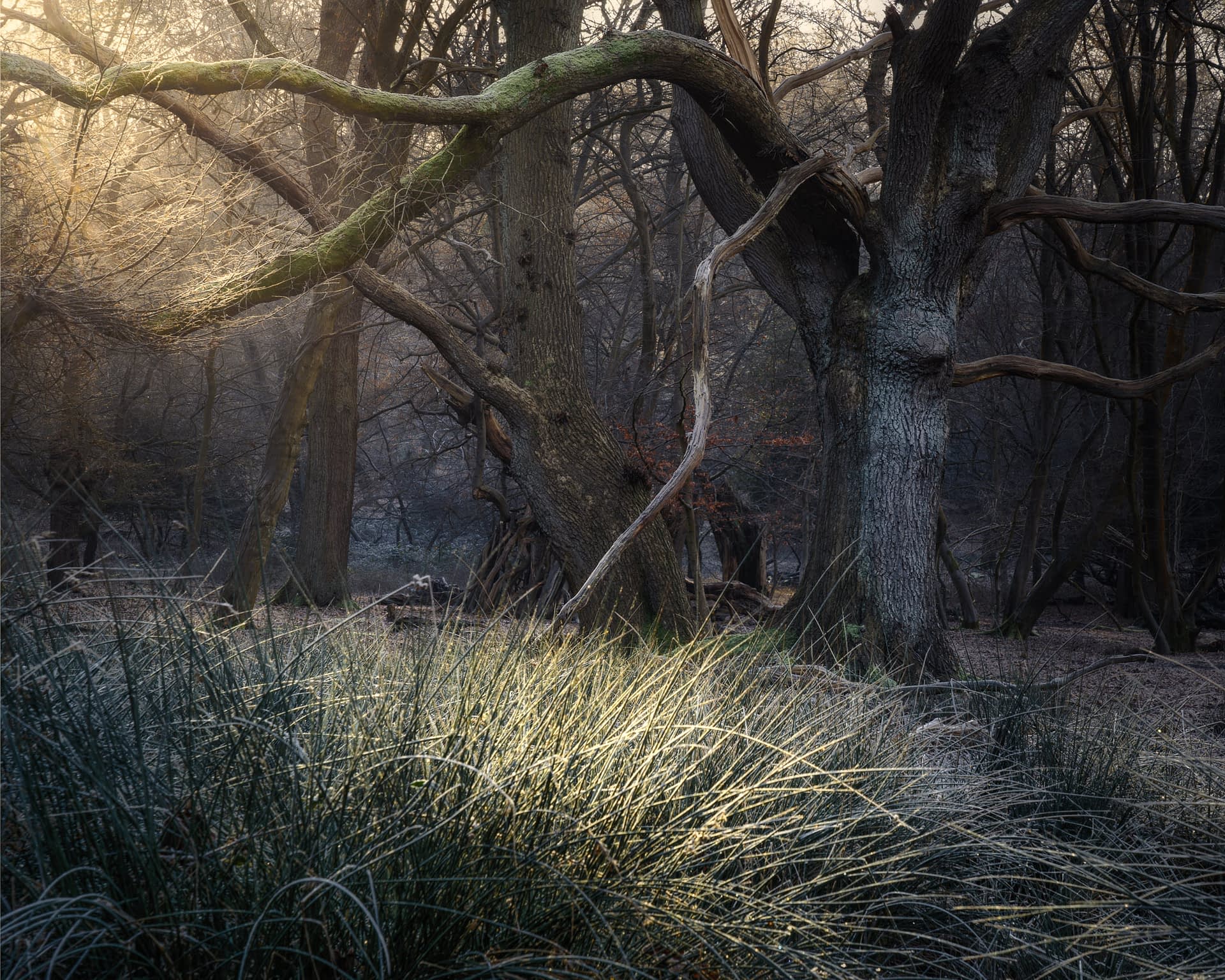
Low light reaching the interior. The glow finds the gaps in the canopy and lights whatever stands in them.
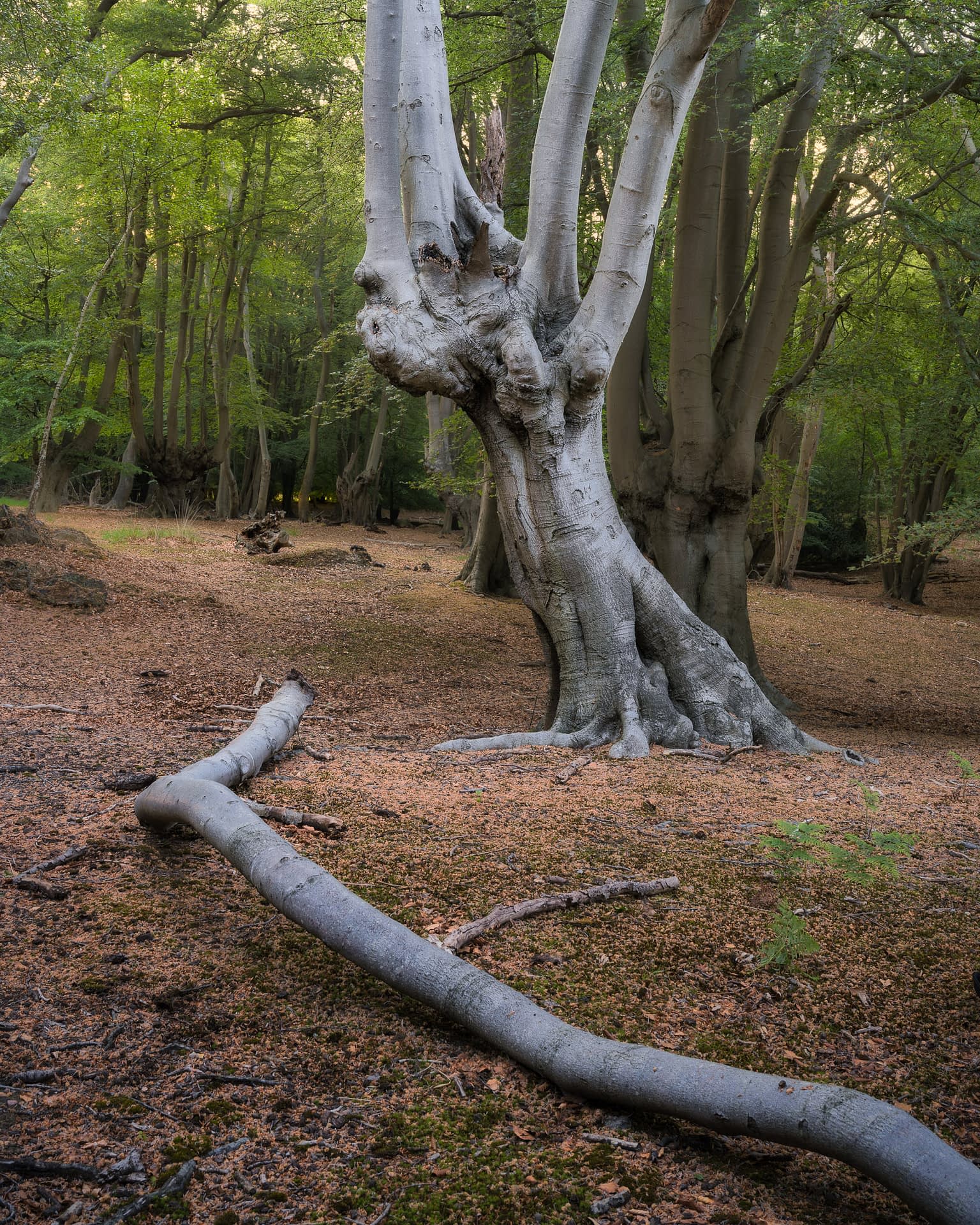
When the light goes flat, drop to the deadwood and the roots. The floor here carries pictures of its own.
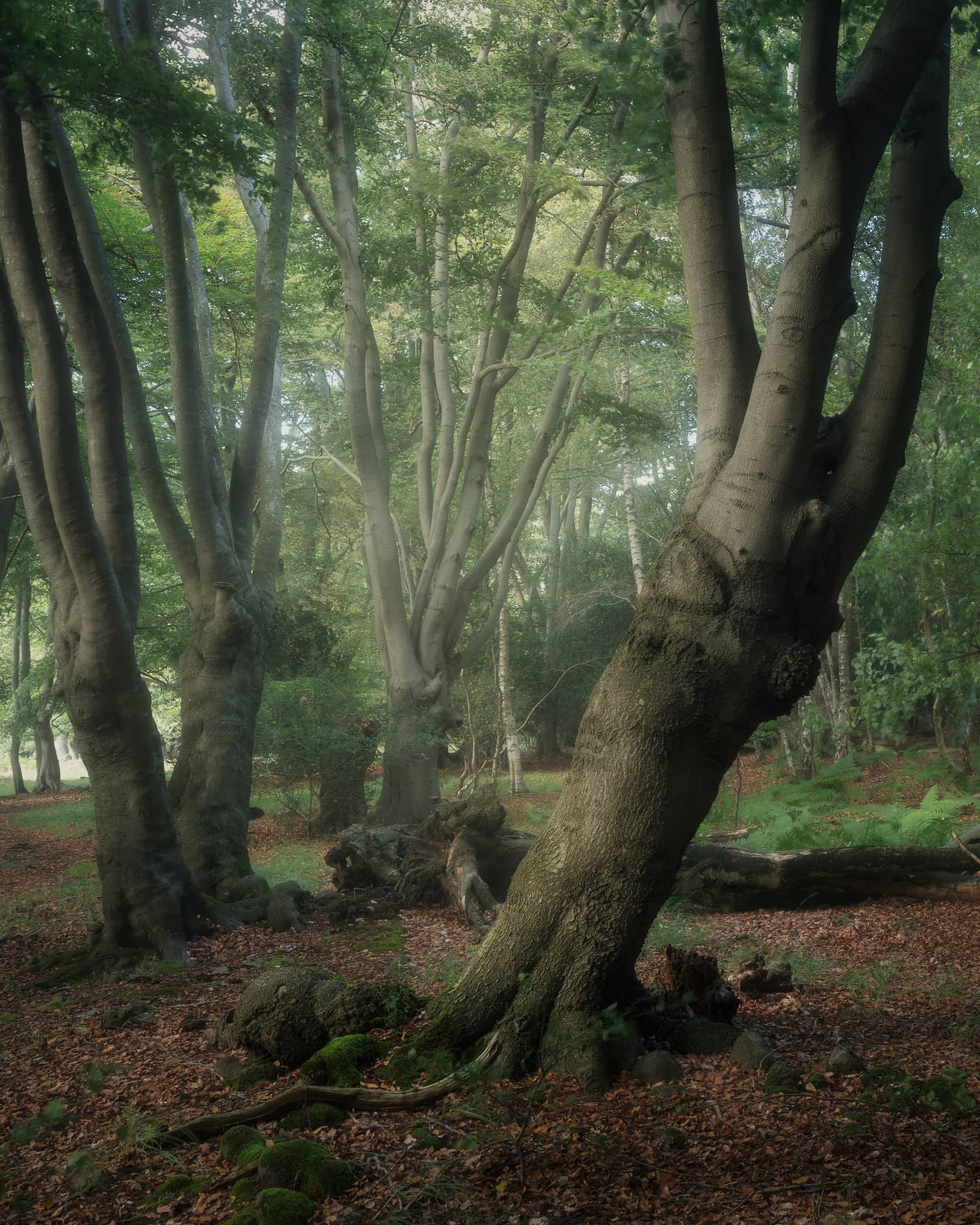
Peak colour runs copper through red, orange and yellow, often all in one view. The last week of October is the time to aim for.
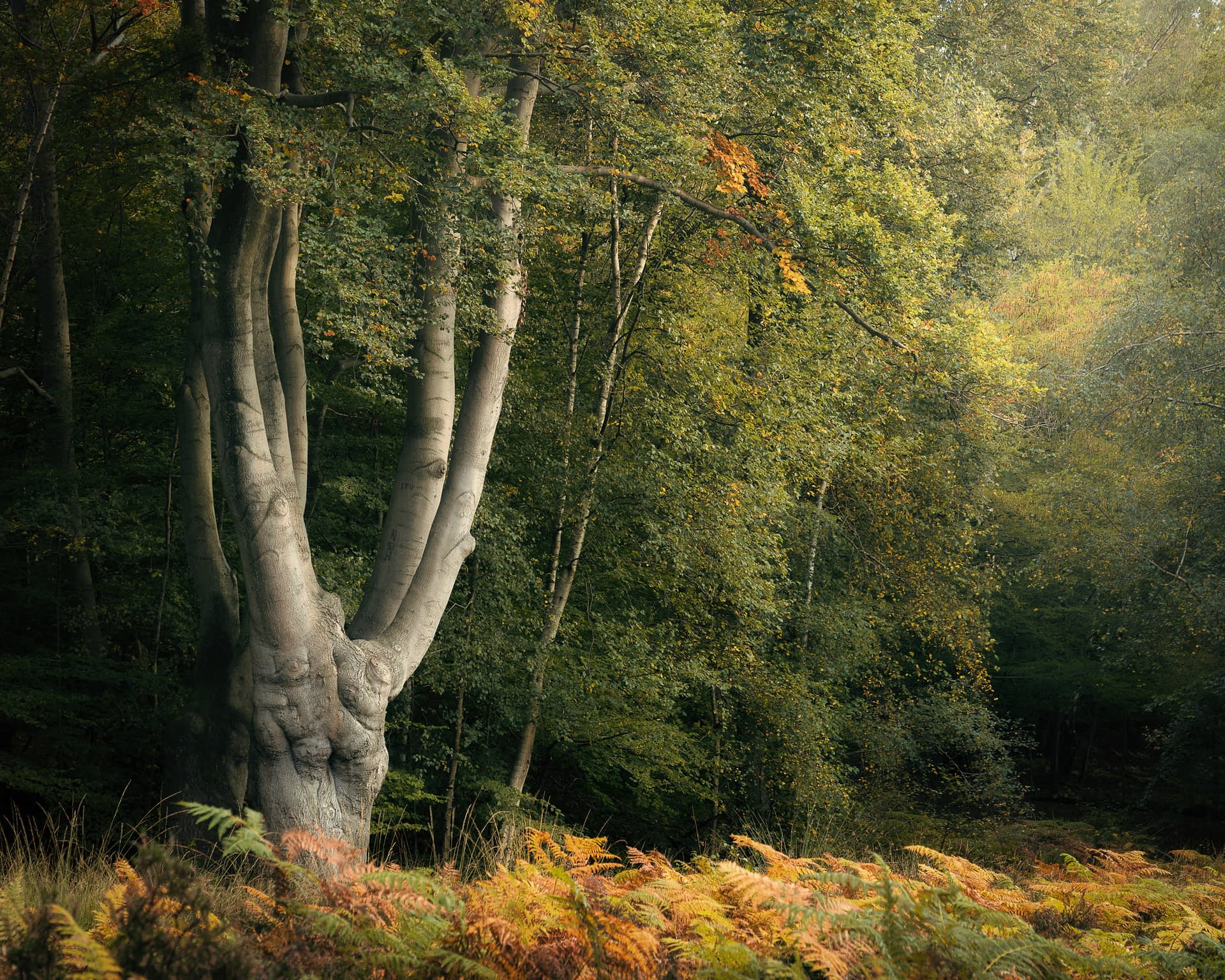
Work the pollards as portraits first. Each one has its own character, and this wood holds thousands of them.
Before you go
Visiting and shooting.
Getting there and parking.
There are more than 30 car parks around Epping Forest and I have parked in most of them. My favourites, roughly north to south: Genesis Slade (CM16 7DR), Piercing Hill (CM16 7JW), Jack's Hill (IG10 2NY) and Long Running opposite it, Broadstrood (IG10 2SD), Honey Lane (EN9 3QT), Mount Pleasant (IG10 1JD), Hill Wood (IG10 4HR), and Wake Valley and Claypit Hill (both IG10 4AF). All are chargeable and prices change, so check the boards when you park. The gates open at around 7am and most close at or around dusk; the closing time is on the board too, and it is worth reading before you commit to a long walk in.
For dark starts, Piercing Hill can be parked out of hours, and there are a few spaces outside the Hill Wood barriers that are useful on very early mornings. There are other early options, but the spaces are so limited that naming them would cost the photographers already using them, me included. That groundwork is yours to do, the same way it was mine.
I have never arrived by tube myself, but the Central line runs close to several parts of the wood. For Chalet Wood and its bluebells, Wanstead and Redbridge stations are the easy way in, easier than driving.
Access and restrictions.
The wood is open on foot at all times; only the car parks are gated. Drones need a permit, as on any site like this. Fungi picking is banned, which is good news for photographers: the subjects stay put. Rules and notices are posted at the car parks, so read the boards.
One more thing, since Epping is the busiest wood in this series. It is as much everyone else's place as it is mine, and the pictures have never once been ruined by other people enjoying it. If you want solitude, do what I do and visit when other people are at home: early, or in weather.
Best conditions and timing.
Rain is my most productive condition here, by a distance. Snow, hoar frost, fog and golden light have given me more dramatic photographs, but rain is the one that almost always delivers, and I have written about why woodland works in the rain at length.
The wet woods near Honey Lane hold fog and frost better than most of the site. Jack's Hill and Ambresbury Banks are special in fog, rain and snow.
Twilight is the other condition I love here, especially after a sunny day. Better still if a few clouds are left to catch the sun once it has dipped below the horizon: the golden glow reaches into the wood's interior, most of all around the edges of clearings, meadows and ponds, and wherever there are gaps in the canopy.
There is no single condition Epping needs. There is so much to shoot that I just go. On a recent workshop we made images in the middle of a sunny day, waiting for the sun to pass behind cloud to drop the contrast. They were competent rather than outstanding, and that is fine: every frame you make banks a composition you can return to and farm when the conditions come good.
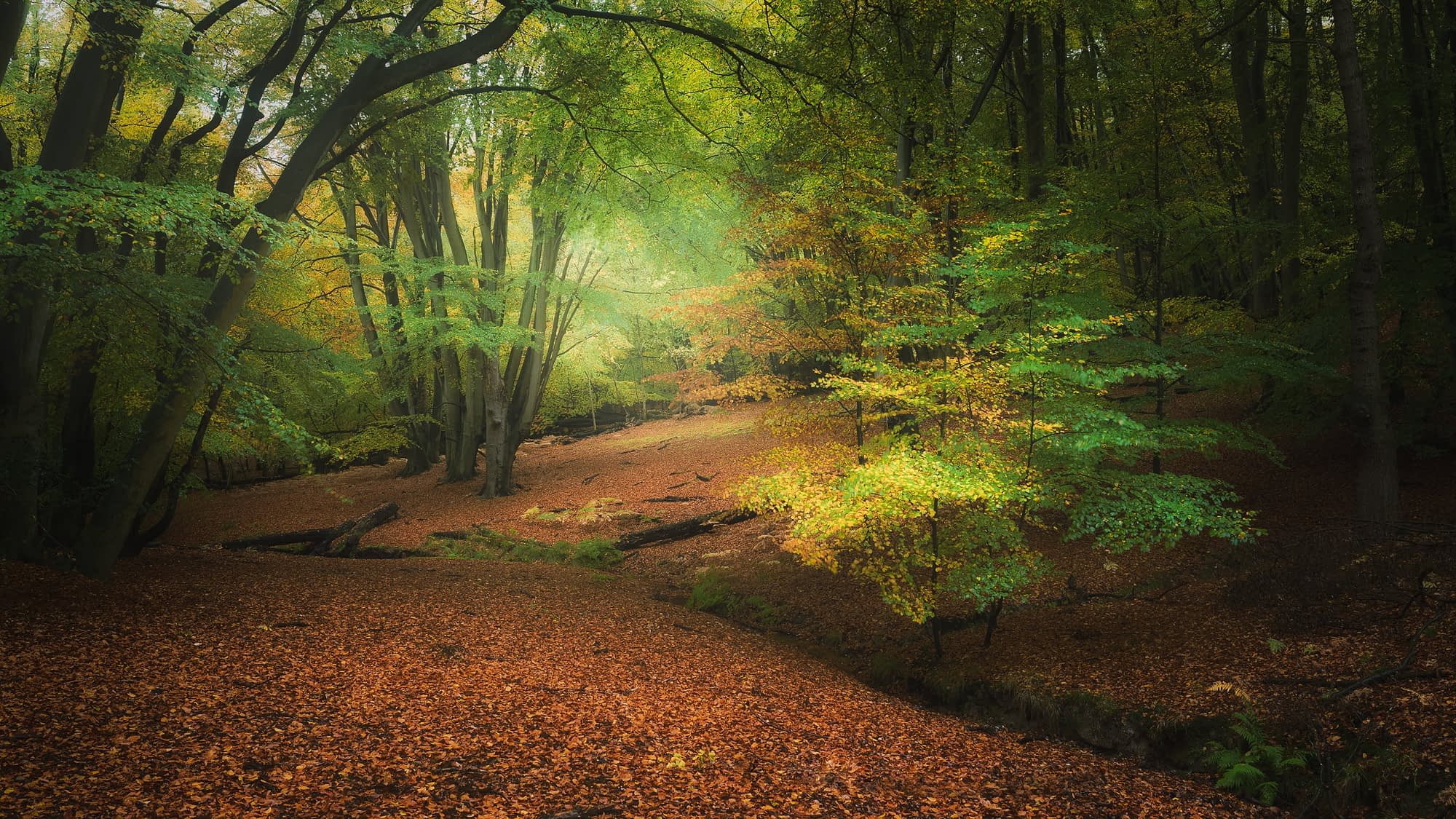
Light reaching the interior around a break in the canopy. After a sunny day, twilight does this to the whole wood.
Subjects and compositions
What to photograph.
The trees, above everything. Epping holds around 50,000 ancient trees, and fifteen years of monthly visits has not come close to exhausting them. Work them as individual portraits, then go closer: the trunks carry textures and patterns that reward a long look.
Then widen out. In the denser areas the better pictures are often about the relationships between trees, how they lean, crowd and answer one another, rather than any single specimen.
Look down as well. Some of the big trees stand with their roots fully exposed, and the root structures are subjects in their own right. The silver birch stands offer a lighter, cleaner subject when the giants get too much.
Water plays a supporting role. Connaught Water and Hollow Ponds are popular for reflections, and Queen Elizabeth's Hunting Lodge and the Copped Hall estate add built history to the edges of the wood, but none of these is where my own work comes from.
Identification and character
Tree species.
Beech. The ancient pollards are the signature: multi-limbed, sinewy, and at their most graphic in winter when the structure stands bare. The younger beeches carry the autumn colour.
Hornbeam. Fluted, muscular bark and a dense, characterful habit. Epping holds them in numbers, often in groves, and they suit close work on trunk and texture.
Oak. The oldest here are thought to be over 800 years old, hollowed and sprawling, more monument than tree.
Silver birch. Stands of them break up the big-tree areas around High Beach, white bark against everything else, a different discipline entirely.
The 50,000 ancient trees make this one of the most significant concentrations in Europe. If that term is new to you, start with what ancient woodland actually is.
Timing
Seasonal highlights.
Spring. Bluebells at Chalet Wood from the last week of April into early May; by the 5th they are usually past their peak. If you photograph bluebells a lot you will know the difference between the rich, deep violet of peak flowers and the slightly faded purple that follows, and it is worth a scouting visit to any bluebell wood in mid April to see whether you need to bring plans forward. I will be honest about Chalet Wood: it is an excellent bluebell wood, but woods closer to my home give me as much or more, so I rarely make the trip. If it held more ancient trees it would be unmissable.
Summer. The middle of the day is workable here if you wait for cloud to soften the contrast, and the pond edges come alive with dragonflies and damselflies.
Autumn. Colour peaks in the last week of October and runs to mid November, sometimes into December if the storms stay away. The leaves hang on, and the character of the pictures changes the deeper into the season you go.
Winter. Epping delivers in snow and hoar frost, and holds fog well. The snowstorm evening near Ambresbury Banks remains one of my favourite sessions anywhere.
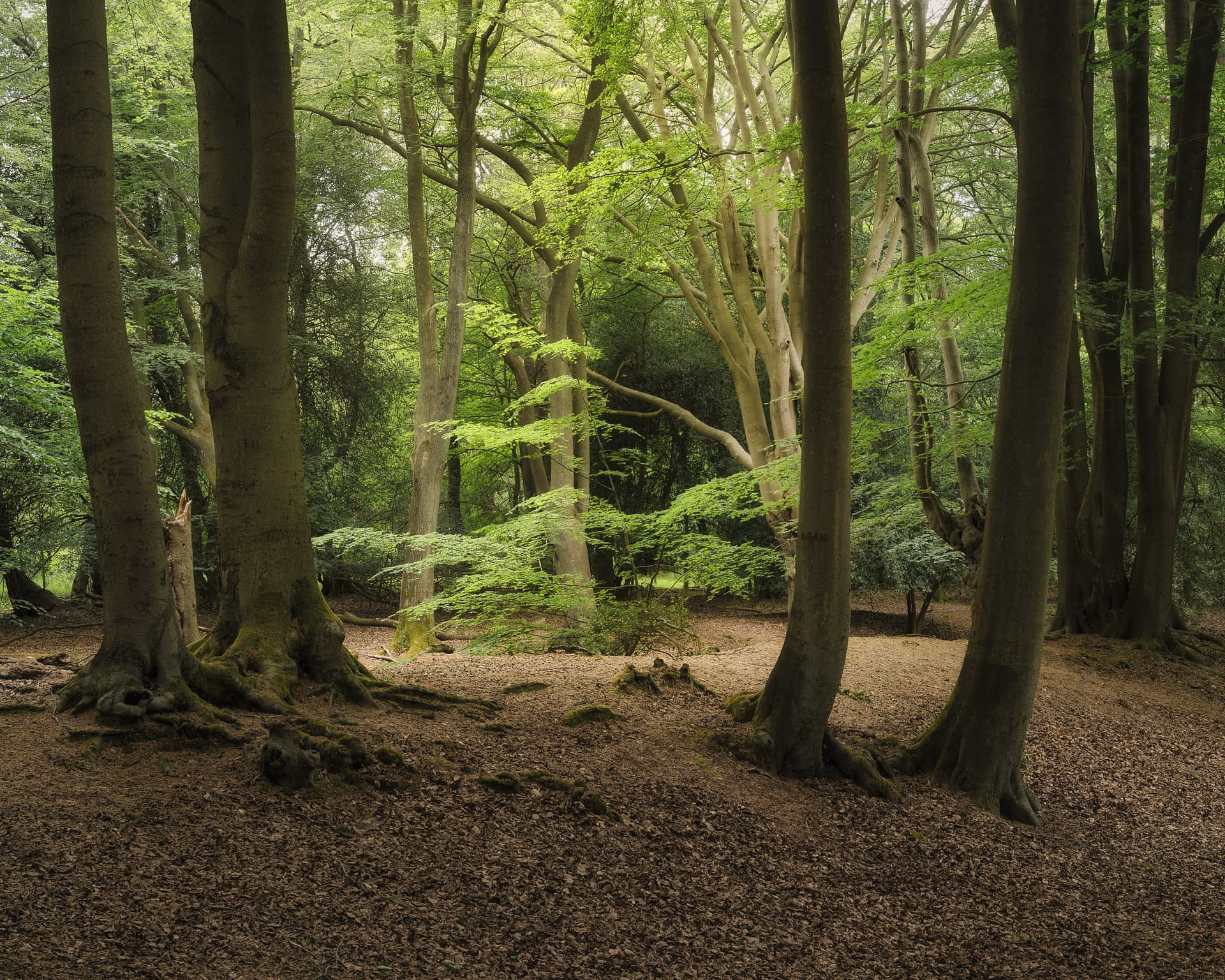
Spring
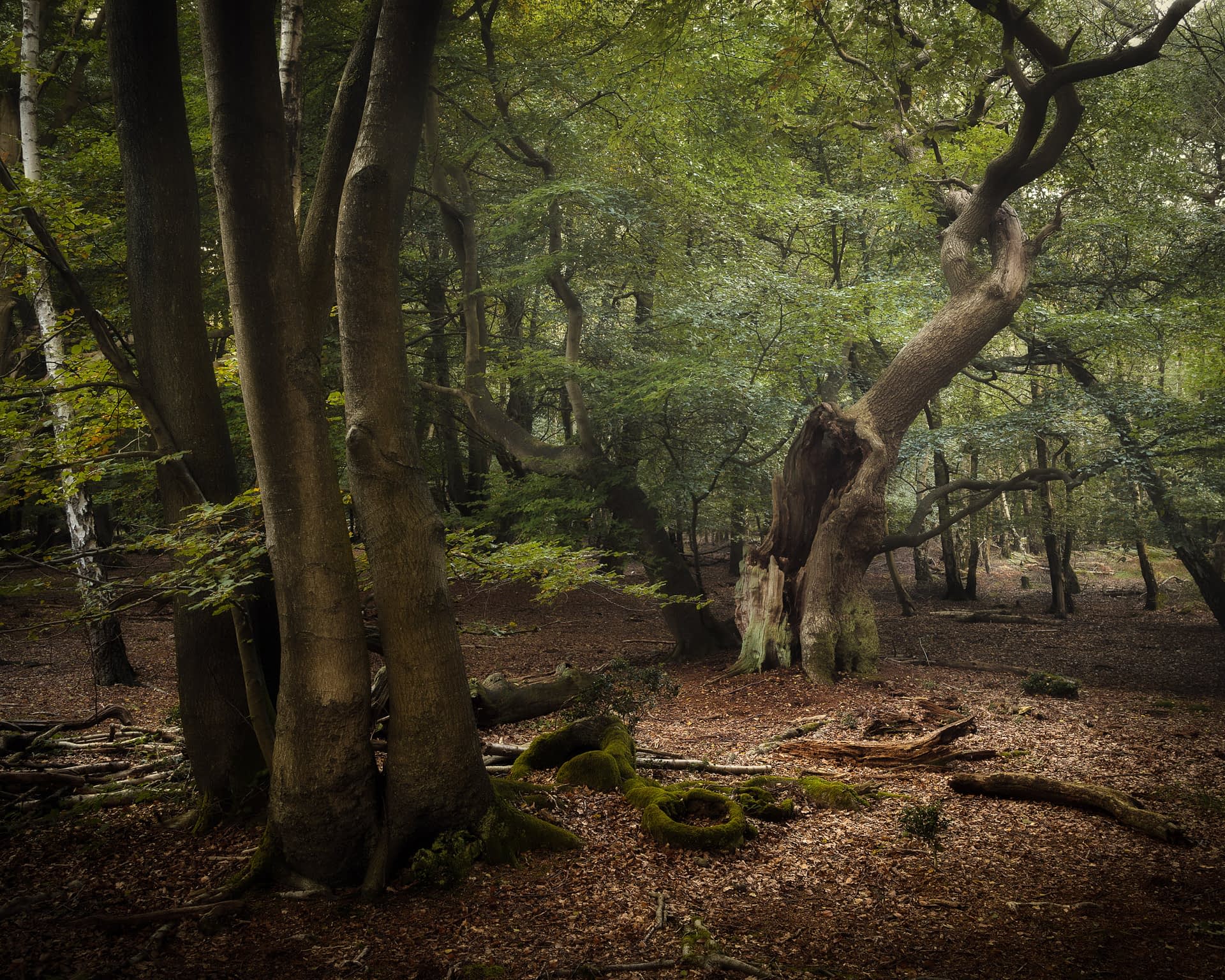
Summer
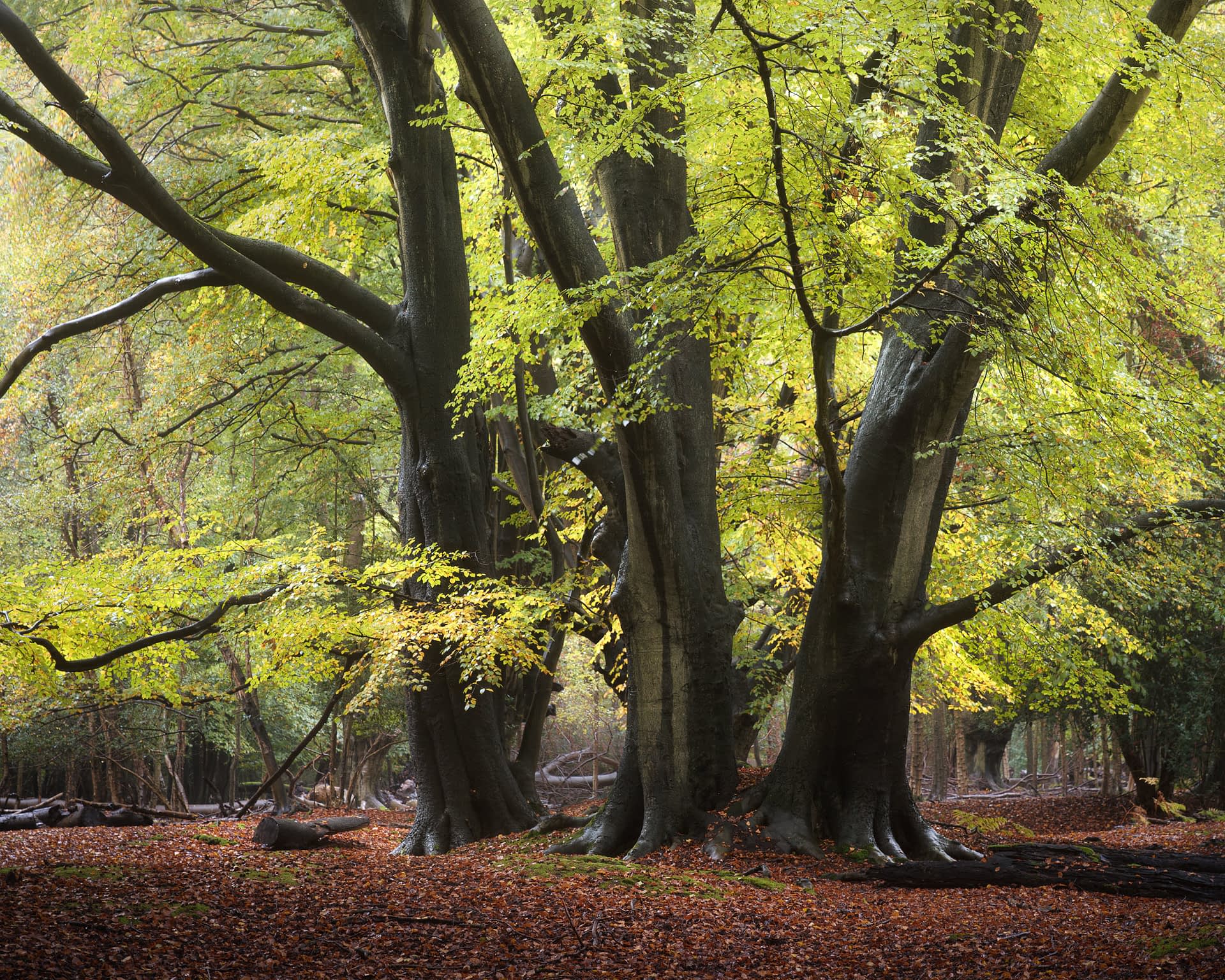
Autumn
Winter
Four ways in
Areas to explore.
Jack's Hill, Ambresbury Banks and the Epping Thicks.
My most visited corner of the wood, and the setting for that snowstorm evening. The groves here are special in fog, rain and snow, and Ambresbury Banks itself, an Iron Age earthwork, is worth a visit in its own right.
CREATIVE TIP
Go past the portraits and work the textures and patterns in the trunks. The closer study is where this area keeps giving.
mindful moment
Pick one trunk and give its surface a full minute before you raise the camera. The patterns arrive with the attention.
Loughton Camp and the pollards around it.
Another Iron Age earthwork deep in the wood, ringed by some amazing ancient beech pollards. The history and the trees carry the same story: this ground has been worked, defended and cropped for a very long time.
CREATIVE TIP
The pollards near the camp are the subject. Individual portraits first, in soft light or fog.
mindful moment
Listen for woodpeckers here from spring through to early autumn. They will find you before you find them.
The wet woods near Honey Lane.
A different Epping: low, damp ground unlike most of the site, which is exactly why it earns its place. The wetness makes it the most reliable corner for fog, and it is excellent in hoar frost and in rain.
CREATIVE TIP
Shoot the relationships between the trees rather than individual portraits. This area reads as a community, not a cast of characters.
mindful moment
In winter, some of these beeches hold their copper leaves long after everything around them has let go.
High Beach.
I shoot around High Beach a lot, though I almost never park at High Beach itself; the smaller car parks nearby serve the woods better. The draw is the big trees, a huge range of them, each with its own character, and the stands of silver birch that give you a counter-subject when the giants get too much.
CREATIVE TIP
Seek out the trees with their roots fully exposed. There are a few, and they are unlike anything else here.
mindful moment
Stand at one of the exposed root plates and take in the part of a tree you are never supposed to see.
Wake Valley.
The woods near the pond hold fine pollards and some interesting ancient root structures. There are images and reflections to capture around the pond, too. The area works in rain, in overcast, and even in golden light.
CREATIVE TIP
Seek out the trees with their roots fully exposed. There are a few, and they are unlike anything else here.
mindful moment
Stand at one of the exposed root plates and take in the part of a tree you are never supposed to see.
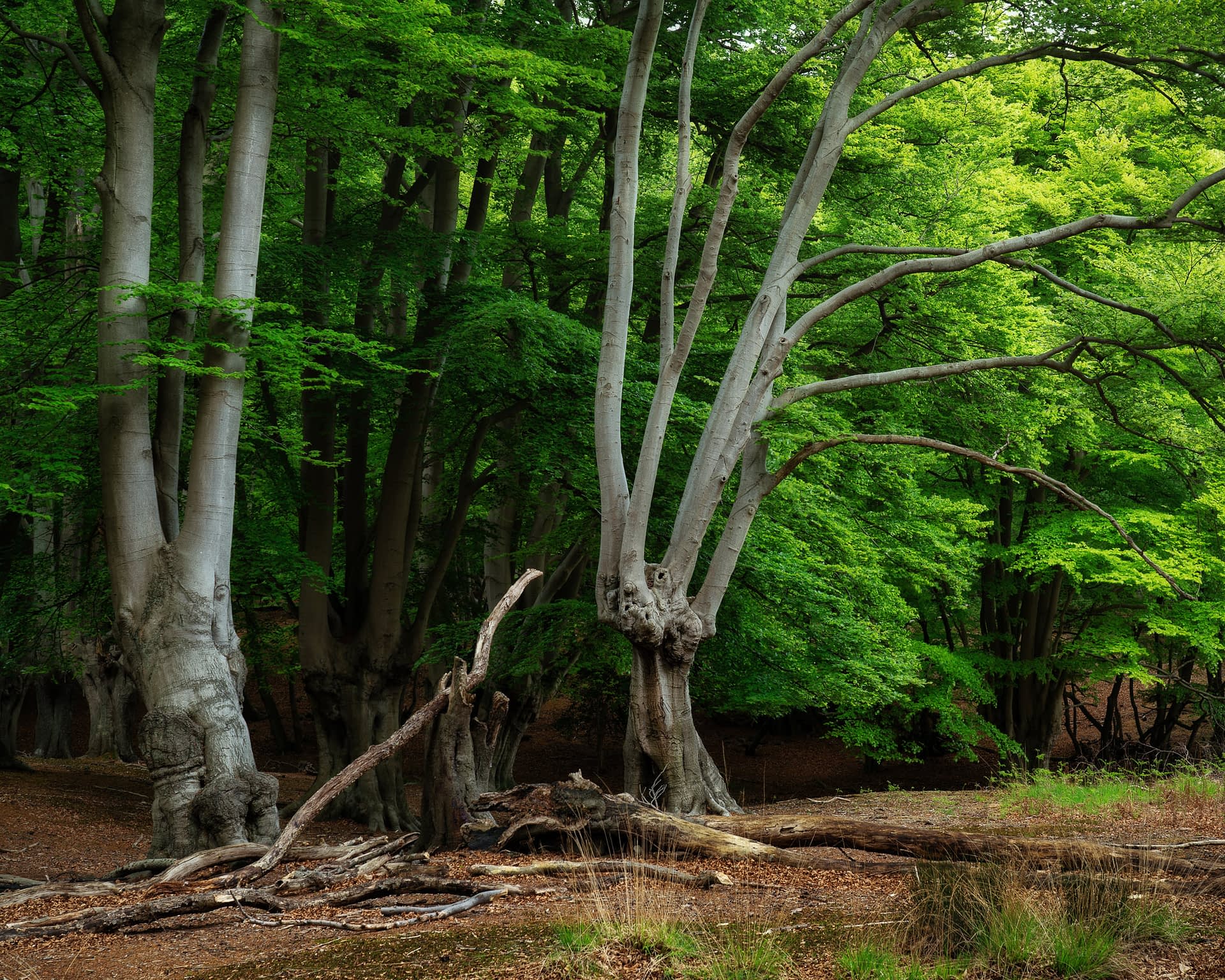
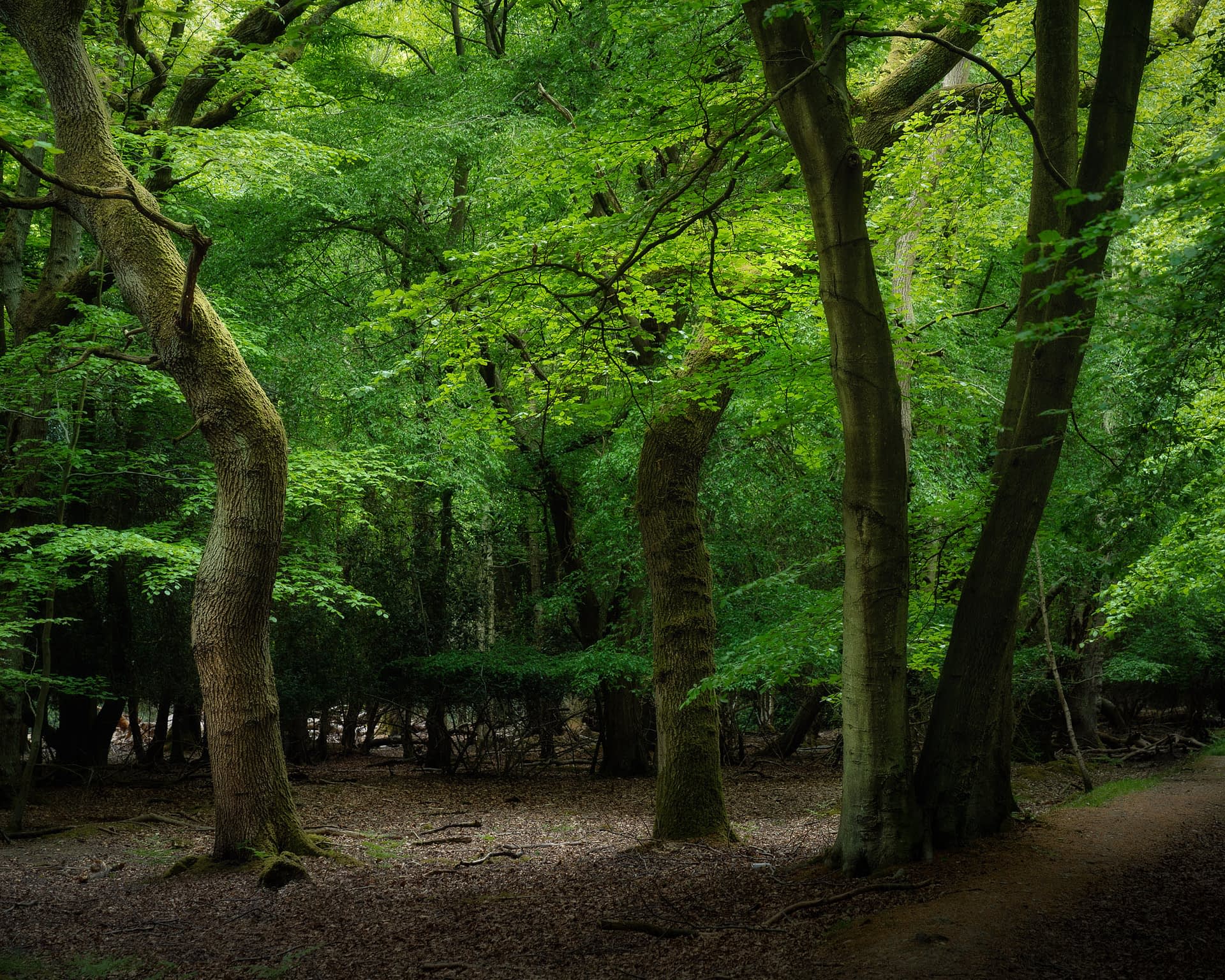
Near Jack's Hill, my most visited corner of the wood, here in its green months.
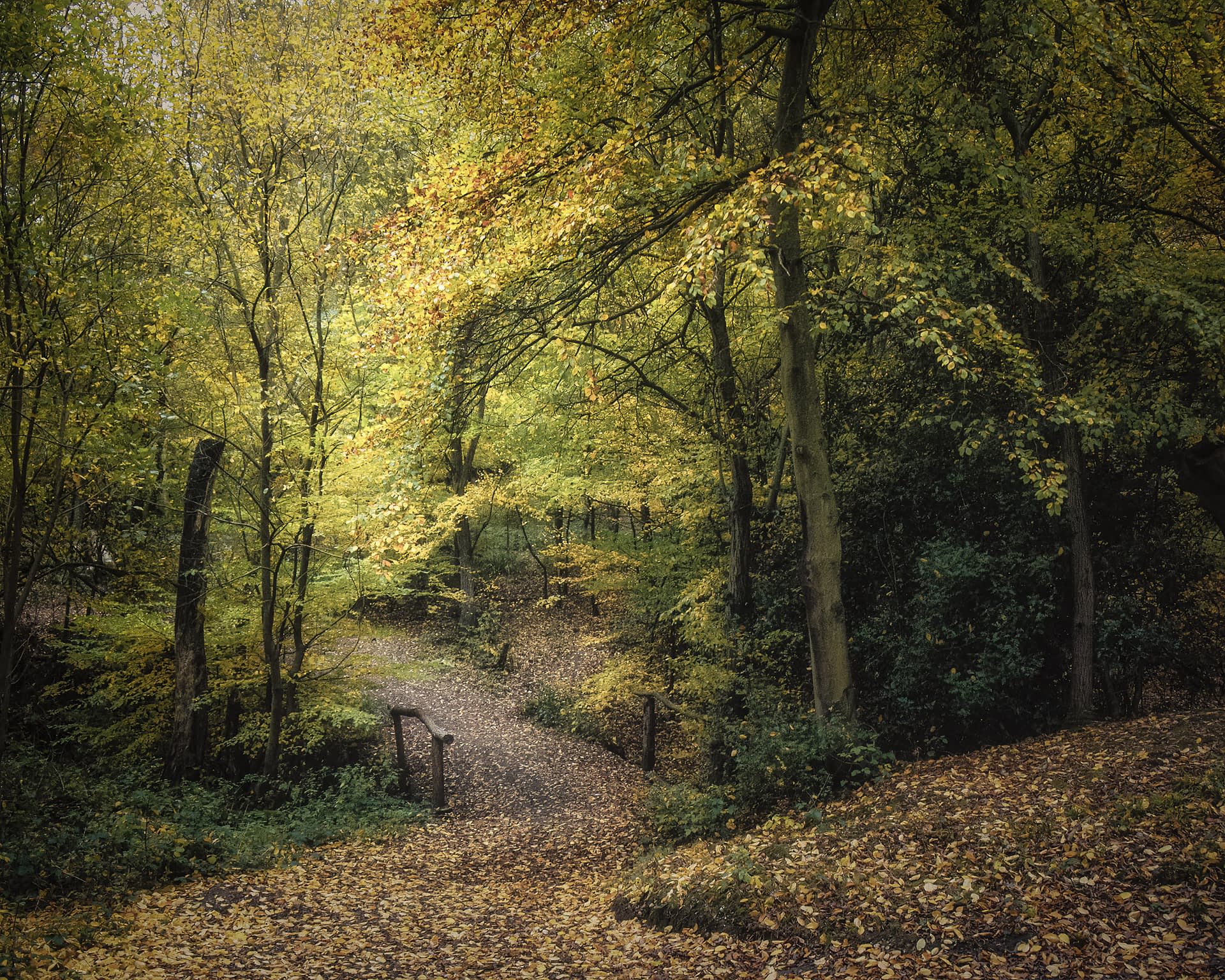
I shoot around High Beach far more than I park at it; the smaller car parks serve this area better.
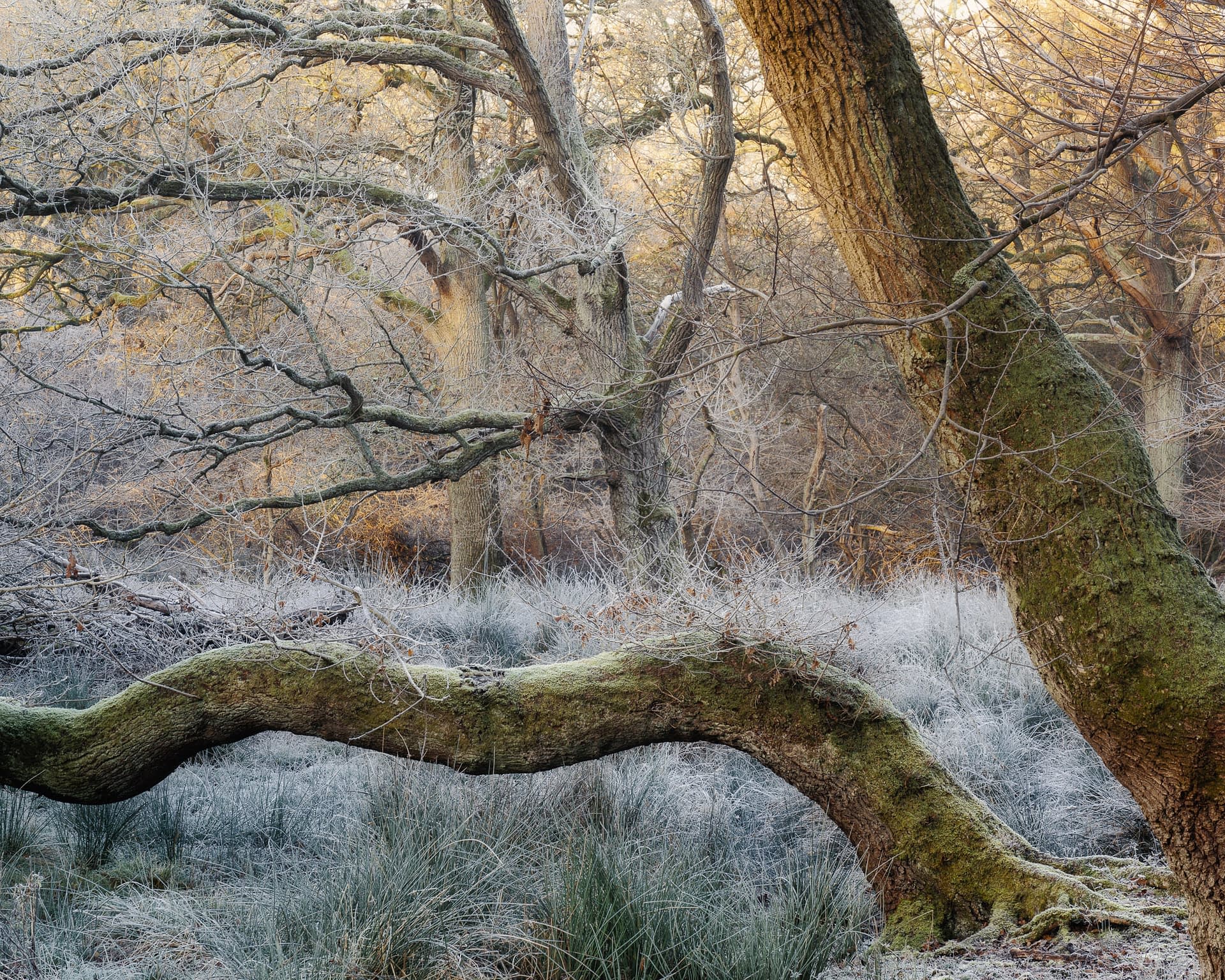
The wet woods near Honey Lane in hoar frost. The damp ground is why this corner delivers it.
Final thoughts
Fifteen years in, and I am still scratching the surface.
I visit Epping Forest almost every month, and the honest summary is that 2,400 hectares will outlast me. There are photographs in this wood I will never see. That is not a complaint. It is the reason I keep going back.
For the same City of London stewardship at a fraction of the scale, and pollards you can meet one at a time, read my guide to Burnham Beeches. All of the guides live at the location guides index.
Before you visit
Common questions about Epping Forest.
Where do I park at Epping Forest?
There are more than 30 chargeable car parks. My favourites include Jack's Hill (IG10 2NY), Genesis Slade (CM16 7DR), Honey Lane (EN9 3QT), Hill Wood (IG10 4HR) and Wake Valley (IG10 4AF). Gates open at around 7am and close at or around dusk; closing times and prices are on the boards at each car park.
Can I get into Epping Forest before sunrise?
Yes, the wood is open on foot at all times; only the car parks are gated until 8am. Piercing Hill can be parked out of hours and there are a few spaces outside the Hill Wood barriers. Other early options exist, but finding them is each photographer's own groundwork.
When does autumn colour peak at Epping Forest?
The last week of October to mid November, sometimes running into December if the storms stay away. The leaves hang on, and the pictures change character the later you go.
When are the bluebells at Chalet Wood?
Usually from the last week of April into early May, past their peak by around the 5th. Scout in mid April to see how the season is running. Wanstead and Redbridge Underground stations are the easiest way in.
Is Epping Forest too busy for photography?
No. It is well used, but the crowds stay near the honeypots. Go deep into the woods, arrive early, or go out in the weather other people sit out, and you will often have it to yourself.
Previous Guide
Next Guide
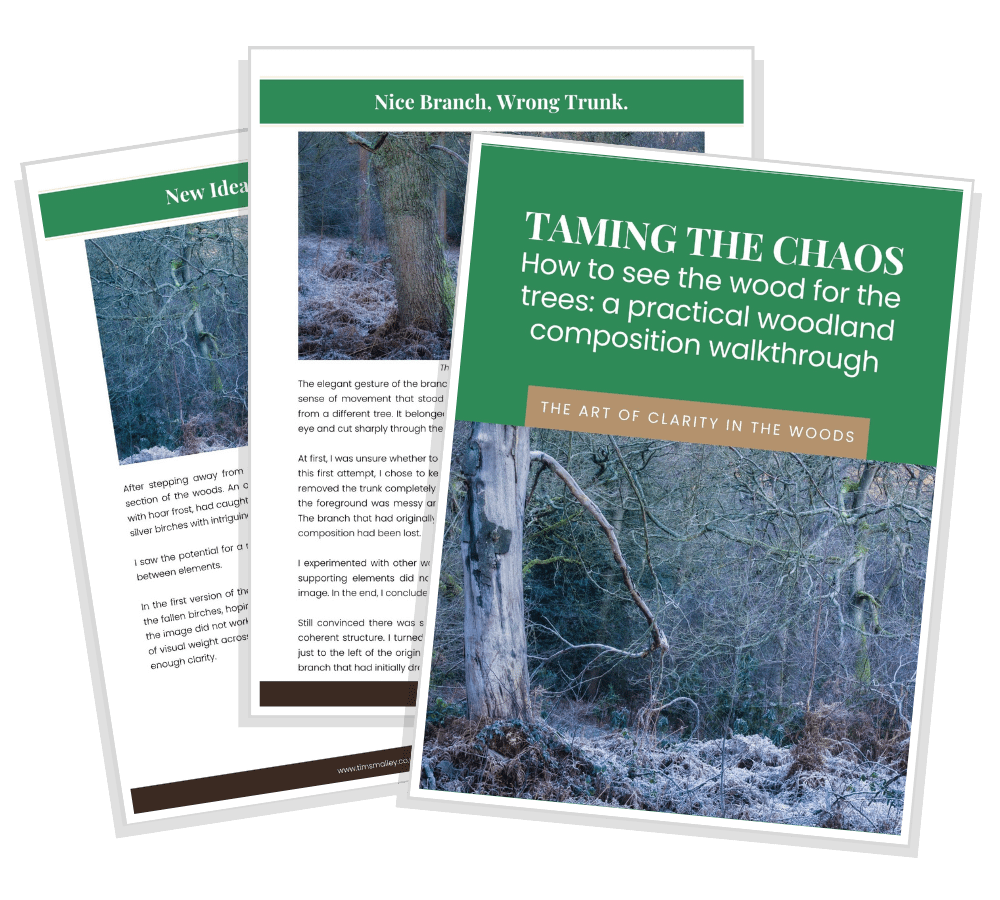
Free composition guide
Learn how to tame the chaos in the woods.
Woodland is the hardest landscape to compose. This free guide gives you a practical way to cut through the visual mess and find the picture, in Hainault or any wood you walk into.